

If you manage social for a thought leadership brand, a B2B company, or a creator-led business, you have probably been asked some version of the same question this year: should we be on Bluesky? Maybe a client brought it up. Maybe your CEO saw a competitor’s handle and wants to know why you are not there yet.
You do not need another explainer telling you what Bluesky is. You need a real answer, and a plan you can actually run.
Here is the number that should shape that plan. Bluesky has over 45 million registered users as of July 2026, and its daily active users are somewhere between 1.5 million and 3.6 million according to some third party sources.
That gap between signed up and shows up is the first thing to understand before you commit a single hour to a Bluesky marketing strategy, and it is the thing most guides skip past to get to the pep talk.
This one will not. Below is a practical, feature-first plan built around how Bluesky actually works: no central algorithm, no ad platform, and a discovery model that runs on custom feeds instead of follower counts. If you manage more than one account, or you are deciding this for a brand that leans on credibility rather than mass reach, this is written for you.
Why Bluesky Deserves a Real Strategy in 2026, Not Just Hype
Every social media manager who has been doing this long enough has learned to be skeptical of the next big platform pitch. This section is not that pitch.
It walks through the actual numbers, how Bluesky stacks up against the platforms already in your rotation, and a quick way to tell if your brand is even a fit before you read another word.
The Twitter-Alternative Graveyard: Why This Time Is Structurally Different
Social media managers have watched this cycle before. A wave of frustration with X sends users looking for an alternative, a new app gets a burst of press, and most of the migration fades within a year. It happened with several earlier attempts at a Twitter alternative, and the skepticism from anyone who has managed brand accounts through a few of these cycles is fair.
Bluesky’s difference is structural, not just cultural. It runs on the AT Protocol, an open standard that lets users take their identity, followers, and posts to a different app entirely if they choose. Your account is not locked into one company’s servers. That portability, combined with a discovery system that does not depend on a single company’s ranking algorithm, is why this platform has kept growing.
The Real Numbers: What 45M Registered and 3.5M Daily Active Actually Means for Reach
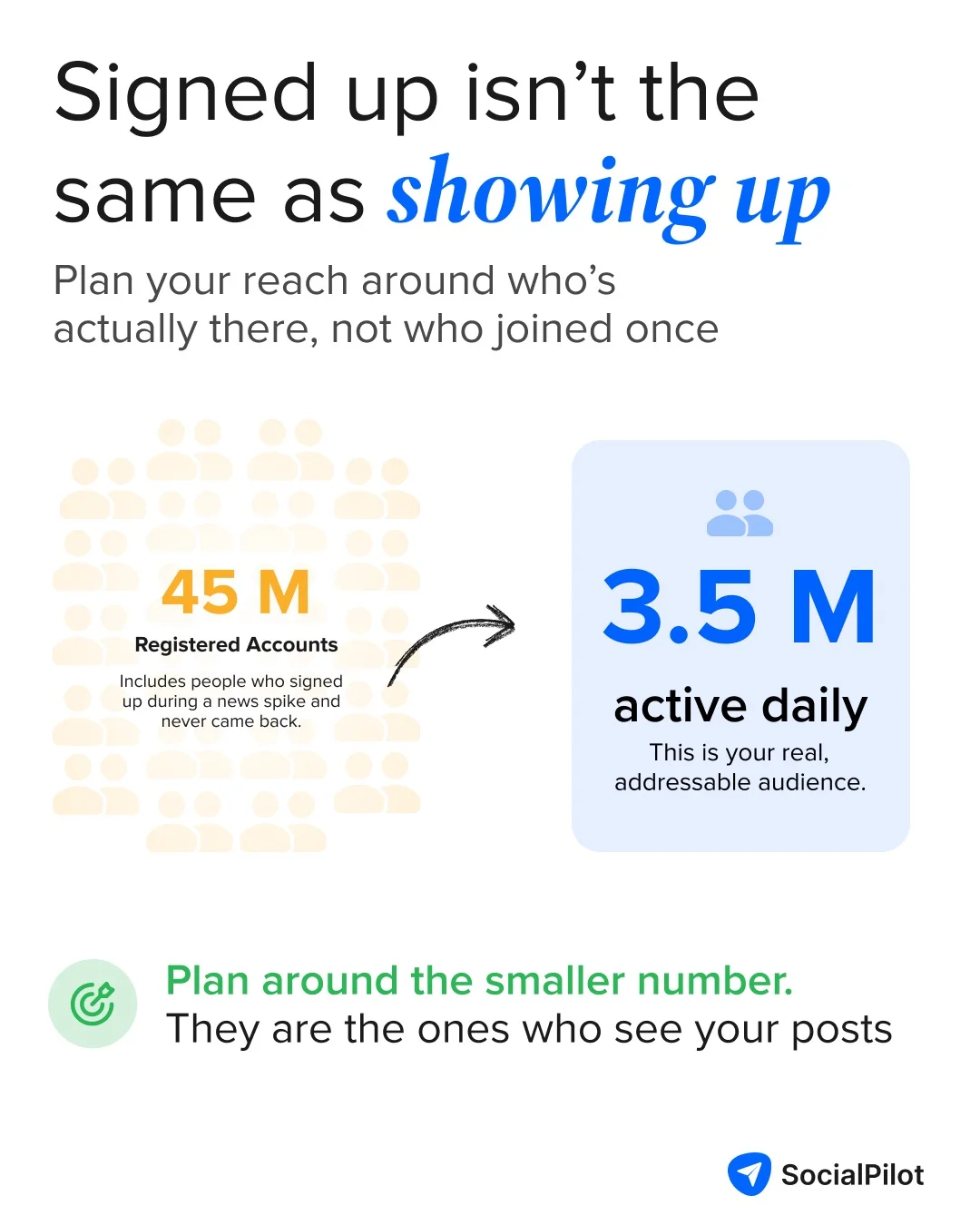
Treat the 45 million figure as a ceiling, not a floor. Registered accounts include people who signed up during a news spike and never came back. The 3.5 million daily active users is closer to your real addressable audience on any given day, and that number has moved around quite a bit over the past year as usage spikes around major news cycles and then settles.
What matters more for your planning is that Bluesky is not yet a mass-reach platform. It is a smaller, more concentrated audience, and whether that trade works for you depends entirely on who you are trying to reach.
Bluesky vs Threads vs X at a Glance
Before you decide where Bluesky fits in your channel mix, it helps to see Bluesky vs Threads vs X (Twitter) for brands laid out side by side.
| Bluesky | Threads | Twitter/X | |
| Registered users | ~45M (July 2026) | Approx 400M MAU | 550-600M MAU |
| Daily active users | ~3.5M (Similarweb estimate) | 115-150M DAU | Not publicly disclosed |
| Algorithm | None by default; chronological timeline plus user-chosen custom feeds | Meta’s engagement algorithm | X’s engagement algorithm |
| Native ads | No, as of mid-2026 | Yes, through Meta’s ad platform | Yes |
| Best-fit brands | Thought leadership, B2B tech, publishers, creator-led businesses | Consumer brands, lifestyle, mass-market | News, culture, real-time events |
Sources: TechCrunch, Social Media Today.
The algorithm row is the one that should change your strategy the most. On Threads and X, an engagement algorithm decides who sees your post beyond your followers. On Bluesky, that job belongs to custom feeds, which is a completely different game and the subject of the next section.
The Verdict Framework: 3 Quick Signals Before You Read Further
Before you invest in a full Bluesky social media marketing plan, ask yourself three quick questions:
- Does your brand voice already work as commentary, not just announcements?
- Are your best customers or prospects the kind of people who read industry newsletters and follow individual thinkers, not just brand pages?
- Can you commit to a near-daily presence for at least one account before judging results?
If you answered yes to two or more, keep reading. In the below sections, we will discuss the full version of this framework, with the audience-fit detail you need to score it properly.
How Discovery Works on Bluesky Without a Central Algorithm
By now, you have a sense of whether Bluesky fits your brand. The next question is how anyone actually sees your posts once you commit to it.
Without a single ranking algorithm deciding your reach, that answer comes down to custom feeds, and understanding them changes how you write, tag, and time everything that follows.
Here is the single most important thing to understand about how to use Bluesky for marketing: your reach has almost nothing to do with your follower count.
The Feed-First Strategy is the practical reality that brand discovery on Bluesky depends on whether your content gets picked up by the custom feeds your audience already subscribes to, not on a platform algorithm and not on paid promotion.
There is no boost button. There is no engagement algorithm deciding your fate. There are, instead, more than 50,000 community-built feed algorithms on the network, according to Bluesky’s own Series A announcement, each one built around a topic, a niche, or a community.
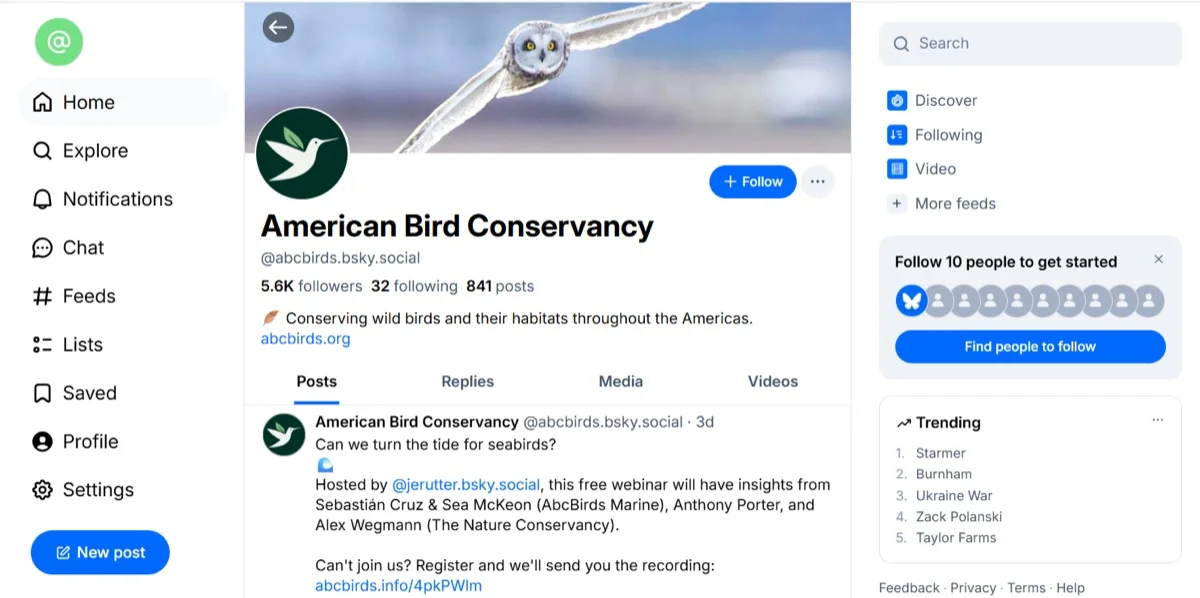
For instance, take American Bird Conservancy. It is not a brand with a massive following anywhere, but its team has said that its Bluesky engagement now beats its engagement on X and Threads. That is not a fluke. It is what happens when a specific, values-driven voice earns a spot in the feeds its actual audience already reads.
If your content regularly earns inclusion in three or four relevant feeds on Bluesky, it can be seen by many more people who have never heard of your brand. That inversion is the entire strategic model. Chasing followers matters less here than earning a spot in the rooms your audience is already sitting in.
Anatomy of a Custom Feed: Who Runs Them and How They Choose Content
Custom feeds are built and maintained by individual developers, communities, and sometimes brands themselves, using the open AT Protocol. Each feed runs its own selection logic. Some pull in posts using specific hashtags or keywords. Some filter by which accounts a moderator has approved. Some blend both.
The “For Science” feed is a clear example of this in action. It watches for posts tagged with the 🧪 emoji from a curated list of scientists and science communicators, and it does not care how many followers the poster has. A researcher with two hundred followers gets the same shot at that feed as one with twenty thousand, as long as the post fits the pattern the feed is built to catch.

This is why Bluesky custom feeds marketing looks nothing like SEO or paid targeting. You are not optimizing for one company’s ranking signals. You are producing content that a feed’s specific selection criteria, whatever they are, will recognize as relevant.
A few concrete habits make your content easier for feeds to pick up:
- Use specific, topic-relevant hashtags rather than broad ones. Feeds built around keyword matching rely on this more than any other platform you currently manage.
- Write posts that stand on their own. Feed browsers rarely have context from your last five posts, so each one needs to make sense by itself.
- Post with enough regularity that a feed’s refresh cycle has something recent from you to surface. A single great post a month will not get picked up as reliably as consistent, smaller posts.
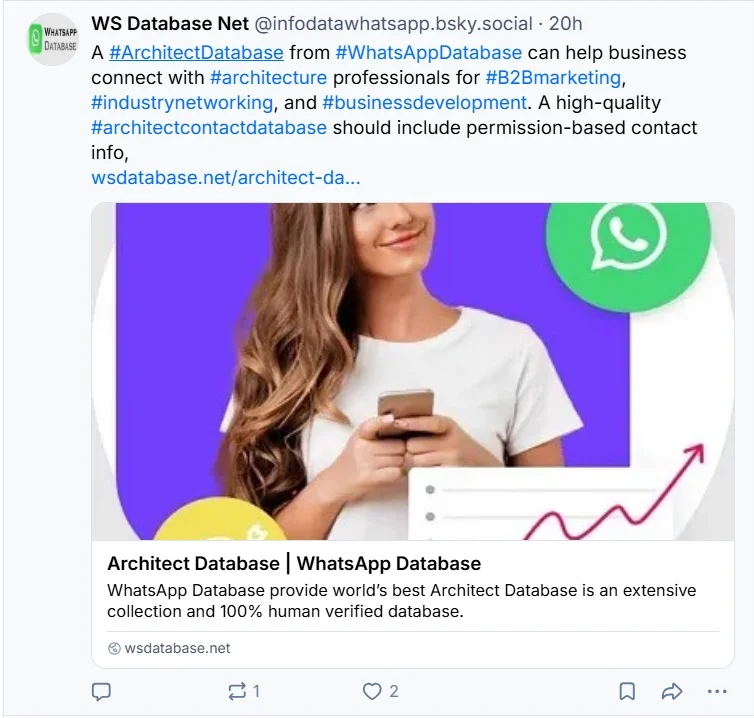
Here’s a post that checks all three boxes: specific hashtags, a complete thought on its own, and posted by WS Database Net, an account with a steady cadence.
None of this requires guessing at a hidden algorithm’s preferences the way ranking for Google or optimizing an Instagram post does. It requires understanding a specific feed’s stated purpose and writing content that genuinely belongs there.
The Bluesky Marketing Strategy in Practice
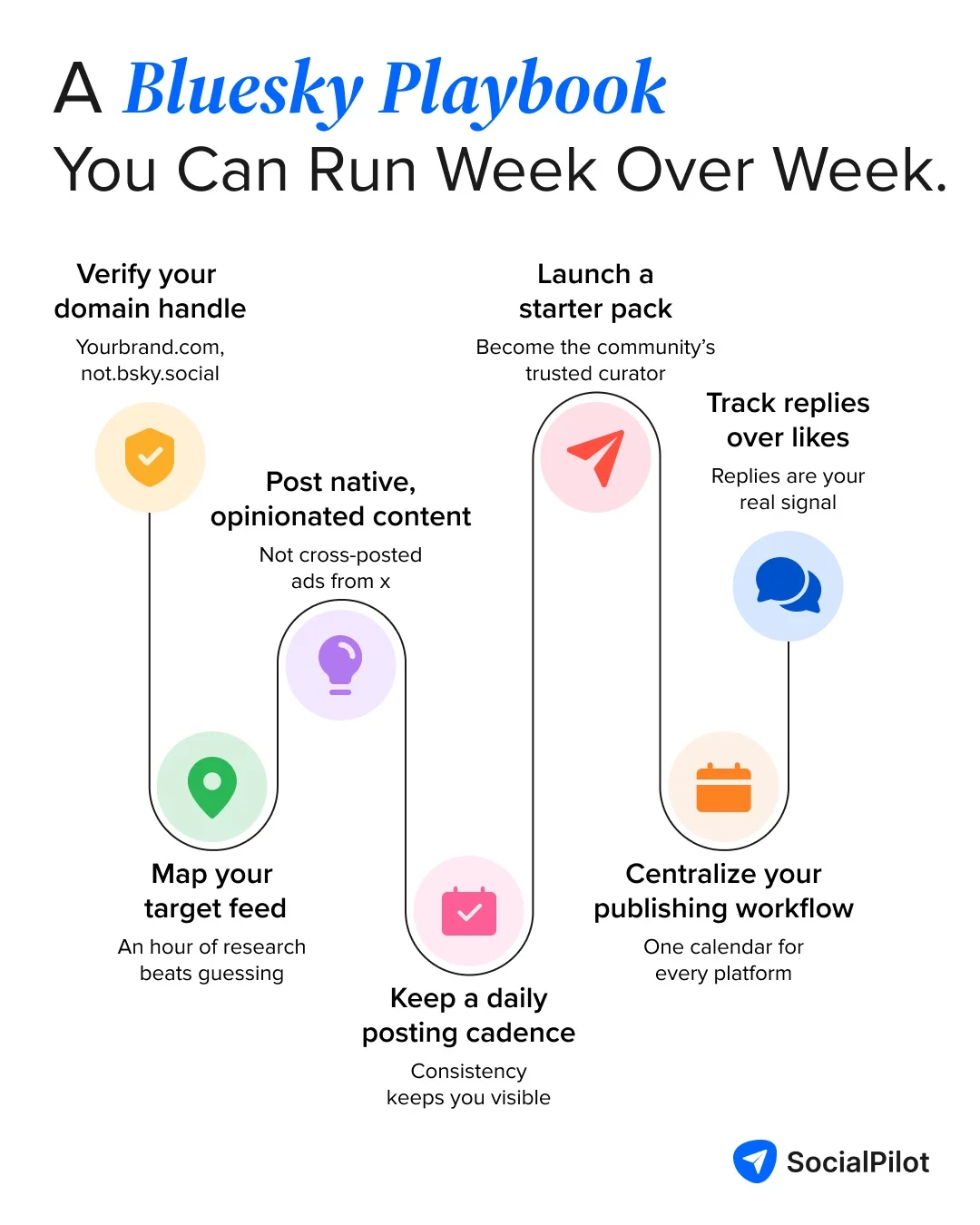
Now that you have understood the mechanics, the below strategy tells you how to actually run this week over week.
Set Up Your Profile as a Credibility Signal
Setting up Bluesky for business the right way starts before your first post. Before anything else, verify your handle to your own domain. Instead of showing up as yourbrand.bsky.social, you can set your handle to yourbrand.com through a DNS record, a process Bluesky’s own settings walk you through directly. It takes a few minutes and it is free.
The University of Utah does exactly this. Its handle is @utah.edu, not a generic .bsky.social address, so anyone who sees a post immediately knows it is the real institution.

This matters more on Bluesky than on other platforms because there is no blue checkmark economy here. A domain-verified handle is the clearest signal of legitimacy the platform offers, and for a thought leadership or B2B brand, that credibility signal does real work with a skeptical, technical audience.
Map Your Target Feeds and Communities Before You Post
Spend an hour before you post anything. Search Bluesky’s feed directory for your industry, your niche, and adjacent topics. Note which feeds are active, how often they update, and what kind of content actually appears in them.
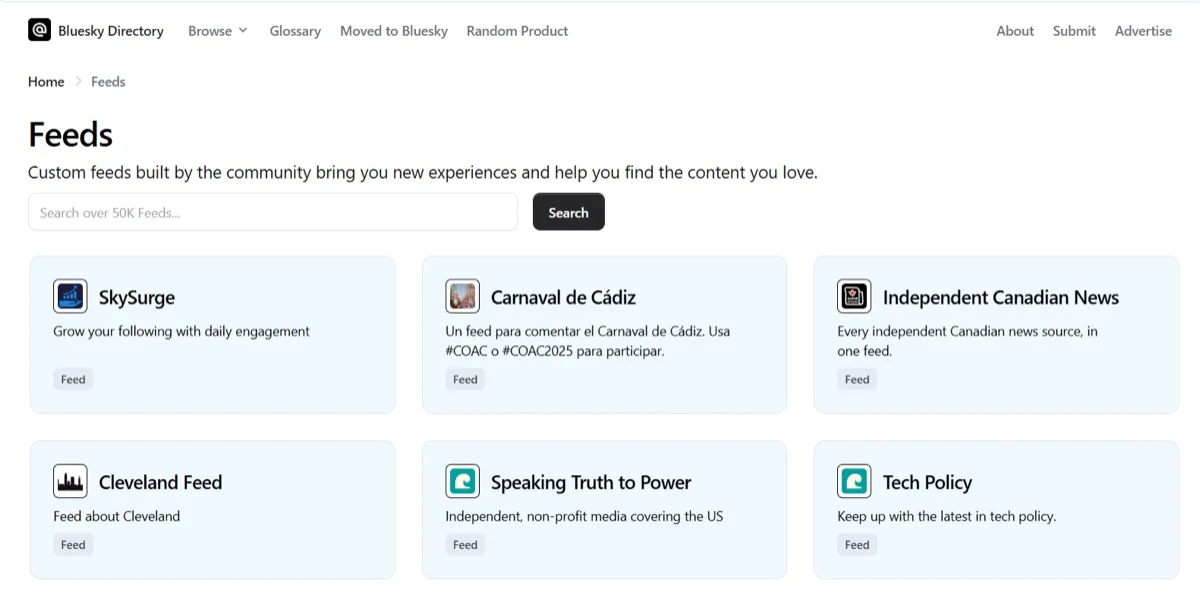
This single hour of research will tell you more about what to post than any generic content calendar template.
Creating Content That’s Native to Bluesky, Not Just Cross-Posted From X
The fastest way to get ignored, or worse, muted, on Bluesky is to pipe in the same content you post on X without adaptation. The audience here self-selected away from broadcast-style brand posting. Content that reads as an ad, even a well-designed one, gets skipped.
What works instead:
- Sharp, specific opinions on industry topics
- Direct answers to questions your audience is actually asking
- Posts that read like they came from a person who knows the subject, not a marketing calendar.
This is the heart of Bluesky organic marketing. There is no paid lever to pull if the content falls flat, so the content itself has to carry the weight.
Establish a Baseline Content Cadence
Aim for daily or near-daily posting once you commit to an account. Because the default timeline is chronological, gaps in posting mean your existing followers simply see less of you, and feeds have less recent material to surface.
Quality still outranks volume. One sharp, well-argued post beats three throwaway ones, but consistency is what keeps you visible at all.
Launch a Starter Pack: Your Community Anchor, Not a Follower Tactic
A Starter Pack is a curated, shareable bundle of accounts and feeds that anyone can create and that a new user can follow in a single tap. Most guides describe Bluesky starter packs for brands as a nice-to-have onboarding feature. That undersells what they actually do.
Building a Starter Pack of the fifteen or twenty best voices and feeds in your industry does not just get you followers. It positions your brand as the trusted curator of that community’s onboarding experience.
Every person who follows your pack encounters your brand first, in a position of authority, before they have built their own sense of who matters in the space. That is a fundamentally different role than being one more account competing for attention.
Forge & Spark, a content marketing agency, did exactly this. Its “Brands for Good” pack bundles twelve purpose-driven companies into one follow, and anyone who taps it meets Forge & Spark first, as the curator, not just another name in the group.
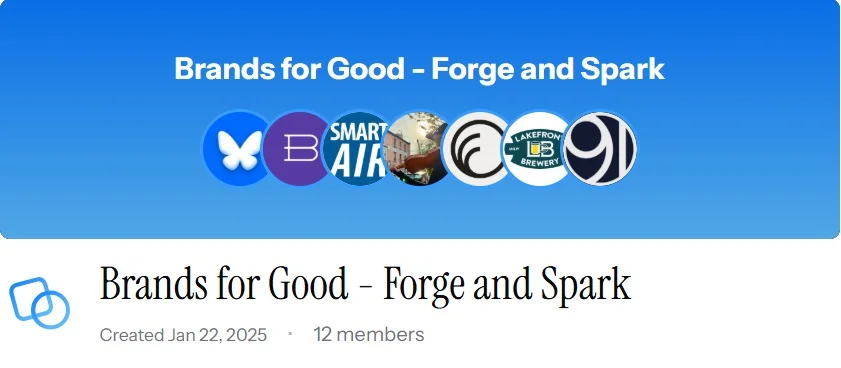
For a full walkthrough on building Bluesky Starter Packs, the process itself takes less time than most brands expect.
Fit Bluesky Into Your Multi-Channel Publishing Workflow
Bluesky has no native scheduling. Every post has to go out in real time through the app or website, which is a minor annoyance for one account and a real workflow problem once you are managing several.
If you are already juggling LinkedIn, X, and a handful of client or brand accounts, adding one more real-time-only channel can be a hassle. Tools like SocialPilot let you handle scheduling Bluesky posts from the same calendar as your other platforms, which is what actually makes daily presence realistic instead of one more app to remember to open.
Set a Realistic Weekly Time Budget for Meaningful Presence
Here is a reasonable starting allocation for one account run with intent, not as a side project:
| Task | Time per week |
| Scanning and engaging in target feeds | 45-60 min |
| Writing and posting original content | 60-90 min |
| Replying to comments and mentions | 45-60 min |
| Reviewing what worked and adjusting | 20-30 min |
| Total | 3-4 hours |
Multiply that across every additional account you manage, and the case for a shared scheduling and engagement workflow becomes obvious fast.
Track the Metrics That Tell You It’s Actually Working
Bluesky’s native analytics amount to a like, repost, and reply count on each post. However, there is no reach number, impressions dashboard, or follower-growth chart built in. The below image shows what a native analytics dashboard of Bluesky looks like:
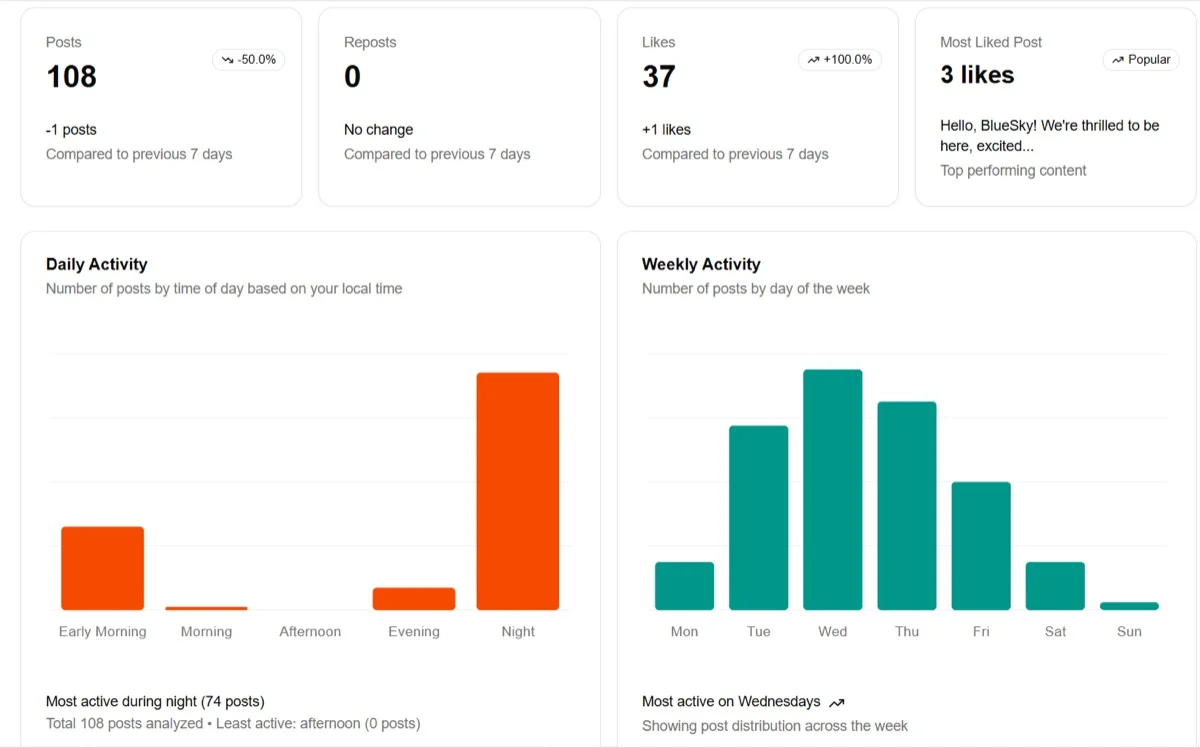
The dashboard also shows likes, replies, reposts, quotes and a link count for every post.
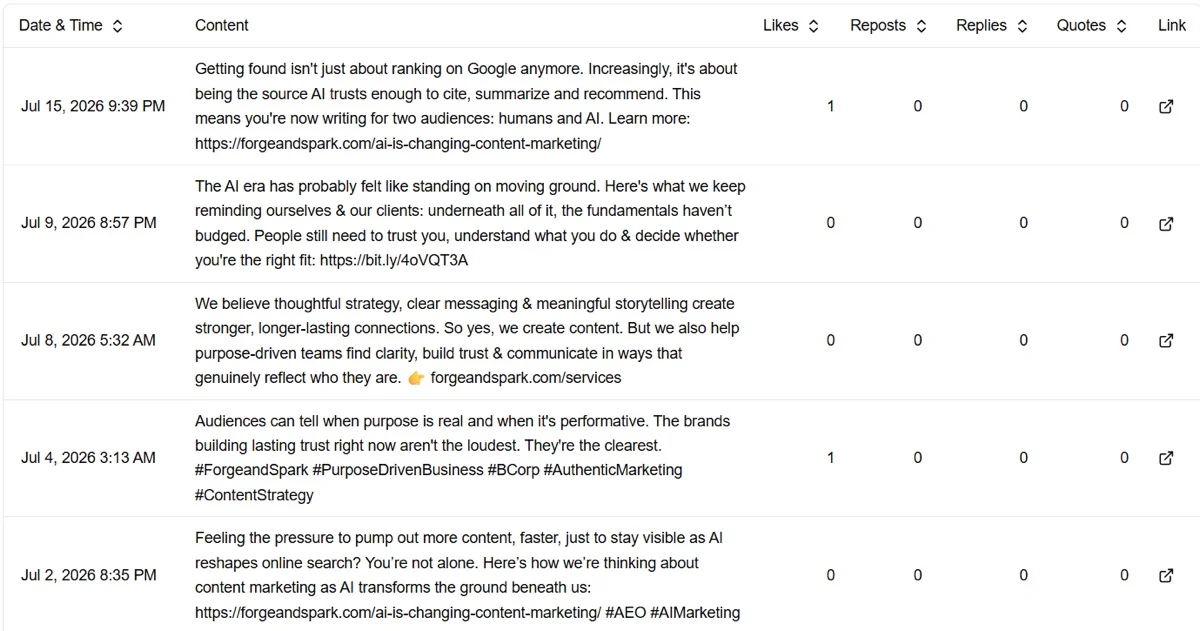
Replies are the one worth watching closest. Since there is no algorithm rewarding reach, a post that generates genuine back-and-forth is doing more for your visibility compared to a post that racks up passive likes.
Use these three numbers as a comparison tool against your own history. A post that pulls more replies than your last ten posts combined just told you something real about what your audience wants to talk about.
Track that pattern by hand for a month, even in a plain spreadsheet, and you will know exactly which topics and formats are earning genuine attention.
Which Brands Should Prioritize Bluesky (and Which Should Skip It)
You have the mechanics down now. The last question is the one that decides whether any of it is worth your time: does your brand actually belong here.
Where Bluesky Wins: Tech, Media, Policy, and Niche Community Brands
Academic migration research backs up who is actually here. A study of roughly 300,000 academic users who moved from Twitter to Bluesky found that the adoption is mostly done by brands associated with arts, humanities and social sciences. Additionally, niche and community brands, news outlets, and similar voices often prefer Bluesky over Twitter.
News outlets and publishers find a genuinely receptive audience here, since Bluesky’s user base skews toward exactly the people who read hard news daily. The New York Times runs its official presence at @nytimes.com, verified through its own domain.

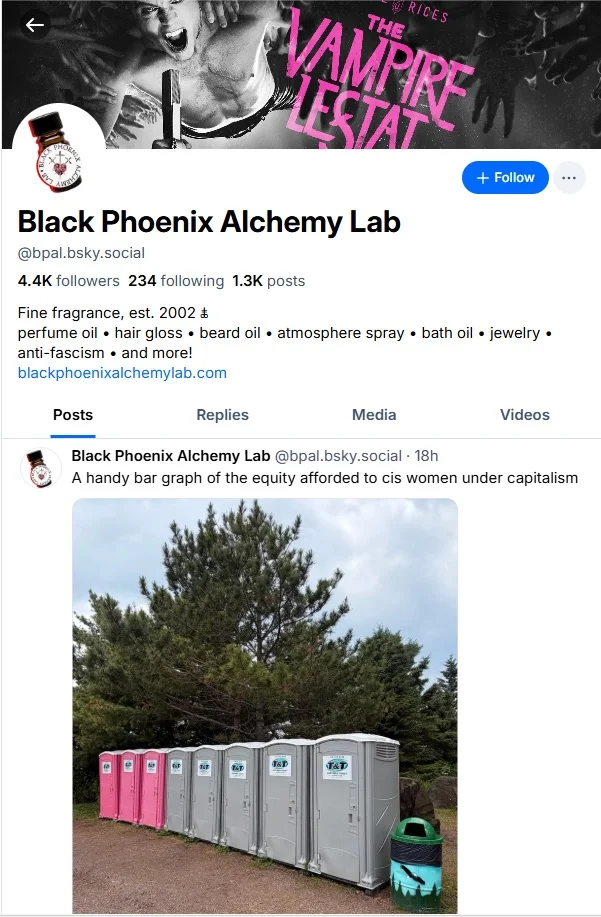
Niche and community-driven brands thrive because a specific, recognizable identity travels further here than broad appeal does. Black Phoenix Alchemy Lab, an independent fragrance brand, has built a genuinely engaged following at @bpal.bsky.social.
However, there is much lower migration among the medicine and engineering fields.
If your brand fits either of these patterns, a Bluesky brand strategy is worth building properly. The same test applies for Bluesky for small business use: the platform rewards a specific, recognizable voice over broad appeal, regardless of company size.
Where Bluesky Struggles: Mass-Market Consumer and Ad-Dependent Brands
If your growth model depends on paid targeting and broad reach, Bluesky will frustrate you. There is no ad platform to speak of. Bluesky CEO Jay Graber has said in an interview with TechCrunch that she has not ruled out some future advertising model, but she has been clear that an algorithm serving targeted ads based on user behavior is not part of the plan.
Mass-market consumer brands, and any brand whose social strategy leans on scale over depth, will likely find better returns focusing effort elsewhere for now. That is not a knock on the platform. It is simply a mismatch of audience and model, and that mismatch is worth being honest about before you commit a team’s time to it.
The Full Verdict Framework – A Go/No-Go Checklist
Score your brand against these five signals. The more boxes you check, the stronger the case for putting real time into Bluesky.
- ☐ Your audience already includes journalists, researchers, tech workers, or politically engaged users – the groups most active on Bluesky today.
- ☐ You have the bandwidth to run a new platform without pulling time or budget from channels that are already working.
- ☐ Your brand voice works in a fast, text-first, conversational feed, not one that depends on heavy visuals or short-form video.
- ☐ You’ve already seen real traffic, mentions, or engagement coming from Bluesky, not just a hunch that it might be worth trying.
- ☐ A noticeable share of your industry’s conversation, or your competitors, have already moved some presence there.
If you check three or more boxes, then your business needs a proper Bluesky strategy.
Also, your Bluesky strategy will get a lot easier once scheduling is off your plate. SocialPilot’s Bluesky scheduler lets you plan and queue Bluesky posts in advance, right alongside your other platforms, so you’re not logging into Bluesky separately just to post. And with its AI Suggested Time feature, you can schedule your posts in the best recommended slots based on when your audience actually engages.
Here’s a quick walkthrough of how it works:
Putting It Into Practice: Your First 30 Days and Next Step
Forget generic Bluesky marketing tips. Start with one account, spend a week setting it up and mapping your target feeds. Then post for 2-4 weeks daily, engage in replies and build your first Starter Pack. At the one-month mark, look at your reply quality and feed inclusion to judge whether it is working.
If you are managing this decision across more than one brand or client account, Bluesky becomes one more thing your team has to plan around, not just post to. SocialPilot’s content calendar gives you a single view of everything scheduled across every platform and client, and its approval workflows mean a new channel like Bluesky can be easily rolled out to a client account.
Ready to bring Bluesky into a workflow that already handles the rest of your accounts? Check SocialPilot’s plans and pricing and find the plan that fits your team.


 Join 55,000+ social media managers


