

Every agency says they can deliver a strong brand voice, but few actually do it well over time. You onboard the client, jot down a quick personality brief, and save it in a Google Doc. Six months later, the client complains that their Instagram captions sound like they came from another company. They are right. After three freelancers, two account managers, and an AI tool, the original voice has disappeared.
This problem is common because agencies treat brand voice as a one-time creative task instead of a system. You write it once and expect it to last, but it doesn’t. As soon as more than one person writes for the account, the voice starts to fade. It falls apart completely when clients approve content without checking if it matches the agreed standard.
This guide gives you a system. It explains how to find a brand voice even when clients can’t describe it, document it so your team actually uses it, keep it steady when AI is involved, and spot changes before the client notices.
Why Brand Voice Is Harder to Define Than Anyone Admits – Especially for Agencies
Most articles about brand voice are aimed at people inside the company, who already know their brand and just need a framework to write it down. But as an agency, you are an outsider. You are being asked to define something that lives inside another company, often in a way the client has never really thought about.
Most brand voice projects fail because there is a gap between what clients think they want and what they can actually explain.
Most clients have never really thought about their brand voice. Over the years, they have just written things, and those pieces have added up to something that feels right to them, even if they can’t explain it when asked.
When clients ask for something like “Professional but approachable,” that is not a real brief. It is a range, and every writer will interpret it differently.
A copywriter Amelie Pollak puts it plainly:
“Asking for “friendly but professional” is like asking someone to paint a picture that is “sort of blue-ish but not too blue.” You need annotated examples, not adjectives.”
Changes in brand voice often go unnoticed at first. Every new freelancer, team member, or AI draft brings small shifts that seem fine, but over time, the account can end up sounding like a completely different brand.
Brand Voice vs. Brand Tone: The Distinction That Changes How You Document Everything
Most guides that agencies give clients are really tone guides. They focus on how the brand acts in different situations, not on the core personality behind every message.
It is important to have a clear distinction between the two, because this distinction determines the structure of your documentation.
Here is a quick comparison between the two – side by side:
| Brand Voice | Brand Tone | |
| What it is | The fixed personality of the brand | How that personality sounds in a specific context |
| Does it change? | No – stays constant across all channels and content types | Yes – adjusts based on the situation |
| Set by | Defined once in the voice document | Applied per scenario, platform, or content type |
| Example | “We are direct, plain-spoken, and never oversell” | “In a complaint reply, we are calm and solution-focused. In a launch post, we are energetic.” |
| Analogy | A person’s character | A person’s mood in a given moment |
| What happens without it | Every writer builds a different version of the brand from scratch | The brand sounds inconsistent across situations even when the traits are defined |
Voice: The Fixed Personality That Never Changes
Brand voice is the steady personality a brand uses in every message, no matter the channel, topic, or writer. It is like a person’s character. People do not become someone else at a job interview, a wedding, or during an argument. Their core personality stays the same, even if how they speak changes.
Writers should be able to spot a brand’s personality even without the logo. If a post, email, product description, and support reply all feel like they came from the same person, the voice is working. If they seem like they are from different companies, the voice is not consistent.
A useful voice trait is not just a word like “bold.” It is something like “we name problems directly, including our own mistakes.” The first gives writers no real guidance. The second tells them exactly how to write about a product failure.
Voice should be specific. Mailchimp’s content style guide is a good example. It uses phrases like “Fun but not silly,” “Smart but not academic,” and “Confident but not cocky.” These help writers know both the range and the limits of the brand’s voice.
Tone: How to Document It Across Five Real Scenarios
Brand tone is the situational adjustment of brand voice. Voice is who you are. Tone is how you show up in a specific context.
A brand can be energetic during a product launch and more careful during a crisis. The personality stays the same, but the way it is expressed changes.
Before you document tone across scenarios, you need to define it first. A few ways to get there:
- Use the voice traits as a guide. If the trait is “direct, not blunt,” then replies to complaints should be calm and focused on solutions, never cold or overly apologetic.
- Ask the client: Who do you want to sound like? Not copy – reference. It tells you where on the formal-casual axis they want to sit.
- Let your relationship with the audience guide you. A B2B SaaS brand speaking to technical buyers needs a different tone than a DTC brand talking to new customers. Always let your audience shape your tone.
- Check what already works. Find the five top-performing posts and see what tone they use. This pattern usually shows the brand’s true voice at its best.
- Be clear about what tone is not. For each tone, name what happens if you go too far. For example, “Energetic” can turn into “desperate,” and “Casual” can become “unprofessional” if not kept in check.
Most voice documents make the mistake of describing tone in vague terms, like “we are warm in customer interactions and energetic in promotional content.” This is not helpful when you are in a hurry. Instead, document tone for specific, real scenarios that every social media account faces.
Here is how you can document tone for different scenarios:
| Scenario & Tone Goal | ❌ Wrong | ✅ Right |
| 📣 Product Announcement (Be Energetic, not overselling) | “We are thrilled beyond measure to announce the most game-changing product we have ever released.” | “We just shipped something we’ve been working on for months. Here’s what it does and why we built it.” |
| 💬 Customer Complaint – (Calm, direct, takes ownership) | “We are so sorry to hear you are having trouble! We totally understand how frustrating that must be!” | “That’s a real problem and we want to fix it. Send us your order number and we’ll sort this out today.” |
| 🔥 Trending Moment – (Aware, natural, never forced) | “Wow, has anyone been watching what is happening in the [trending topic] space? So wild!” | “Direct, specific comment that ties naturally to what the brand does or believes.” |
| ⚠️ Crisis / Mistake – (Honest, specific, solution-focused) | “We are working diligently to address this issue and apologize for any inconvenience caused.” | “Here’s what went wrong, what we did about it, and what we changed so it doesn’t happen again.” |
| 🤝 Community Engagement – (Human, conversational, not performative) | “We LOVE hearing from our amazing community! You are all incredible!” | “Good question. Here’s what we think – and we’d genuinely love to know what you did here.” |
How to Define Brand Voice From Scratch: The Five-Step Process
Creating a brand voice for a client is not just about creativity; it is about research. Your job is to find what already exists, name it clearly, and document it in a way that lasts through the agency-client relationship.
The Voice Extraction Framework below will help you create a useful voice document, not just a list of adjectives that no one uses.
Step 1 – Audit What Already Exists (Even If It’s Inconsistent)
Pull twenty to thirty pieces of existing content across all active channels. Include social posts, email subject lines, website copy, and even customer support replies. You are not looking for what is good. You are looking for what is intentional versus accidental.
Go through the content and mark the phrases, sentence structures, and vocabulary that appear consistently without anyone having planned them. These involuntary patterns are often the truest expression of the brand’s actual voice because nobody performed them for an audience. They just came naturally.
Also, note what is inconsistent – not to criticize, but to decide which version to keep. If the website is formal and social posts are casual, you need to choose which style to stick with. It is not about fixing mistakes, but making a clear choice.
At the end of this step, you will have a one-page voice fingerprint: five to ten recurring patterns, each with a real example from your audit. This is not the final voice guide, but the raw material for it. Sharing this with the client usually leads to a much more focused conversation than any questionnaire.
For teams building toward a full documentation system, read our guide on building a social media style guide after this step to understand where brand voice sits within a broader content governance framework.
Step 2 — Map Competitor Voice to Find the White Space
Brand voice is about positioning. If every competitor is “helpful and approachable,” using those same traits will make your brand blend in, no matter how well you write. The content could be great but still sound like everyone else.
The mapping exercise: place three to five competitors on a simple two-by-two grid. Put “formal to casual” on one axis and “serious to playful” on the other. Plot each competitor based on how they actually communicate on social, not how they describe themselves. Then identify the open quadrants and ask whether the target audience is currently being served by anyone in that space.
This exercise helps you make a strategic choice instead of just following the crowd. It also gives you something clear to show the client.
For instance, Wendy uses a combative, sarcastic voice on X/Twitter because the brand has spent years building an audience that expects and wants that specific energy.
If you have flaming locks of auburn hair and a face card that never declines, we have the perfect contest for you 😉
Wendy’s Look-Alike Contest is 3:30-5:30pm May 26th at Seaport Square in NYC! pic.twitter.com/sEUa15Db7G— Wendy’s (@Wendys) May 18, 2026
If a regional fast-casual chain tries to copy that style right away, it will mostly confuse people. Find the open space in the market, then make sure your brand can actually keep up that choice.
Step 3 – Define 3–5 Traits With Do/Avoid Examples
This is the main part of the voice document. Everything else supports it. The traits you define here should be clear enough that a new writer can read them and create on-brand content without needing to ask questions.
If the answer is no, the trait is not specific enough.
The format for each trait has three components:
- Use a specific phrase, not just one word. For example, “Direct” is not enough. “Direct, not blunt” is better because it shows writers where the line is.
- A one-sentence definition of what a given trait means for a specific brand. For instance, how to be direct when responding to a question, writing a caption, or posting a mistake.
- Two annotated examples. One that embodies the trait correctly, one that violates it in the most common way.
Limit the list to five traits, since that is about as many as people can remember while writing.
For instance, in Slack’s brand voice documentation they describe their voice as “clear, concise, and human, like a friendly, intelligent coworker.” That is a one-sentence trait definition that tells their writers something specific. Not what they can see on the wall, but what they can use when they are writing.
Step 4 – Build the Voice Document and Get It Signed Off
How you format the voice document affects whether people use it, not just how good it is. Writers will not open a thirty-page PDF when they need to write quickly, but they will use a one-page reference card.
Build two versions.
The first is a one-page quick-reference sheet: three to five traits, the calibrated name for each, a one-sentence definition, and two examples. This is what goes into every new contributor onboarding pack and what stays open in a browser tab while someone is writing.
The second is a full annotated version with all the context: how the traits were identified, what the audit found, what the competitor map showed, and how each trait applies in the five tone scenarios from Section 2. This is what gets used in onboarding sessions and voice reviews, not in daily writing.
Step 5 – Adapt It Per Platform Before Anyone Starts Writing
If your voice document does not explain how to adapt for each platform, writers will ignore it. They know LinkedIn and TikTok need different styles, and they are right. Telling them to “be direct and conversational” is not helpful unless you show what that means for each platform.
Adapting for each platform does not mean changing the voice. It means showing how each trait comes across in different channels.
Here is what that looks like in practice for a brand whose voice is “direct and plain-spoken”:
| Platform | How “Direct and plain-spoken” expresses |
| Structured bullets. One clear idea per post. No jargon. Ends with a genuine question or observation, not a call to action. | |
| Single strong visual. Caption under 100 words. First line does the heavy lifting. No hashtag stacking. | |
| TikTok | First three seconds state the point. Conversational first-person. Reacts to real moments rather than announcing. |
| X / Twitter | Under 200 characters when possible. Responds rather than broadcasts. States the opinion directly without hedging. |
| Threads | More casual and reflective than X. Shares the thought behind the post, not just the post itself. |
This table is your quick guide for each channel. It has one column for every active platform and is added to the main voice document.
Watch the video below to learn more about how to develop a brand’s voice from scratch.
Keeping Brand Voice Consistent When AI Is in Your Workflow
AI is already part of agency workflows. Most social media content now uses AI at some point, whether for drafting, rephrasing, creating captions, or brainstorming ideas. The real question is not if you should use AI, but if your brand voice can survive it.
A 2025 Brandwatch survey found that 71% of marketers say using AI without losing the human touch is their biggest challenge. So, how can agencies maintain their client’s brand voices when using AI? Let’s find out.
Why AI Couldn’t Keep a Consistent Voice and What That Really Costs You
When a new writer reads a brand voice guide, they form a mental picture of the brand and use it to make writing choices. AI, without clear voice instructions, has no mental model. It creates language that is meant for everyone, so it ends up fitting no one perfectly.
For clients who have built a recognizable voice over the years, this is a real cost. Audiences who have been reading a consistent brand voice will notice the shift even if they cannot name it. Multiple agency clients have complained about losing their brand voice on Reddit. [source: Reddit thread]
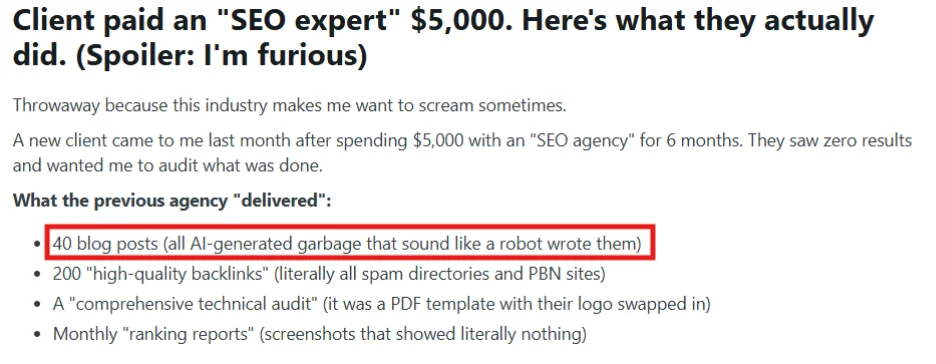
Even if these posts get good results, your client’s account will lose its brand feel and start to seem like just a content calendar. This change happens slowly and is hard to fix once it starts.
Here is a before-and-after using a direct, plain-spoken brand.
AI output without voice instructions: “Exciting news! We are thrilled to announce that our latest feature is now available to all users. This powerful addition will help you streamline your workflow and achieve more in less time.”
Same prompt with voice-loaded instructions: “We shipped the thing. [Feature name] is live for everyone today. Here is what it does: [specific function in one sentence]. If you have been waiting for this, you can turn it on in settings right now.”
The real difference is not style, but specificity. The first example sounds like a press release. The second sounds like someone who understands both the product and the audience.
Building Per-Client AI Slash Commands
Voice-loading often fails because it depends on each writer remembering to add instructions. One writer does it well, another forgets, and the results change based on the person, not the brand.
The fix is a saved slash command per client. Something like /client-1 that any writer calls at the start of a session. It loads everything automatically: who the brand is, how it speaks, what it never says, and how tone shifts across post types.
What goes into each client’s slash command:
- A one-sentence character description: who this brand is if it were a person
- The 3–5 voice traits, written as explicit do/don’t instructions – not adjectives
- A banned phrases list: words and expressions this brand never uses
- Tone instructions per post type: launches, complaints, community posts, awareness content
- 2–3 example lines pulled from the brand’s best-performing posts
Once it is set up, any writer – full-time, freelance, or new – can use the command and start drafting from the same starting point. The voice stays consistent because of the system, not the individual writer.
To dive deeper into this, read our guide on how to automate entire social media management with Claude. Also, you can update your client’s slash commands whenever the voice document changes.
How to Make Sure Writers Actually Use the Voice Document
Most voice guides are made once, saved in a shared drive, and then forgotten. After three months, writers rely on memory. The guide needs to be part of the process at two key points: before a new writer publishes anything, and before content goes live after client review.
How to Vet a New Writer Before They Publish
Give every new writer this test before they publish anything. It takes under thirty minutes.
Hand them the one-page voice reference and one real example post. Ask them to produce two pieces: one written in the brand’s voice, one that deliberately breaks it. Then ask them to write two to three sentences explaining the choices they made in each version.
The explanation is the real test. If a writer can write well but cannot explain their voice choices, they will lose consistency under pressure. This test helps you catch that before the client notices.
What to Do When Clients Keep Approving Off-Brand Content
Repeated off-brand approvals usually come down to one of three causes:
- The voice document does not reflect what the client actually wants. They signed off without pushing back. Fix it with a thirty-minute session, where you ask them for two posts they are proud of and two they privately dislike.
- Sometimes the wrong person is approving content. If this happens, give the weekly approver a one-page checklist with five things to review before they approve anything.
- If one off-brand post does well and the client wants more, show them a six-month overview instead of single posts. What seems fine one post at a time becomes clear drift when you look at the bigger picture.
Building approval workflows directly into your publishing process means every post goes through a voice checkpoint before it reaches the client, reducing the frequency of drift-by-approval in the first place.
Brand Voice in the Wild: Three Case Studies
The following cases are not general “this brand does voice well” summaries. Each one is chosen to teach a specific, actionable lesson on how agencies should think about building and protecting clients’ brand voice.
Duolingo: When Distinctive Voice Becomes the Product
Duolingo‘s brand voice is so clear that people can easily parody it. That is the goal. If a voice cannot be imitated, it is not memorable enough.
The February 2025 “Duo Death” campaign is the proof. Duolingo killed its mascot publicly, starting with an app icon update. It generated 1.7 billion impressions and sparked twice the social conversation of that year’s top Super Bowl ads. That only works when an audience already knows exactly who the character is.
What agencies can learn: Duolingo’s brand voice guidelines use traits like “expressive, playful, embracing, and worldly.” Each one is clear enough for writers to use as a check. Most agency voice documents are not this specific. That is the standard to aim for.
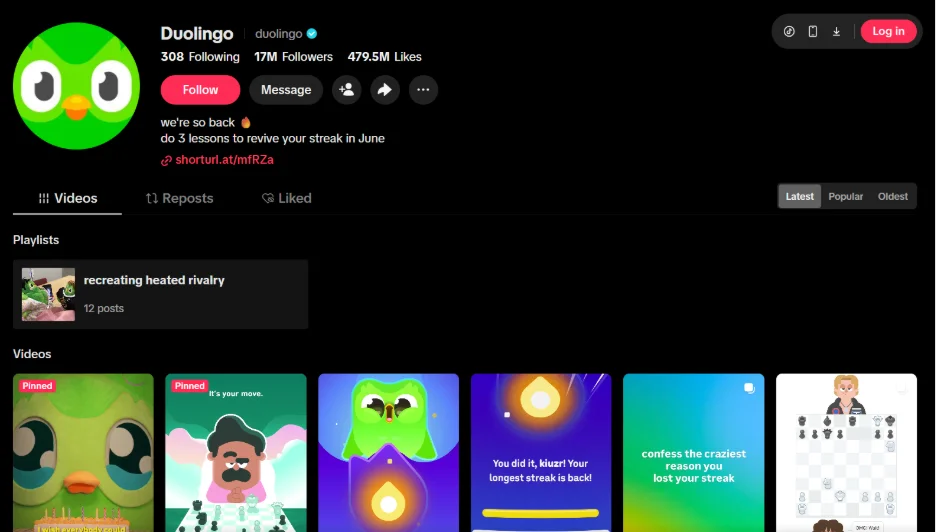
To keep this level of consistency, agencies need creative freedom in their contracts. If clients approve every post, the voice will become too safe. A unique voice needs space to take risks. Duolingo’s TikTok is a good example of this.
The branch now exists on the remote. Let me fix the commit signatures and push.
McDonald’s: When Borrowing a Competitor’s Tone Backfires
McDonald’s real brand voice is warm, familiar, and focused on being accessible. “I’m Lovin’ It” is no accident – it shows the brand’s long-term effort to be a feel-good, welcoming place. This voice works because it matches the audience: families, kids, and late-night customers.
The problem started when McDonald’s tried to copy Wendy’s style. Wendy’s combative tone on X works because their audience expects it. They have built that relationship over years with roasts, sarcasm, and Twitter feuds.
When McDonald’s CEO chrisk_mcd used the same sarcastic tone in a video, it did not work. The writing was not the problem—the audience was not used to that style from McDonald’s.
Your brand tone should match the relationship you already have with your audience, not the one you wish you had.
Agencies should ask before changing tone: Has this brand built the kind of audience relationship that makes this tone believable? If not, it is better to have an honest talk than to try a risky content experiment. Clients who want to sound like a competitor need to know that tone is earned over time, not just copied.
Intercom: Voice Consistency Across a Growing Customer-Facing Team
Intercom defines its brand voice in four words: conversational, clear, confident, and delightful. They also explicitly define what it is not – goofy, oversimplified, flashy, or flowery. That “what it is not” list is what makes the document usable. Writers do not have to guess where the edges are.
As the team grew, they built a framework called PREACH to maintain a consistent tone across every customer interaction: Proud, Responsible, Empathetic, Articulate, Concise, Human. Every new support and content team member is onboarded against this framework.
They backed it with process: a peer-review system in which team members rate each other’s conversations on quality and tone. Drift gets caught internally before it reaches the customer.
Intercom’s consistency does not come from just a well-written document. It comes from having a clear framework, a list of what the voice is not, and a regular review process. This is the standard for any client with more than two content creators.
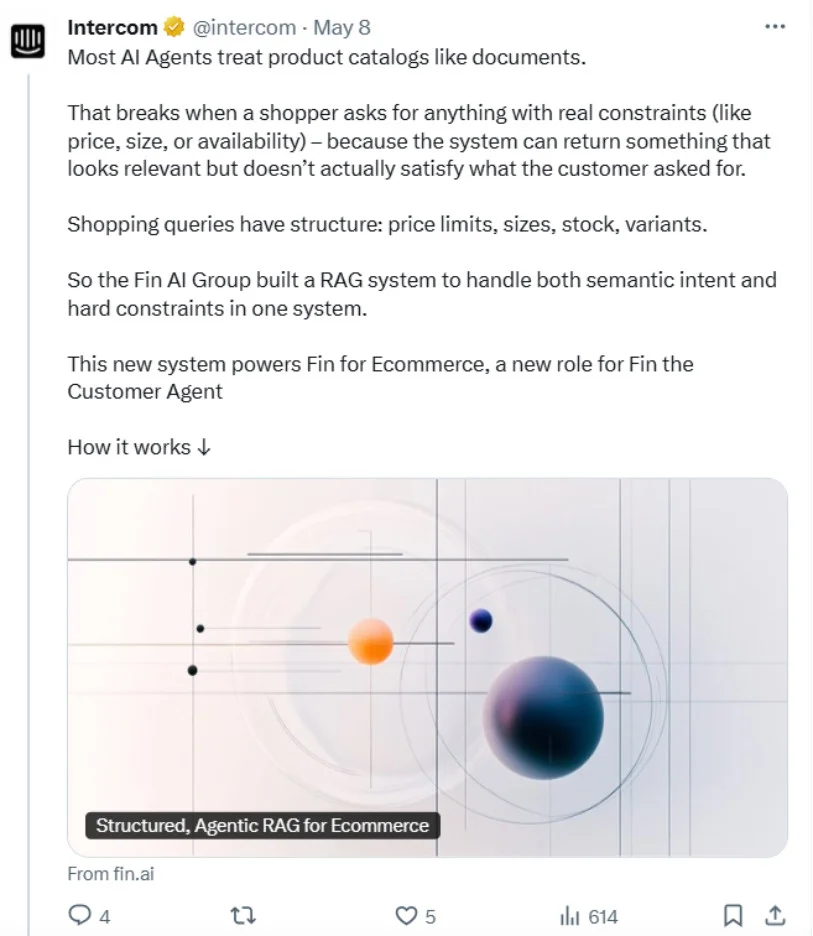
On their X/Twitter feed – the tone they use for posts, replies, announcements, and community engagement is consistent enough that you could remove the logo and still recognize the brand.
Voice Drift: How to Detect It, Diagnose It, and Recover
Voice drift is not a failure – it is inevitable when multiple people write for the same account over time. The failure is not catching it early. The agency that audits for drift as a standard service is the one clients renew with, because the account always sounds like them without them knowing why.
The Observable Signals That Voice Has Drifted
These are the signals to watch for. Each one is specific enough that you can check for it in a content review without needing specialized tools.
- Longtime followers say the brand “feels different lately.” This feedback is vague and not tied to any specific post.
- Client edits spike on copy that used to go through clean.
- New words and phrases appear in recent posts that are not in the voice document.
- Reply tone diverges from organic content tone.
- AI drafts begin to “sound better” than the edited versions.
The 90-Minute Quarterly Audit
Take the 30 most recent posts and rate each one for every voice trait on a scale from 1 to 3. Find the average score for each trait. The traits with the lowest scores show where drift has happened.
For each trait with a low score, find three strong and three weak examples. Write a short paragraph explaining what the drift looks like and what the standard should be. Share this with all contributors so they understand what changed.
The Five Drift Triggers and the Fix for Each
Every agency hits these. Knowing which trigger caused the drift cuts the recovery time in half.
| Trigger | What Happened | The Fix |
| Team turnover | New writer imported their default voice without internalizing the document | Run the onboarding test before they publish – not after |
| Algorithm shift | Team chased a new format that performs well but does not fit the voice | Audit which formats are causing drift; drop the ones that cannot be adapted |
| Client side-channel instructions | Verbal or Slack feedback contradicted the agreed standard and compounded quietly | All directional voice feedback goes through the account lead only |
| AI without voice-loading | Someone started drafting with AI without setting up the per-client slash command | Set it up retroactively; run the quarterly audit to see how far drift has traveled |
| Performance pressure | An off-brand post performed well and the team started imitating it | Show the client a side-by-side of the spike vs. consistent signal; ask which one they are building toward |
Most voice drift happens at two points: when content is being drafted and when it is being approved. SocialPilot addresses both.
During drafting, SocialPilot’s AI Pilot lets you create and rewrite content with built-in tone and style controls. Set it up for each client so every draft starts with the right voice.
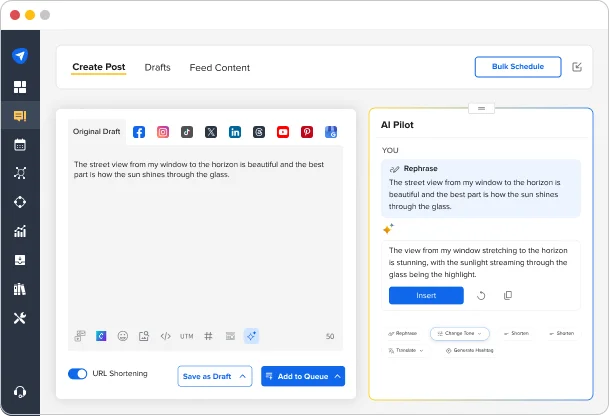
At the approval stage, SocialPilot’s content approval workflows let agencies add a dedicated approver to the publishing process – someone whose job at that step is specifically to check voice before anything goes live. The checkpoint is only as strong as the person holding it, but having a named step in the workflow makes voice review a requirement, not an afterthought.
Together, they turn voice consistency from something you hope for into something you can actually build into the way your team works every day.
Brand Voice Is an Agency’s Most Undervalued Retention Tool
Most agencies see brand voice as a one-time deliverable – something to finish during onboarding and then forget. The best agencies build systems for extraction, documentation, AI use, and drift checks. This is what keeps clients coming back instead of leaving over “inconsistent quality.”
Everything in this guide is meant to be repeatable. The Voice Extraction Framework works for any client, industry, or team size. The quarterly audit can be done in one session. The writer onboarding test takes thirty minutes. You do not need a brand strategist – just a clear process and the discipline to follow it.
The approval step is where brand voice is either kept or lost. Add a checkpoint here, and consistency becomes part of the process, not just the responsibility of whoever is writing that week.
If you are managing multiple clients and want to build that checkpoint into your publishing workflow, check out SocialPilot’s plans and pricing.





 Join 55,000+ social media managers


