
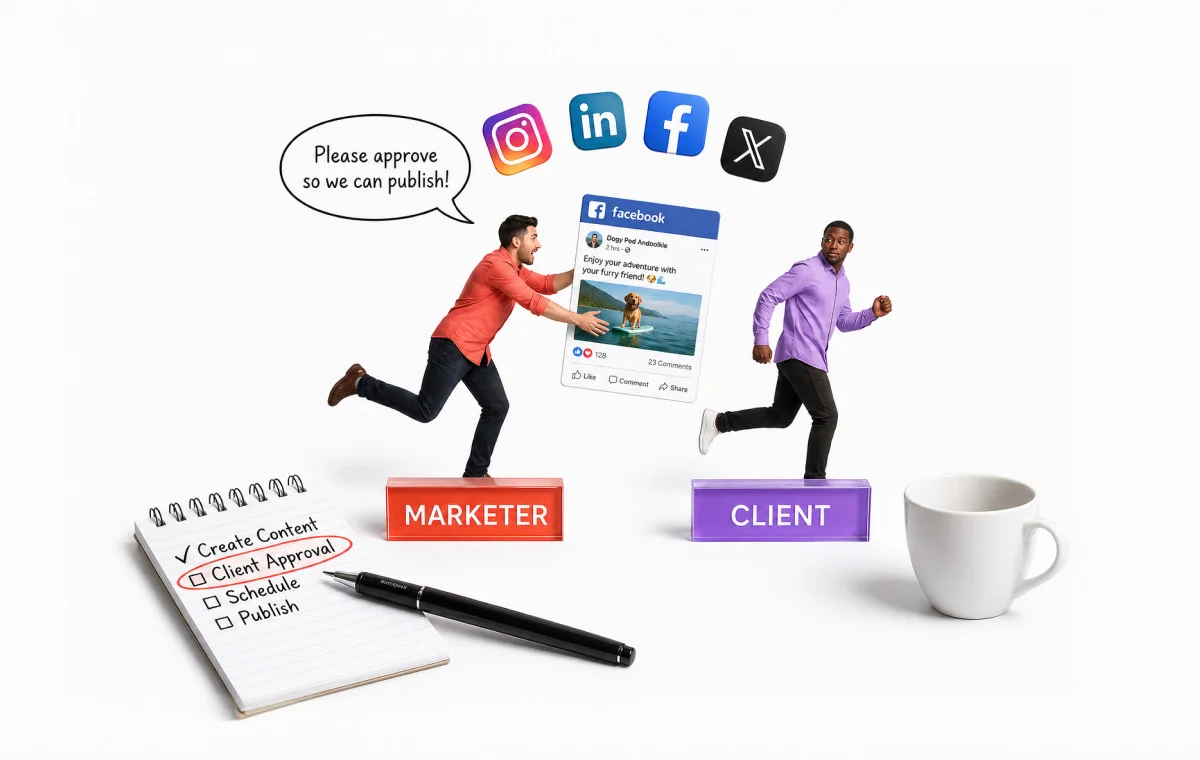
You emailed the draft to a client on Monday and waited three days before following up on Thursday. You texted again Friday morning. Now it’s Sunday evening, and you’re writing your third follow-up email. The post was supposed to go live yesterday.
You might think this is just a client problem. Maybe they’re bad at checking email, too busy, or don’t take social media seriously. But agencies of all sizes deal with this issue.
We’ve seen many discussions where agency owners and social media managers talk about this same problem.
Most agencies assume it’s a client problem, but the real issue is the process. If you send a request without a deadline, make it hard to respond, and there’s no consequence for silence, it’s no surprise the request gets ignored.
According to a Ziflow survey of over 500 marketers, conducted with the American Marketing Association, 65% of marketers lose more than a day each week chasing feedback.
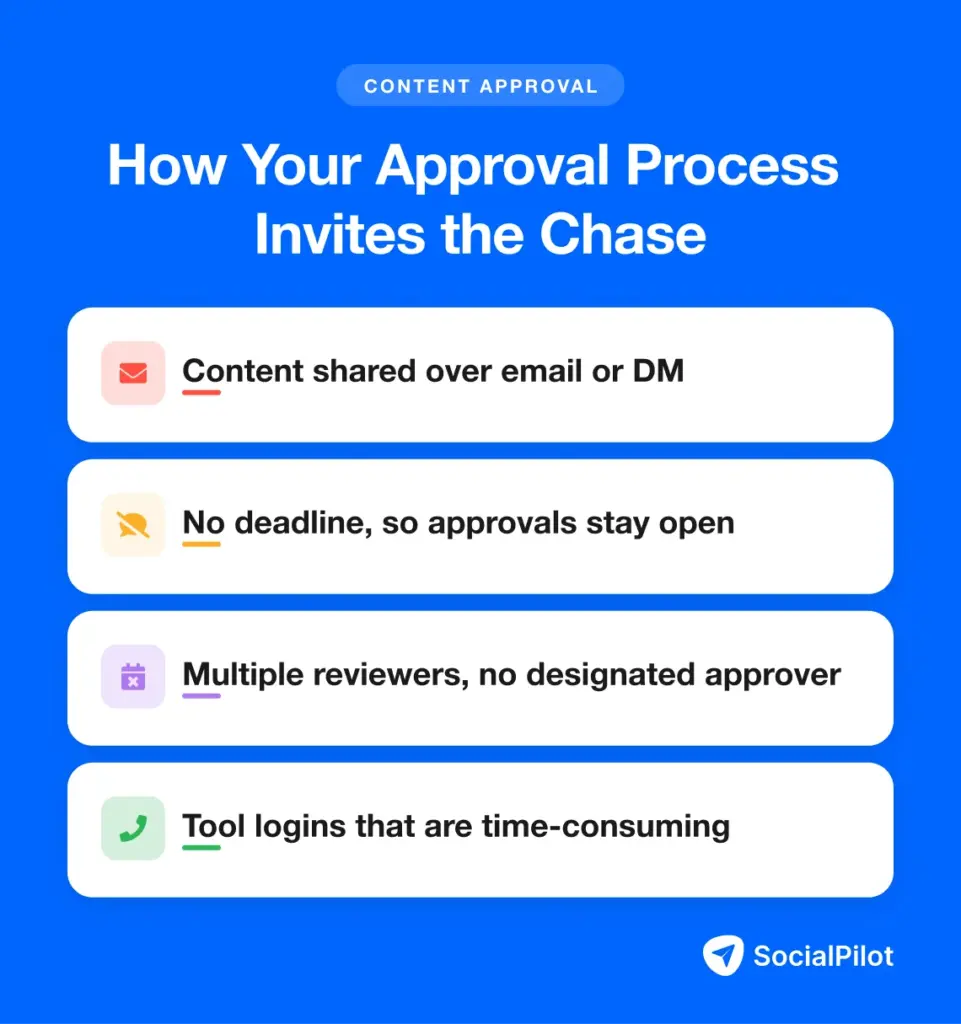
How Your Process Invites the Chase
Do you remember the last time you waited for a client to approve something. Did you send an email with a draft, a Slack message with a Google Drive link, or maybe a WhatsApp message with a screenshot?
That’s the real problem, not the client.
You draft the post and send it by email. The client replies in an old thread, giving feedback on the wrong version. Your designer updates the post and shares it in Slack. Then a colleague, copied on an earlier email, replies with another change. You end up scheduling what you think is the approved version.
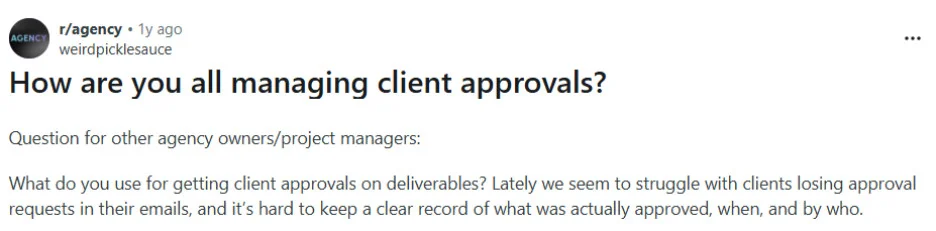
Many agencies struggle with this approval loop, where approvals are scattered across emails, Slack, and WhatsApp. As this thread mentions, your clients will eventually lose your approval request in their mailboxes.
This happens when there’s no single place where a post lives, gets reviewed, and gets approved. Feedback arrives through whatever channel the client happens to be on, and nobody documents the final call.
The cost sits at 35–45 minutes per post in approval overhead: drafting the handoff message, following up when it goes quiet, finding the reply buried in the wrong thread, reconciling the feedback, and confirming which version is actually approved.
At 20 posts a week across 15 clients, that math becomes a job inside your job.
Broken process 2: No deadline, so the approval stays open indefinitely
If you send content for approval without a deadline, you’re just making a request, not setting an expectation.
The client replies four days later and expects you to adjust your publishing calendar. Now, the post about a trending topic is outdated, and the campaign launch is delayed. When you explain the slot has passed, the client doesn’t get it. From their point of view, they responded.
“If you wait ten days to push out a trend-driven asset because someone’s still reviewing the phrasing, that post may as well have never existed.”
— Swydo’s guide to agency approval workflows.
If there’s no set approval window, the client ends up controlling your schedule. A request without a deadline is just another task on their list, with no reason to act quickly.
Broken process 3: Multiple stakeholders, no designated approver
You add the marketing coordinator as an approver. Then the founder wants to review everything. The office manager shares thoughts on brand voice. Now three people get the request, but none of them knows they’re supposed to give final approval.
The coordinator sends edits. The founder has different edits. The office manager flags something the others didn’t mention. You revise and resubmit. The cycle repeats.
When everyone can comment but no one is responsible, approval turns into a negotiation. The post stalls because no one has the authority to say it’s finished. You end up managing the group, which makes you the bottleneck, not the client.
Broken process 4: The client has to log in to a tool they don’t use
You set up an approval system and send the client an invite. They ignore it and text you instead. You handle the approval informally just to keep things moving.
As this thread puts it, the moment your client experiences friction, approvals break.

The approvals must happen on a tool, but most of the time, they happen on texts and emails. This leaves you without an audit trail or a record of what was approved, and nothing to show when a client claims they never signed off on a caption weeks later.
Login hassles quietly ruin agency approval portals. If clients have to remember a password for a site they rarely visit, they probably won’t bother and will just text you instead.
Why It Was Working – Until It Wasn’t
None of this happened because of a single bad decision – it just built up over time.
Emails, WhatsApp, and quick approval texts worked when you only had three clients. No one changed the process because it seemed fine.
Here’s the math that explains why.
Every post needs approval before it goes live. If you write three posts per client each week across four social channels, that’s 12 approvals per client, per week. Handling 36 approvals from three clients is manageable. But chasing 240 from 20 clients gets insane.
If each approval takes about five minutes – including drafting the request, sending reminders, and confirming the right version – the time adds up quickly:
| Clients | Approvals/week | Time per approval | Hours lost weekly | Hours lost monthly |
| 3 | 36 | 5 min | 3 hrs | 12 hrs |
| 10 | 120 | 5 min | 10 hrs | 40 hrs |
| 20 | 240 | 5 min | 20 hrs | 80 hrs |
With 20 clients, your team spends 20 hours a week – half the workweek – just managing approvals.
At $50 an hour, that’s $4,000 lost each month—almost $48,000 a year. The loss isn’t from slow clients, but from a process that can’t handle this scale.
This is why agencies with 15–20 clients don’t just feel busy — they feel like they’re drowning.
Industry analysis from Apaya puts the real-world communication overhead at 5–10 hours per week for a 20-client agency – the lower end because some clients may respond quickly, and some agencies have automated the approval process.
Structural Fix Required for These 4 Broken Processes
When agencies don’t get timely approvals, their first instinct is to send a more polite follow-up or try a different channel hoping the client will respond.
None of these touches the root cause. The polite follow-up is still a request with no deadline. The new channel adds to an already scattered trail. The complex portal gets abandoned after the first login attempt.
What actually works is making each failure mode structurally impossible.
1. Tie feedback directly to the post
Stop sending content by email and gathering feedback from different places. All feedback – edits, questions, approvals – should stay with the post itself, not in a separate thread.
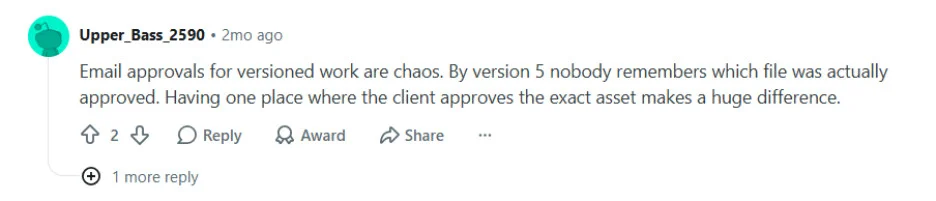
As this thread rightly points out, email approvals can be a total chaos.
When agencies ask for feedback on tools, comments are right next to the content, so there is no version history, and the final approved draft appears in the same thread. Nobody has to chase a reply or dig through email to confirm what was actually signed off.
2. Set a 48-hour approval window and enforce it
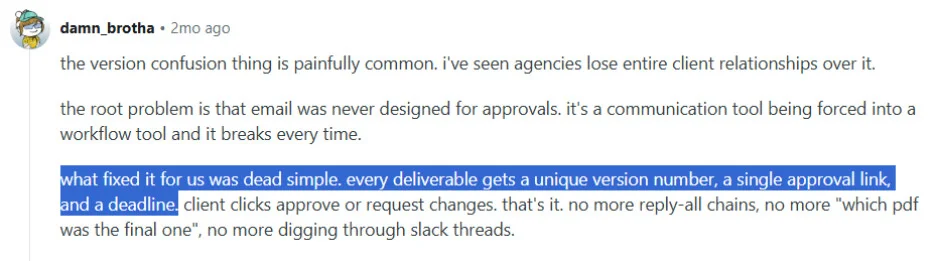
Every approval request needs a deadline. Not a suggestion. As this thread mentions, every deliverable must include a single approval link and a 48-hour deadline.
If the decision is not made by the client during that time, the post must be published, postponed, or flagged, depending on the rules set during onboarding.
This change can be created with a tool that turns a simple request into a real process. Clients stop seeing it as optional when they know there’s a consequence for not responding.
3. Designate one approver per account
At onboarding, get one person on the client side with sign-off authority. Not a committee, just one person. As the below thread mentions, agencies often juggle multiple pieces of feedback coming from different people.
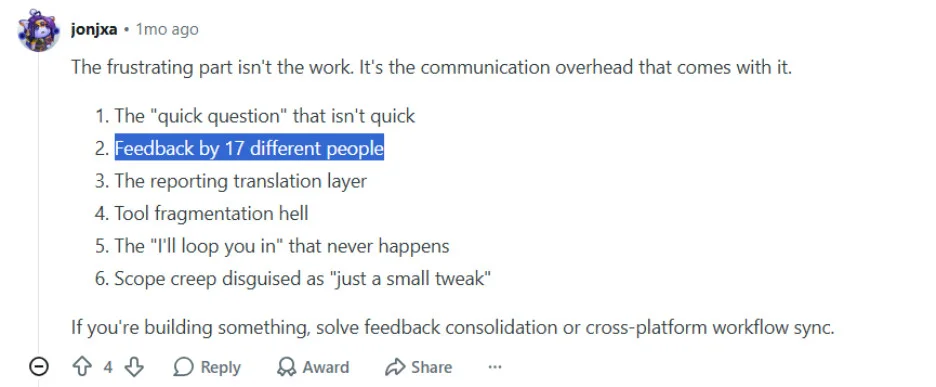
To avoid this, make sure there is one designated approver who closes the loop.
This ends the committee dynamic in which three people give conflicting feedback, and no one has final authority. When one person is accountable, the approval moves.
4. Remove the login requirement entirely
We at SocialPilot have heard this from enough agencies to recognize the pattern – their approvals are often scattered across WhatsApp and text not because someone planned it that way, but because clients won’t log in to a platform they open once a month.
Despite the existing approval portal, the approvals mostly happen over text, and then three weeks later, agencies have nothing to point to.
As this thread mentions, the fix to this is to send a single branded link with no login required.
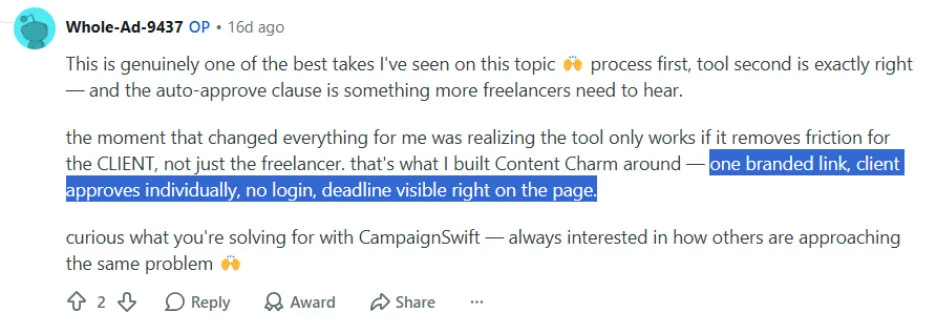
This removes extra steps and speeds up the process.
To sum it up:
| What’s broken | Replace with | What changes |
| Email/DM sharing | Feedback tied directly to the post | No version drift, clear audit trail |
| No deadline | 48-hr approval window enforced by the system | Calendar stays yours |
| Multiple stakeholders | One designated approver per account, set at onboarding | One person, one mandate, one answer |
| Login-required portal | Email link, zero-login approval | Client approves in 90 seconds from their phone |
To put these four fixes in place, agencies need social media management tools that make approvals easier without adding a lot of extra work.
Here’s how five widely used tools can help agencies integrate these 4 solutions into their workflow:
| Feature | SocialPilot | Planable | Content Studio | Hootsuite | Buffer |
| Centralized commenting on posts | ✅ | ✅ | ✅ | ✅ | ✅ |
| Auto-approve toggle (deadline enforcement) | ✅ | ❌ | ❌ | ❌ | ❌ |
| Single approver designation | ✅ | ✅ | ✅ | ⚠️ | ❌ |
| Approvals On-The-Go (no-login email link) | ✅ | ✅ | ✅ | ❌ | ❌ |
Based on the feature comparison, the three tools that can help you ease approvals are SocialPilot, Plannable, and ContentStudio. All 3 of them support post-level commenting and no-login client approval. Agencies can also assign a designated approver for each of their client accounts.
However, SocialPilot’s Approvals On-The-Go feature stands out for solving all the friction points that agencies struggle with. Using this feature, agencies can send each client a personalized magic link, which is a direct, shareable URL tied to their pending content.
This magic link is easier than texting. Clients do not need any account or password and can open this link on any device. Additionally, there is an auto-approve toggle that automatically approves the post 1 hour before its scheduled time, if it is not approved by the client until then.
Talking about the prices, Plannable will charge you for every workspace/client account you add, so the costs can add up really quickly. However, SocialPilot and ContentStudio have unlimited agency packages that start from $85/mo and $99/mo, respectively.
Final Word:
The approval chase feels like a client problem because the client isn’t responding. But the silence is a symptom – the process is the cause.
Every hour your team spends on follow-ups, sorting scattered feedback, and chasing sign-offs for posts that should have gone live is time taken from somewhere else. As you grow, that lost time eats into your capacity, your margins, and your ability to take on new clients.
None of these four fixes needs a complicated rollout. Just choose a tool that enforces deadlines, removes login barriers, and keeps every comment with its post. Then, chasing approvals won’t be your job anymore.
SocialPilot is designed to handle all four fixes. If approval follow-ups are taking up your week, it’s worth checking out.



 Join 55,000+ social media managers


