
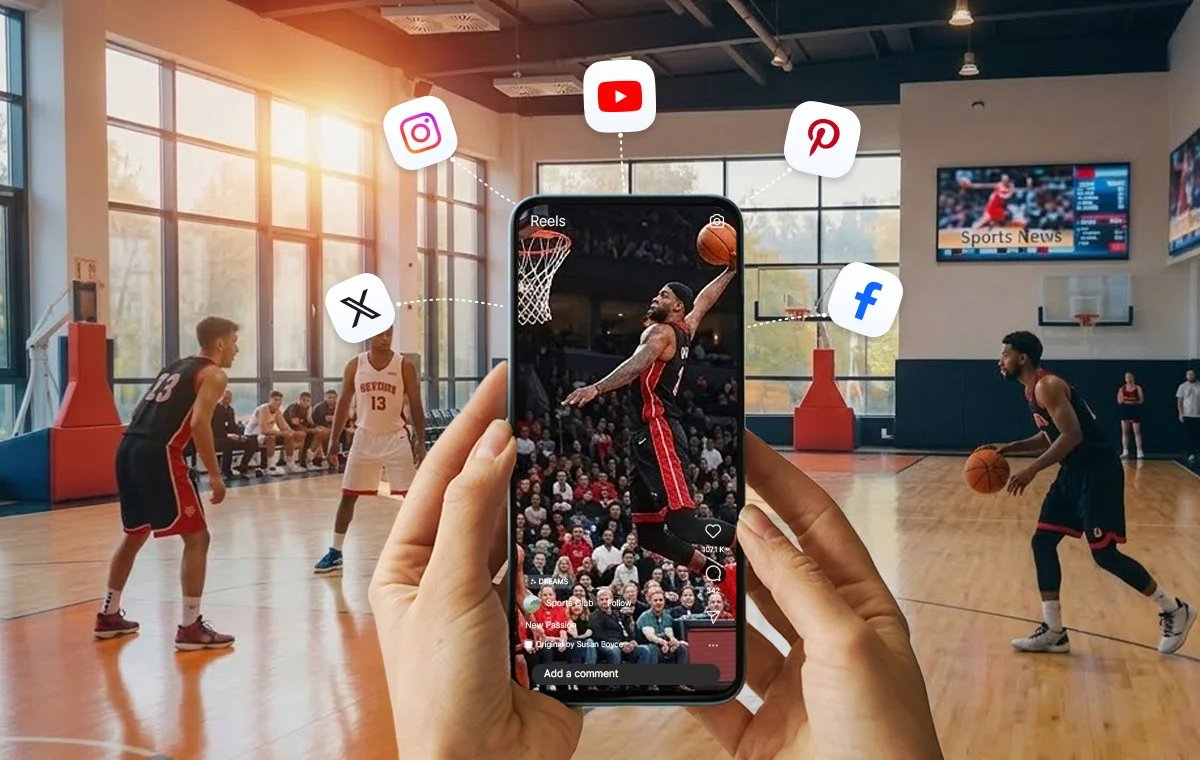
Sports today aren’t just watched in stadiums or on TV. They’re followed every minute on social media. Fans react to goals, transfers, controversies, and behind-the-scenes moments instantly from their phones.
During the 2022 FIFA World Cup, social media recorded 93.6 million posts generating 5.95 billion engagements. Similarly, the 2024 Summer Olympics saw around 412 billion engagements from 270 million posts, showing how social platforms have become one of the biggest stages in sports.
But despite that reach, many sports clubs or agencies still treat social media as an afterthought, posting mostly after match day or without a clear plan. That’s a missed opportunity, because sports naturally produce the kind of emotional, real-time content that audiences love to engage with.
In this guide, we’ll break down how social media team or agencies managing sports accounts can build a smarter social media marketing strategy, so every post can brings stronger fan engagement and long-term growth.
Social media has changed the way fans experience sports. Earlier, fans mostly depended on TV and news for updates. Now, with platforms like Instagram and Twitter (X), fans can get live match updates, watch highlights, and interact with athletes instantly from their phones.
This change is happening as the sports industry grows quickly. The global sports market is expected to increase from $417 billion in 2025 to about $602 billion by 2030, according to Statista, and social media is playing a big role in this growth.
For clubs, leagues, and athletes, social media is no longer just a promotional tool, it’s a central part of how fans experience the game.
Social media flipped the script on how sports organizations talk to fans. Teams no longer depend solely on scheduled broadcasts or press coverage. Now, fans comment during matches, share highlights within seconds, and react instantly to transfers, announcements, or controversies.
This back-and-forth has turned sports into a 24/7 digital conversation. Clubs, leagues, and athletes aren’t just competitors on the field anymore. They’re content creators too. Training clips, locker-room celebrations, travel moments, behind-the-scenes stories; it all keeps fans hooked between matches. According to Deloitte Digital, around 42% of social media users actively follow sports and recreation topics, proving how deeply sports talk is woven into online culture.
Athletes have built powerful personal brands through social media as well. Many players command audiences that rival major media outlets, and a single post can reach millions of fans in minutes. That direct connection with supporters also opens valuable partnership opportunities with sponsors and brands.
Then there’s a visibility shift. Social platforms have helped accelerate the growth of women’s sports, para-sports, and athletes from diverse backgrounds by putting their stories in front of global audiences without a gatekeeper. Sports organizations are now reaching broader, more diverse fan communities than traditional media ever allowed.
Key Benefits for Sports Teams, Clubs, and Athletes
When used strategically, social media offers several powerful benefits for sports organizations.
- Global reach: Social platforms let teams build fan communities far beyond their home city. Many major clubs now run regional accounts with multilingual content to engage supporters worldwide, expanding their brand presence across borders.
- Higher fan engagement: Sports run on emotion, and social media gives fans a place to express it instantly. Live match updates, behind-the-scenes footage, player Q&As, polls, and user-generated content all make supporters feel closer to the team. According to RivalIQ report sports teams boast Instagram engagement rates of 1.39%, ranking among the top industries and 2-3x higher than the all-industry average.
- Data-driven decisions: Social platforms provide detailed analytics on audience behavior. Teams can track which posts perform best, when fans are most active, and what content drives the most interaction, then adjust their strategy accordingly.
- Cost efficiency: Compared to television or print campaigns, social media is far more flexible and affordable. Organic content can reach large audiences on its own, while paid campaigns allow precise targeting location, interests, and demographics.
- Direct revenue: Social media contributes straight to the bottom line. Teams promote ticket sales, launch merchandise, highlight sponsors, and push exclusive content or memberships through their channels. Strong engagement also increases the value teams can offer commercial partners.
Social media presence alone is not enough. Sports organizations need a clear strategy to use it effectively. According to the WSC Sports Generational Fan Study, 55% of fans discover new players, teams, or leagues through YouTube Shorts or TikTok, and 43% of Gen Z fans scroll on social media while watching live games.
To capture this attention, teams need a structured approach that connects their social media activities with clear goals, target audiences, and a consistent content plan.
1. Define Clear Goals for Your Sports Account
Every social media strategy should start with clear objectives. Posting regularly is important, but the real question is what those posts are meant to achieve.
For sports organizations, social media goals usually connect directly to business outcomes. These can include growing the fan base, increasing ticket sales, promoting merchandise, improving sponsor visibility, strengthening community engagement, or building a positive brand reputation.
Once goals are defined, it’s important to track a few meaningful metrics rather than trying to measure everything. For example:
- Audience growth: follower growth and reach
- Fan engagement: likes, comments, shares, and engagement rate
- Revenue-related goals: ticket or merchandise conversions
- Brand perception: sentiment and community feedback
The exact objectives may also differ depending on who is managing the account. A professional team might focus on ticket sales and sponsorship value, while a league may prioritize global awareness. Individual athletes, on the other hand, often focus more on personal brand growth and partnerships.
2. Know Your Fans: Segmentation and Personas
Not all social media fans behave the same way online. Understanding different fan groups by doing social media audience analysis (what they watch, where they interact, platforms preferred, content formats) will help your social teams create content that feels more relevant and engaging to them.
Sports accounts audiences often include several segments such as:
- Hardcore fans who follow every match (may prefer detailed match analysis, lineup discussions, and tactical clips)
- Casual followers who engage occasionally (may prefer match highlights, key moments, short clips, and entertaining sports content)
- Families attending games together (may prefer family-friendly match experiences, stadium activities, community events)
- Students (may prefer short-form videos, trending sports content, challenges, and behind-the-scenes moments)
- Local supporters (may prefer local team updates, community stories, match schedules, and fan events)
- International fans (may prefer multilingual content, match highlights, player stories, and global team updates)
There are also business audiences like sponsors and corporate partners who interact with teams differently than regular fans.
Each group tends to prefer different platforms and types of content. Younger fans often spend more time on short-form video platforms like TikTok and Instagram Reels, while older audiences may be more active on Facebook or YouTube. Corporate audiences and sponsors may follow teams on LinkedIn to stay updated on partnerships and announcements.
You can start by analyzing your existing followers using platform native analytics and look at data such as age groups, locations, gender, comment trends, and engagement patterns.
Sports account management agencies can better understand these patterns by using social media analytics and social listening tools to help identify what fans care about and how they prefer to interact with content.
3. Choose the Right Platforms and Content Pillars
Once you understand your goals and audience, the next step is deciding where to focus your efforts as many university level teams or local sports club may have limited resources. Most sports organizations maintain a presence across several major platforms, including Instagram, TikTok, X, YouTube, and Facebook. LinkedIn is also useful for B2B communication, especially for sponsor announcements and organizational/club updates.
However, success on social media isn’t just about being everywhere; it’s about having a clear structure for what you post and when you’re posting (with goal of posting). This is where content pillars become important. Content pillars help you maintain variety while staying consistent with your theme or branding elements.
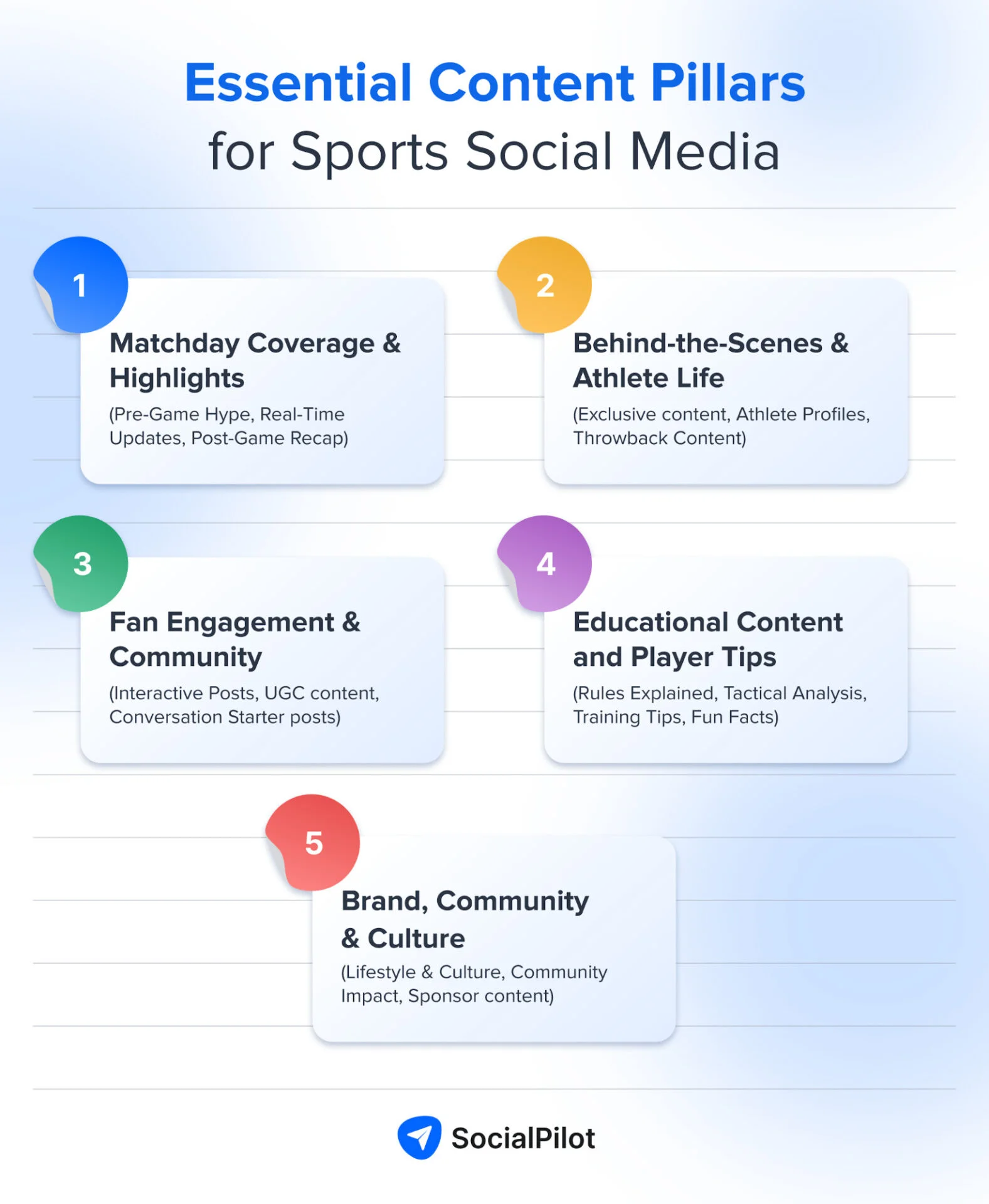
Common content pillars for sports teams include:
- Deliver Game-Day Action: Live updates, highlight clips, score graphics, and post-match reactions that keep fans plugged into every moment.
- Open the Locker Room Door: Exclusive access to training, travel, player routines, and unscripted moments that reveal the human side of your team.
- Tell Player Stories: Interviews, career milestones, personal journeys, and heartfelt moments that build emotional connections with fans.
- Show Community Impact: Document charity work, youth programs, and local engagement that demonstrate what your team stands for.
- Integrate Sponsors Naturally: Feature brand partnerships, merchandise, and campaigns in ways that add value without disrupting the fan experience.
With clear pillars in place, sports teams or athletes can keep their feeds interesting while making sure every post contributes to their overall club or team story. To learn more, check guide on social media content strategy.
4. Build a Content Calendar and Workflow
Consistency in sports social media comes from planning ahead. Start by mapping your team or individual athlete season calendar: add matchdays, tournaments, playoffs, drafts, and transfer windows. Then plan supporting content around those moments, such as pre-match hype posts, lineup announcements, live updates, and post-match reactions.
Next, create a weekly or monthly posting rhythm so your feed stays active even between games. For example, training clips, player stories, fan polls, or community initiatives can fill the gaps during non-match days. You can explore ready-made social media calendar templates to create monthly posts and schedules in advance.
It’s also important to define a social media workflow so you don’t rush at the last minute for changes or writing copies. Typically, the social team plans posts, designers or video editors create assets, and marketing or sponsorship teams review branded content before approval.
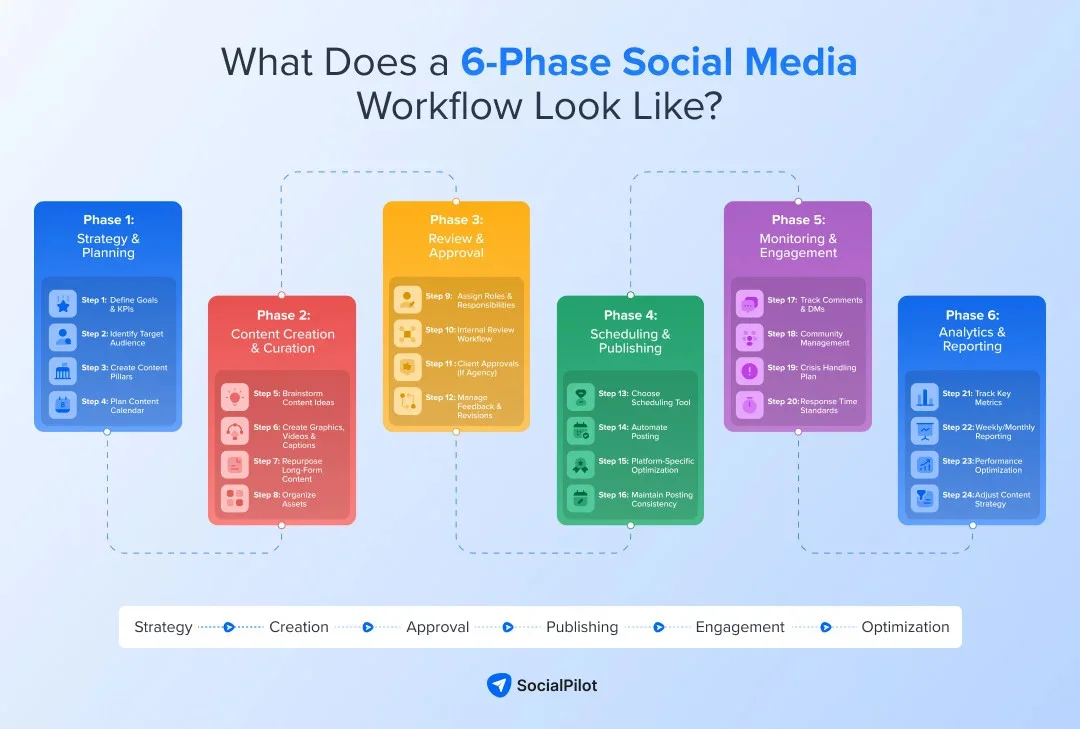
Managing sports social media can get hectic during match weeks. Using a tool like SocialPilot helps teams schedule posts in advance, manage a visual content calendar, and set approval workflows so designers, editors, and marketing teams can review content before publishing.
Features like bulk scheduling and analytics also help teams stay organized and track what content performs best while still leaving space for real-time match updates.
Sports teams naturally produce exciting moments in everyday matches, training sessions, fan reactions, and personal milestones. The key is turning those moments into consistent content that keeps fans engaged throughout the season.
Below are practical content formats teams and athletes can use to build stronger engagement and reach.
1. Game-Day and Live Coverage
Game day is when fan attention is at its peak, so social media activity should match that energy.
Start with real-time match updates. Post lineup announcements, score updates, key plays, and milestone moments as they happen. Using platform-native formats, such as threads, Stories, Reels, or Shorts, helps fans follow the match even if they aren’t watching the broadcast.
Many teams also run pregame and postgame live sessions. A short live stream before the match can cover team news, predictions, or warm-up footage, while postgame sessions can include quick analysis, player reactions, or fan comments.
Speed matters during matches. Quick highlight clips or “instant replay” edits often perform extremely well when posted immediately after big moments like goals, game-winning plays, or record-breaking performances.
- Real-time match updates: Share lineup announcements, score updates, and key plays using formats like threads, Stories, Reels, or Shorts.
- Live fan conversations: Host short pregame or postgame live sessions to discuss lineups, predictions, and reactions.
- Instant highlight clips: Post quick replay edits of goals, big plays, or milestone moments immediately during or after the match.
- Fan reaction content: Share crowd celebrations, watch-party reactions, or social comments from fans during key moments.
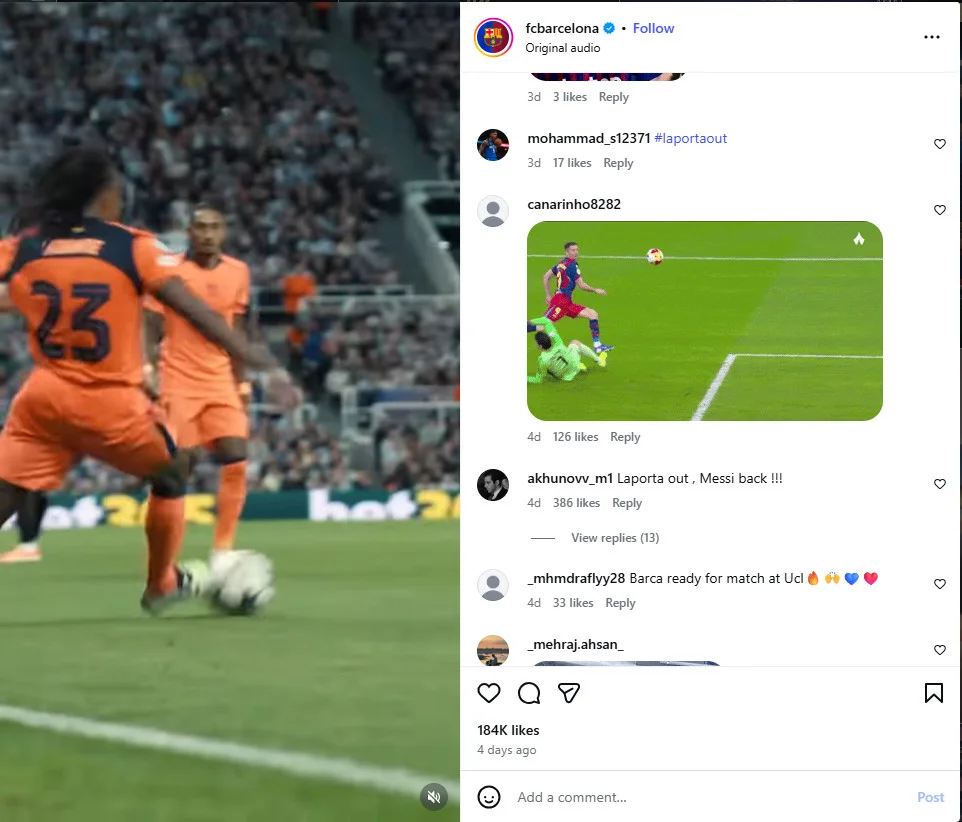
For example, below you can see FC Barcelona shared live match key moment footage on their social media account to update fans.
2. Behind-the-Scenes and Access Content
Fans love seeing what happens beyond the field. Behind-the-scenes content gives them a more personal connection with the team.
Simple formats work well here. Teams can share training sessions, travel days, locker room celebrations, or preparation routines. Even small moments, like a team bus arrival or warm-up drills, can create excitement before a match.
Another effective format is “day in the life” content. Short vlogs, mic’d-up training clips, or player routines show the personality and culture within the team.
Story-driven posts can also perform strongly. For example, sharing a rookie’s journey, an injury comeback story, or a veteran reaching a milestone gives fans something emotional to connect with beyond match results.
- Training and preparation moments: Share clips from practice sessions, warm-ups, or tactical meetings without revealing competitive secrets.
- Travel and locker-room content: Show team arrivals, locker room celebrations, or travel diaries to give fans inside access.
- “Day in the life” videos: Short vlogs or mic’d-up segments that show player routines and personalities.
- Emotional storylines: Document comeback stories, rookie debuts, injuries and returns, or major career milestones.
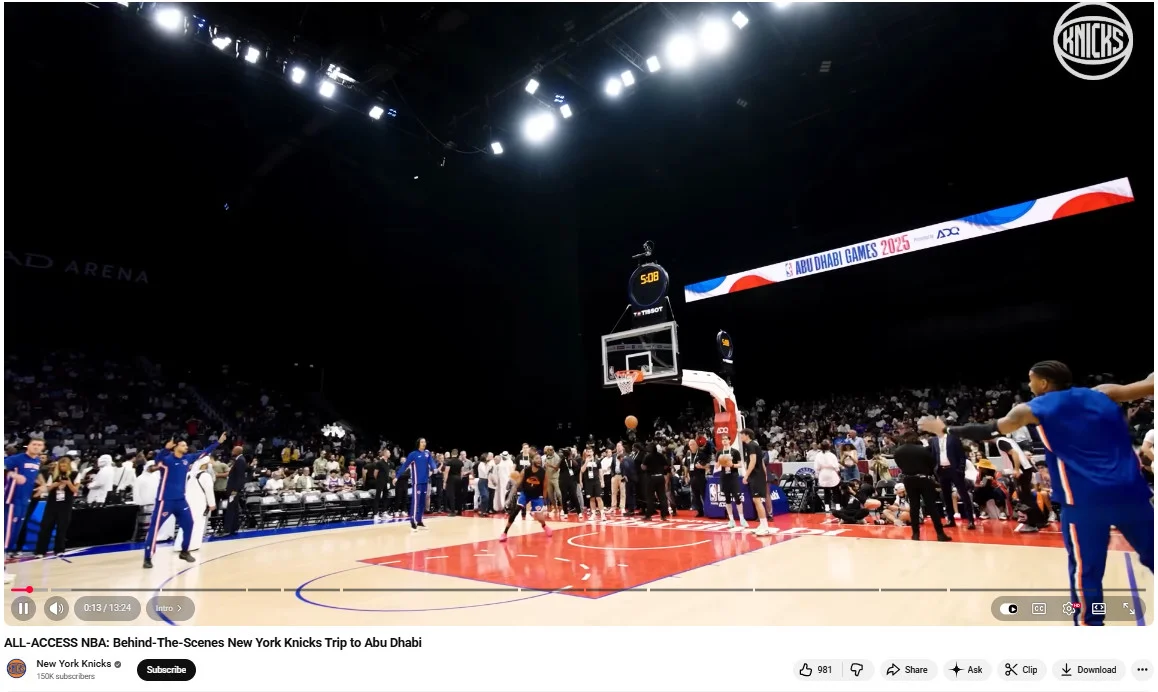
For example, as shown in the image below, the New York Knicks shared behind-the-scenes footage on their YouTube channel.
3. Player-Driven Storytelling and Athlete Branding
Athletes are often the biggest drivers of engagement on sports social media. Giving players space to share their personality can significantly increase reach.
One approach is player spotlight content. This could include quick Q&A videos, posts about hobbies and interests, or stories about their life outside the game. These posts help fans see players as people, not just athletes.
Teams can also collaborate directly with athletes’ personal accounts. For example, providing players with branded graphics, highlight clips, or short videos they can share with their own followers helps extend the reach of team content.
Some organizations also provide basic social media guidelines and support for athletes, helping them grow their personal brands while staying aligned with the team’s image and partnerships.
- Player spotlight posts: Feature Q&A sessions, hobbies, or personal interests to humanize athletes.
- Co-created athlete content: Provide branded clips or graphics that players can share on their own accounts to expand their reach.
- Athlete-led content series: Let players host short segments like training tips, match predictions, or locker-room interviews.
- Personal brand support: Offer guidelines so players can grow their own online presence while aligning with team values.
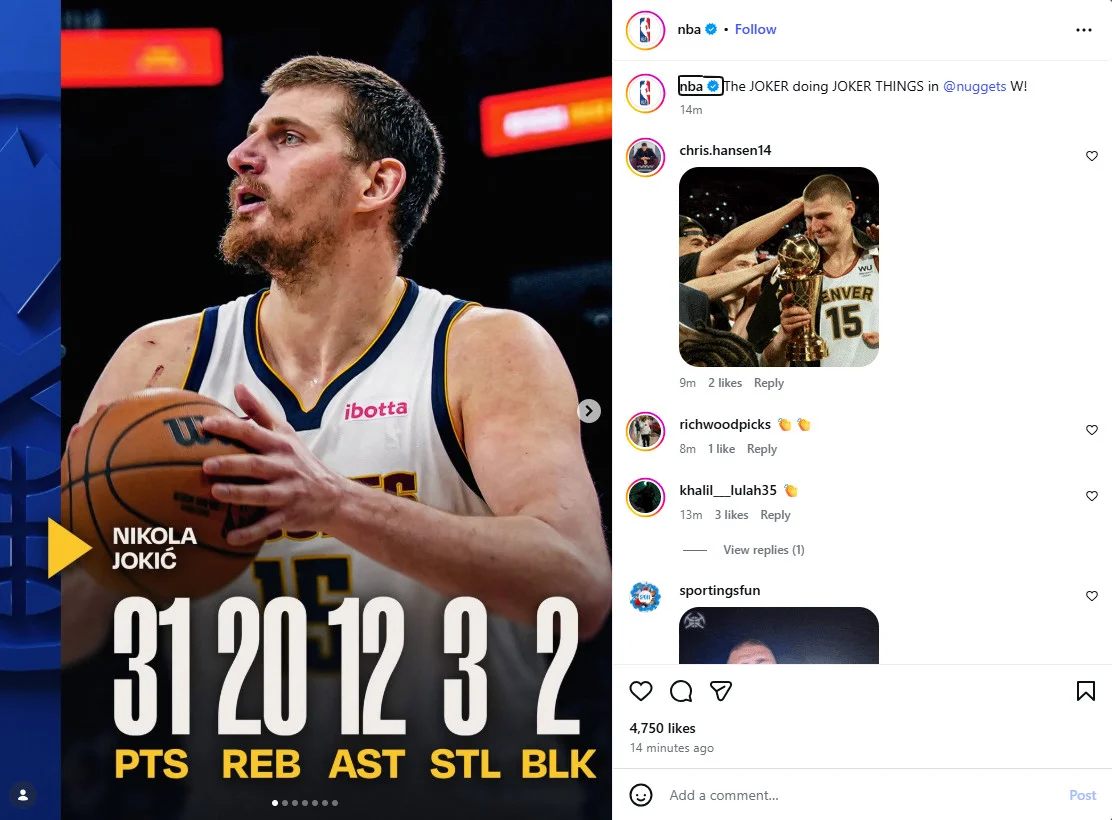
For example, as shown in the image below, the National Basketball Association shared a performance graphic on Instagram highlighting a player’s recent game stats to showcase achievements and strengthen athlete branding
4. Fan Engagement and Community-Building Content
Strong sports brands build communities, not just audiences. Social media makes it easier to involve fans directly in the conversation.
One effective approach is encouraging user-generated content (UGC). Teams can create branded hashtags for matchday outfits, chants, watch parties, or skill challenges and then repost the best fan submissions.
Interactive content also works well. Polls, prediction contests, quizzes, or questions like “choose our walk-out song” give fans a reason to participate instead of just watching.
Another great tactic is fan recognition. Featuring superfans, fan art, stadium traditions, or international supporters helps fans feel seen and appreciated by the team.
- User-generated content campaigns: Encourage fans to share game-day outfits, chants, or skill challenges using branded hashtags.
- Interactive posts: Run polls, quizzes, prediction contests, or “choose our walk-out song” campaigns.
- Fan spotlight features: Highlight superfans, fan art, traditions, or international supporters.
- AMA sessions: Host “Ask Me Anything” interactions with players or coaches to directly involve fans.
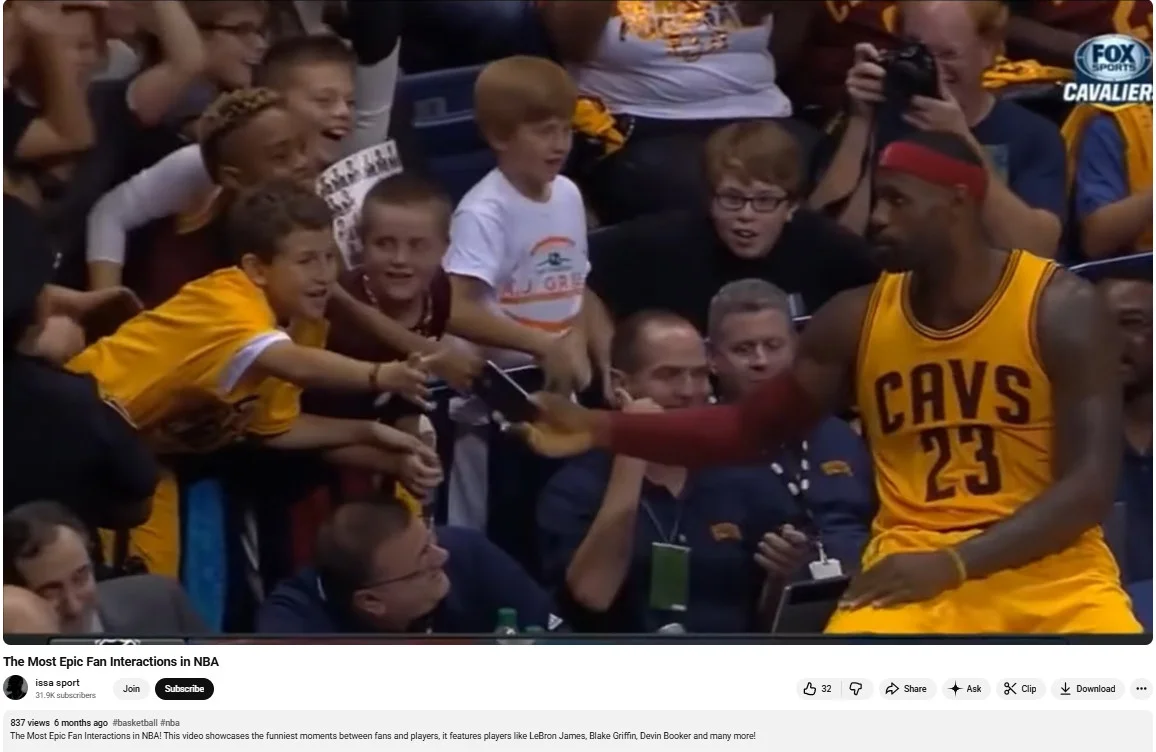
As shown in the image below, the sports channel issa sports shared a fan interaction moment featuring LeBron James on YouTube, highlighting fan engagement and community connection.
5. Community, CSR, and Cause-Driven Campaigns
Sports organizations play an important role in their communities, and social media is a powerful way to highlight that impact.
Teams can share charity initiatives, grassroots programs, school visits, or local partnerships. Showing players interacting with the community often creates positive engagement and strengthens the club’s reputation.
Some campaigns also focus on broader social topics such as mental health awareness, inclusion, youth development, or accessibility in sports. These stories often resonate with audiences even beyond the core fan base.
Partnering with nonprofits or community organizations and documenting those collaborations can also help raise awareness and encourage fans to participate.
- Community initiatives: Share content from school visits, charity matches, or youth training programs.
- Local partnerships: Highlight collaborations with local organizations or community events.
- Awareness campaigns: Support causes like mental health awareness, inclusion, or accessibility in sports.
- NGO collaborations: Partner with nonprofits and document the impact through social storytelling.
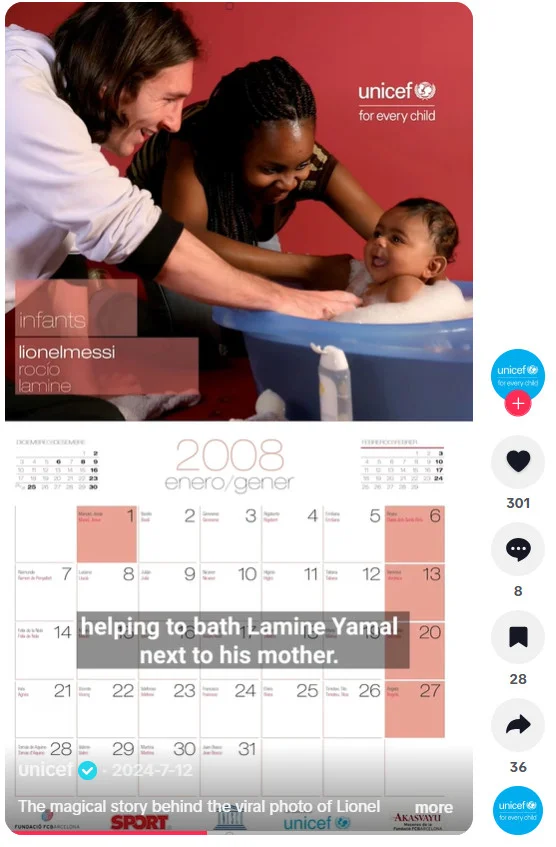
As shown in the image below, UNICEF shared a video of a star footballer, Messi, supporting a family, showing how athletes use social media to spotlight social causes and community impact.
6. Sponsor-Integrated and Revenue-Focused Content
Social media is also a key channel for delivering value to sponsors and driving revenue for sports organizations.
One approach is integrating brands into natural matchday moments, for example “player of the match presented by [brand]” or hydration break highlights sponsored by a partner. These integrations work best when they feel relevant to the moment.
Teams can also use shoppable posts and link-in-bio campaigns to promote tickets, merchandise, or limited-edition drops. Story stickers, countdowns, and exclusive offers can help drive conversions.
Another effective tactic is offering social-only perks, such as early ticket access or special discounts for followers. These campaigns not only generate revenue but also reward fans for staying connected with the team online.
- Branded match segments: Integrate sponsors naturally into content like “Player of the Match presented by [Brand].”
- Shoppable content: Use product tags, link-in-bio pages, or story stickers to promote merchandise and tickets.
- Exclusive follower offers: Share limited-time discounts or early ticket access for social followers.
- Sponsored challenges or campaigns: Run branded fan contests or skill challenges in partnership with sponsors.
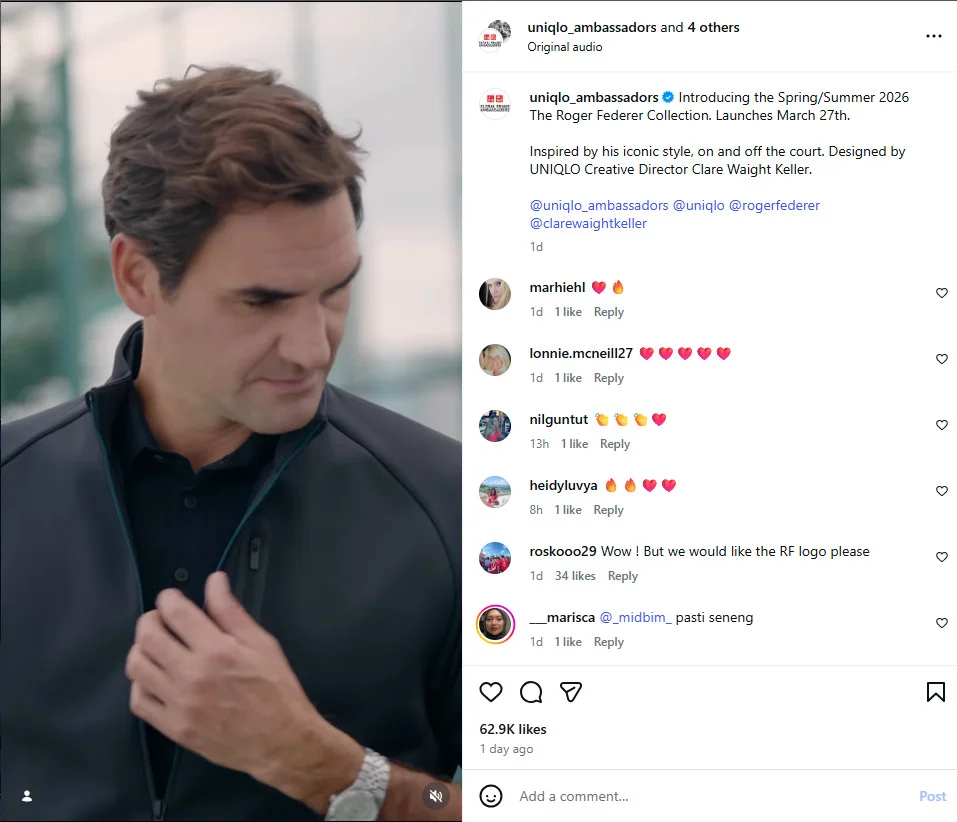
As shown in the image below, a fashion brand, Uniqlo, unveils a new Roger Federer collection, showing how sponsor-led content can spotlight partnerships and directly drive merchandise sales.
Social media is one of the most powerful tools for shaping how fans see a sports team or athlete. Beyond posting highlights and updates, it helps create a recognizable identity, voice, and story that fans connect with over time.
Here are some strategies to help turn a sports club or athlete into a strong brand:
- Define your core brand identity: Decide what your sport team/club represents, such as a hardworking underdog, a legacy powerhouse, or a community-first club and reflect that personality in posts and storytelling.
- Keep visuals consistent: Use the same logos, colors, fonts, and design templates across platforms so fans instantly recognize your content.
- Build recurring content series: Create repeatable formats such as weekly player interviews, match previews, or fan-of-the-week features to strengthen brand familiarity.
- Tell a long-term story: Use posts throughout the season to highlight rivalries, player journeys, and team culture, so fans feel part of the ongoing narrative.
2. Tone of Voice, Visual Identity, and Memes
- Define a clear brand voice: Decide whether your communication style is serious and analytical, playful and humorous, edgy, or family-friendly based on your audience and league culture.
- Use trends and memes strategically: Participate in trending formats or memes when they fit your brand personality but avoid jokes that could damage credibility or respect for the sport.
- Create recognizable graphic templates: Develop standard templates for lineups, match results, player stats, and milestones, so posts are faster to produce and visually consistent.
- Balance professionalism with personality: Combine informative posts (stats, announcements) with lighter content (celebrations, memes, fan reactions) to keep the feed engaging.
- Showcase diverse athletes and teams: Regularly feature women’s teams, youth squads, and para-athletes to reflect the full diversity of the sports community.
- Highlight inclusion initiatives: Share content about accessibility programs, equality campaigns, and safe stadium environments to show commitment beyond the game.
- Collaborate with diverse creators: Partner with athletes, influencers, or community voices who can authentically connect with different fan groups.
- Celebrate fan diversity: Feature supporters from different regions, cultures, and backgrounds to reinforce that the team represents a global community.
For a clearer understanding of how consistent messaging and visual identity build a strong online presence, check out this guide on social media branding.
Different sports organizations have different goals, audiences, and resources. A professional league, a college team, an athlete and a local academy won’t use social media in the same way.
Below are practical ideas tailored to different types of sports properties:
Professional Teams and Leagues:
- Run multiple focused accounts: Create separate handles for men’s teams, women’s teams, youth squads, or academies so each audience gets relevant content.
- Localize for global fans: Launch language-specific accounts or region-focused posts to engage international supporters.
- Post at global-friendly times: Schedule important announcements and highlights based on major fan time zones.
- Collaborate during major events: Coordinate social campaigns with broadcasters, sponsors, and league partners during tournaments, playoffs, or major matches.
College, University, and School Teams:
- Highlight campus culture: Share student life moments, locker room celebrations, and game-day atmosphere to connect with students and alumni.
- Feature athlete creators: Encourage athletes to participate in social content, especially in the NIL era, while providing guidance on brand partnerships.
- Promote attendance: Use countdown posts, ticket reminders, and hype videos to bring students and local fans to home games.
- Celebrate alumni connections: Share throwbacks, alumni achievements, and campus traditions to strengthen emotional ties with past students.
Individual Athletes and Sports Celebrities:
- Define a personal brand: Share content around passions beyond the sport, such as fashion, gaming, fitness, or philanthropy, to build a unique identity with personal branding.
- Balance personal and team content: Post match-related content alongside lifestyle posts while respecting team contracts and sponsorship rules.
- Document the journey: Share training routines, recovery processes, and behind-the-scenes preparation to bring fans closer to the athlete’s career.
- Show long-term ambitions: Highlight business ventures, mentorship roles, or social initiatives that extend the athlete’s influence beyond competition.
Sports Clubs, Academies, and Local Organizations:
- Focus on local community stories: Highlight youth development, local tournaments, and success stories from academy players.
- Share practical updates: Regularly post schedules, tryout announcements, membership details, and facility updates so followers stay informed.
- Showcase local partnerships: Feature collaborations with local sponsors, schools, and community groups.
- Use simple content formats: Rely on easy-to-produce formats like photo carousels, short training clips, and basic graphic templates to stay consistent even with limited budgets.
Managing social media in sports isn’t only about content and engagement. Teams, leagues, and athletes also need clear policies and processes to protect their brand, players, and partnerships. Strong governance helps avoid legal issues, reputational damage, and confusion during sensitive situations.
Sports organizations should have clear social media guidelines for players, staff, and creators. These policies usually outline what type of content is acceptable, how to handle sensitive topics, and what information should never be shared publicly (such as internal team matters or sponsor conflicts).
Regular training can help athletes and staff understand the risks of posting impulsively and how their content reflects the team’s brand. It’s also important to define who reviews or approves sensitive posts so that potential issues can be handled quickly before they escalate.
2. IP, Rights, and Sponsorship Compliance
Social media managers in sports must be careful with intellectual property and media rights. Match footage, highlights, logos, and sponsor assets often have strict usage rules defined by leagues or broadcast partners.
Before publishing content, teams should ensure they have the right to use the footage or graphics, and that sponsor placements follow official guidelines. Contracts with athletes and brand partners should also clearly define how social media content can be used, shared, or promoted.
3. Crisis Communication and Online Safety
Sports conversations online can become intense, especially during losses, controversies, or off-field incidents. Social media teams should monitor comments and moderate abusive or discriminatory behavior to protect players and fans. Having a clear social media crisis management plan is very important; this includes knowing how to respond during negative news, injuries, or scandals.
In most cases, clear communication, empathy, and transparency help maintain trust with fans even during difficult moments.
Social Media Marketing Roadmap for Sports Teams
Social media has become a core growth channel for sports teams and athletes. The best way to start is simple: audit your current channels, define clear goals, and understand your audience. Then build consistent content pillars, create a basic posting calendar, and track performance to improve over time.
Just as important is having the right system in place, clear brand guidelines, content workflows, content calendar, crisis management plan, and tools to manage everything efficiently.
Platforms like SocialPilot help sports teams, clubs, and athletes schedule posts, collaborate with teams, and analyze performance so they can stay consistent, save time, and focus on building stronger fan relationships.
You can start with free trials and explore pricing plans to pick plan that meet your requirements.





 Join 55,000+ social media managers


