


That is not the real problem though. The real problem is that “Instagram tool” is not one thing. It is six unrelated jobs wearing the same name: scheduling, analytics, hashtag research, design, influencer marketing, and bio links. Almost nobody needs all six.
A solo creator’s essentials are design, hashtags and a bio link. A five-client agency’s are scheduling and reporting. Barely any overlap, which is the whole problem. Get your own set wrong and you go one of two ways. You overpay for a suite whose best features you never open, or you stitch five subscriptions together where one would have done the job.
So this page does not rank 17 Instagram, or IG, tools against each other, because most of them are not competing for the same job. It sorts them by the job they actually do, helps you work out which jobs are yours, and says plainly where each tool stops.
One more thing before the list. Instagram gives you real tools for free, and they cover more than most buyers assume. Knowing exactly where they run out is what tells you whether you need to spend anything at all.
We tested all 17 on live Instagram accounts and re-checked every price against the vendor’s own pricing page in August 2026. Where a tool falls short, including ours, we say so.
The Six Jobs Instagram Tools Actually Do
“Instagram tool” is not a category. It is six unrelated jobs sold under one phrase, and tools claiming all six usually do four of them thinly. Here is what each job means, so you know which rows below matter to you. For the same framework across every network, see our full tools roundup.
These six jobs get sold under one phrase, but they do not feed each other. Scheduling does not need hashtag research to work. Design does not need analytics. That independence is why buying a suite for all six is the most common mistake on this page.

Scheduling and Content Planning
Queuing Instagram posts, Reels, Stories and carousels ahead of time, and seeing them on a calendar before they publish. Instagram does this free, with real caps set out further down. You pay for a third-party scheduler when you cross one of them, or when more than one person touches the calendar.
Analytics and Reporting
Tracking reach, engagement, follower growth and best-performing content, then getting it out in a form somebody else can read. Instagram Insights covers the tracking. It does not cover the getting-it-out, and the native-tools section below sets out where it stops.
Hashtag and Trend Research
Finding which tags carry reach now, which are saturated, and which are climbing. The job fewest all-in-one tools do properly, and where a cheap specialist beats an expensive suite most often.
Design and Editing
Making the asset. Templates, resizing to Instagram’s aspect ratios, background removal, on-brand colors and fonts. Two of the three tools here now also schedule, which changes whether you need a separate scheduler at all.
Influencer Marketing
Finding creators, vetting their audiences, running campaigns and paying them. The only one of the six jobs where nothing is affordable. Every tool is quote-only, and two of three assume a funded program.
Bio Links and Engagement
The one link Instagram gives you in your bio, turned into a page that goes many places, with click data attached. The cheapest job here, and the one where the free tier is often genuinely enough.
Which Jobs Does Your Team Actually Need?
| Team type | Scheduling | Analytics | Hashtags | Design | Influencer | Bio links |
| Solo creator | Nice to have | Optional | Essential | Essential | Skip | Essential |
| In-house SMB team | Essential | Essential | Optional | Essential | Optional | Nice to have |
| Small agency (up to ~10 clients) | Essential | Essential | Optional | Nice to have | Optional | Nice to have |
| Larger agency or brand | Essential | Essential | Nice to have | Optional | Essential | Optional |
How to Read the Matrix
The walls are real and they show up in public review data. A complaint that recurs across Iconosquare’s G2 reviews is not the software but the five-profile cap, which a small agency with three clients passes on day one. Across Keyhole’s G2 reviews, a recurring theme is price against jobs the buyer did not need. Both are the same mistake, made in opposite directions.
- Essential means you will hit a wall without it inside a month.
- Optional means it pays for itself only at a certain volume.
- Nice to have means it saves time you may not be short of.
- Skip means the job does not apply to you yet.
Read your row, then read only the sections matching your Essential columns. A solo creator reading top to bottom will spend most of it on software built for someone else.
The Common Mistake
The most expensive mistake is buying a full suite for the two jobs you actually do. A solo creator on a $179-a-month hashtag platform is overpaying by an order of magnitude for a job an $11 tool does. An agency running six clients out of Meta Business Suite for free is losing more in manual hours than a $100 plan costs.
The second mistake is subtler. Paying twice for the same job. If your design tool already schedules to three accounts per network, and it does, you may not need a separate scheduler.
Quick Comparison: The Top Instagram Tools at a Glance
One representative per category, plus the two most-compared schedulers. Every price is the cheapest paid entry point, verified against the tool’s own pricing page in August 2026 and matching its section below.
| SocialPilot | Later | Buffer | Iconosquare | Keyhole | |
| Scheduling |  |
|
|
|
 |
| Analytics | |
|
 |
|
|
| Hashtag research | |
|
|
|
|
| Design and editing | |
|
|
|
|
| Influencer marketing | |
|
|
|
|
| Bio links | |
|
|
|
|
| Free plan | 14-day trial | 14-day trial | 3 channels |
2 profiles |
14-day trial |
| Starting price | $30/mo | $25/mo | $5/channel/mo | €33/mo | $179/mo |
| Best for | Agencies on multiple accounts | Creator-first planning | Solo creators on a budget | Instagram-only depth | Hashtag and trend tracking |
Covered
a real, native feature the tool does well
Partial
present but limited, an add-on, or a higher-tier unlock
Not covered
you would need a second tool for this job
What This Table Does and Doesn’t Show
It shows breadth, not quality. A says a tool does the job, not that it does it better than a specialist. Iconosquare and Socialinsider both earn on analytics and are not equivalent products.
It also does not show cost at your actual scale. Buffer’s $5 looks cheapest here until you have nine channels, at which point it is $45. Agorapulse’s $79 is one seat, not one plan. Read the pricing in each section, not just this row.
And look down the SocialPilot column. Hashtag research is a partial rather than a tick, and influencer marketing and bio links are straight misses. Better you know now than in week two.
Instagram Scheduling and Content Planners
Three tools, not four, because a fourth would repeat work we have already done properly. The full all-in-one field, covering Hootsuite, Sprout Social, Planoly, Loomly, Planable and ContentStudio, is compared in our management tools guide. This section covers the three most-compared Instagram schedulers only.
| Tool | Scheduling | Analytics | Hashtags | Design | Influencer | Bio links | Starting price |
| SocialPilot | |
|
|
|
|
|
$30/mo |
| Later | |
|
|
|
|
|
$25/mo |
| Buffer | |
|
|
|
|
|
$5/channel/mo |
1. SocialPilot
Multi-account Instagram scheduling with client-ready reporting, built for teams running more than one brand.
Coverage
- Scheduling
- Analytics
- Hashtags
- Design
- Influencer
- Bio links
What it actually looks like: One Social Media Calendar holding every connected Instagram account, filtered by client. Bulk Scheduling takes a month of posts from a single CSV. White Label Reports export under an agency’s own name with nothing to edit afterwards, which is the feature agencies always stay for.
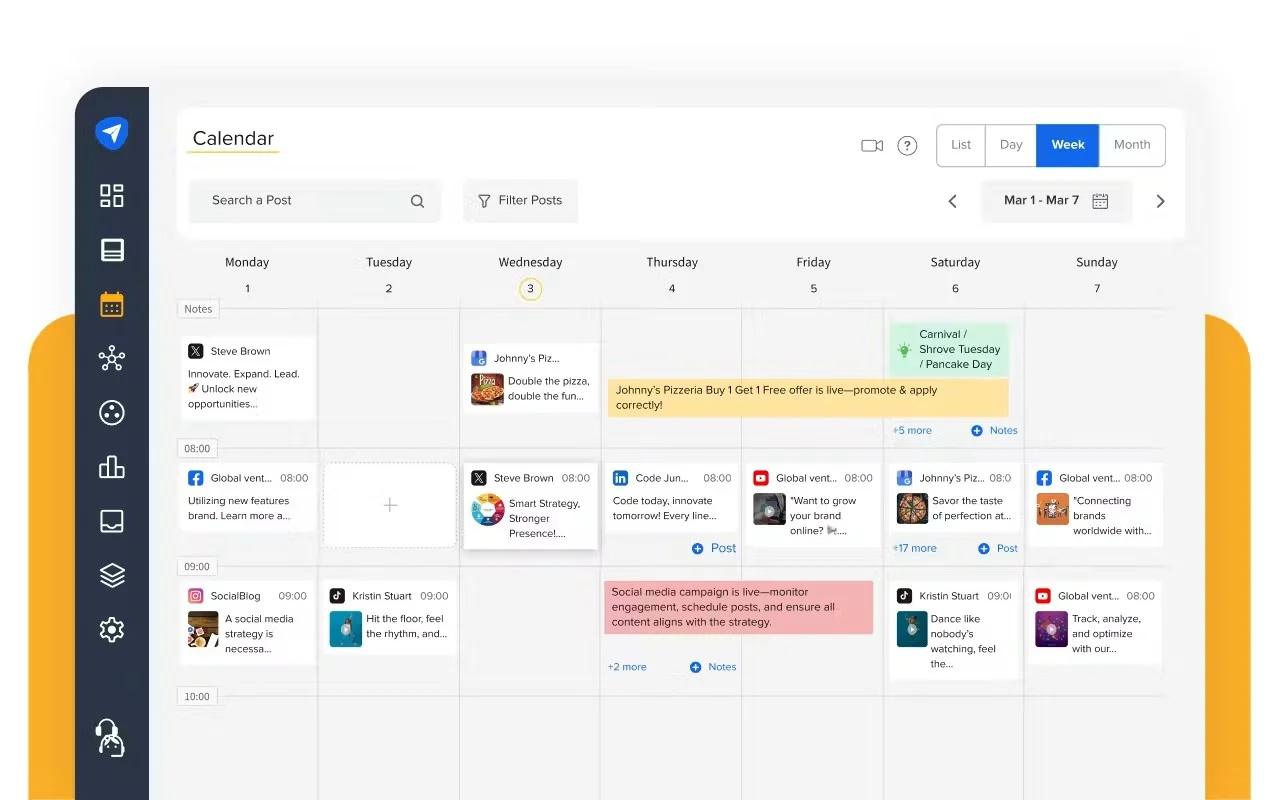
On Capterra, Jess W., a marketing manager in telecommunications, praises the “excellent value, great analytics, bulk scheduling, flexible schedules,” then names a real gap: she cannot schedule Twitter threads.
The pricing is what makes it cheap at agency volume, because it scales on accounts and users rather than per channel. Twenty-five social accounts and six users sit on one $100 Premium plan. On per-channel tools, twenty-five channels alone runs $125 to $250 before you add a second seat. Because the calendar is shared, an approver never needs their own login to see what is queued. Explore SocialPilot’s Instagram features for the full list.
The fair criticism is reliability. Another Capterra reviewer, Khiana K., a customer service representative in construction, likes scheduling ahead and the calendar view but wants to edit pending posts in bulk instead of one at a time. On G2, Shauna M. puts the sharper version plainly: “I have run into a few issues with content not posting and receiving an error.” Instagram’s API returns publishing errors across every third-party scheduler, which is true and also not much comfort when it is your post.
It is rated 4.5 on G2 across 841 reviews and 4.4 on Capterra across 373.
Starting at $25.5/month, SocialPilot’s pricing is structured around client and account volume, making it accessible for agencies at the point they’re scaling rather than only at enterprise scale.
| Ultimate | Premium | Standard | Essentials |
$170.00/mo$200
Billed annually (Save 15%)
|
$85.00/mo$100
Billed annually (Save 15%)
|
$42.50/mo$50
Billed annually (Save 15%)
|
$25.50/mo$30
Billed annually (Save 15%)
|
|
Streamline Social Media Management
|
|||
2. Later
Visual-first Instagram planning that spent 2026 repositioning around creators.
Coverage
- Scheduling
- Analytics
- Hashtags
- Design
- Influencer
- Bio links
What it actually looks like: A drag-and-drop grid where you arrange posts visually before they publish, so you see the feed as a whole rather than as a list. Later sells “social sets” instead of individual accounts, and one set is eight profiles, so the unit of pricing is a brand rather than a channel. Link in Bio comes included from the entry plan, which quietly removes a separate subscription.
On Capterra, Hanna O., a multimedia manager in media production, says “I like Later’s calendar layout, it makes it easy to see where your posts are scheduled,” then adds the catch: “Later’s interface is pretty cluttered and a bit overwhelming to navigate on a desktop.”
That trade runs through the whole product. The visual planner genuinely beats a list view when your feed aesthetic is part of the strategy, and no scheduler here matches it. The clutter is the price of fitting six jobs into one screen. Analytics history reaches two years on Scale, which is where it starts beating Instagram Insights properly rather than marginally, though Starter stops at three months, barely better than the free 90 days you already have. Hashtag support is suggestion-level, not research-level, and will not tell you a tag is saturated.
Later’s own positioning has moved toward creators and influencer work. Across our checks in June and July 2026 the site cycled between an abstract one-word brand line and an explicit “built for creators, trusted by brands” pitch, which reads as active testing rather than a settled decision. If you are a creator rather than an agency, that direction is in your favor.
Later’s paid plans start at $25 a month, or $18.75 billed annually, with Growth at $50 and Scale at $110. The social-set model is either a bargain or a trap depending on your shape: one brand across eight profiles is good value, while six unrelated clients pushes you to Scale where a per-account tool costs less.
For a feature-by-feature view against ours, read SocialPilot vs. Later.
What running Later standalone requires: very little for a single brand, since scheduling, analytics and bio links are all in one bill. Add a hashtag specialist if tag research is weekly work, and Canva for design. An agency with unrelated clients should price the per-account alternatives first.
3. Buffer
The cheapest credible on-ramp, with a free plan that is actually usable.
Coverage
- Scheduling
- Analytics
- Hashtags
- Design
- Influencer
- Bio links
What it actually looks like: A deliberately plain queue. You set posting times per channel, add posts, and Buffer publishes them in order. The free plan connects three channels with ten scheduled posts each, which is enough to run one Instagram account indefinitely without paying anything.
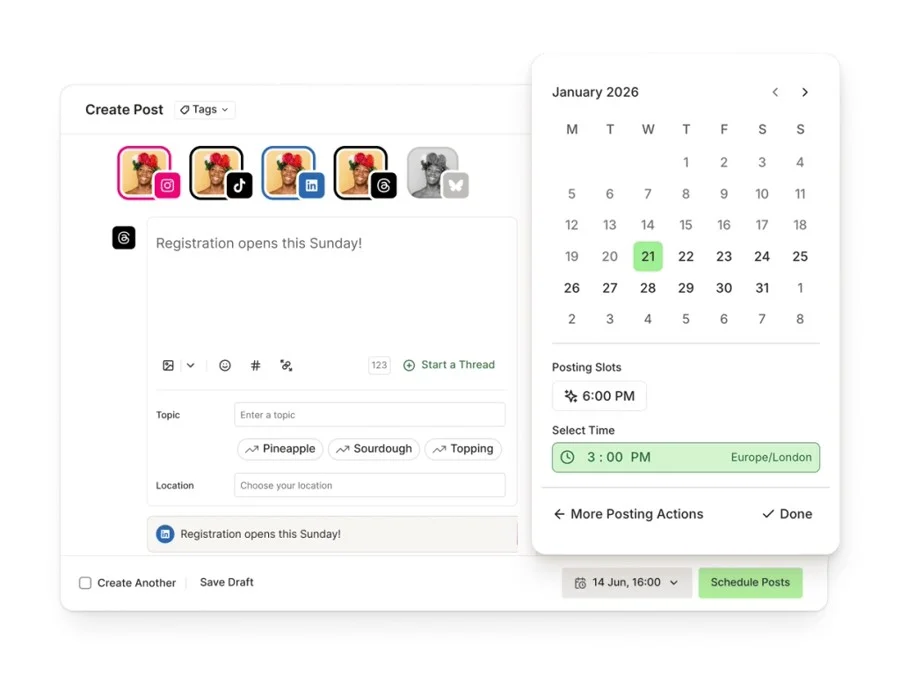
On Capterra, Andrea S., a director of marketing and communications in education, calls it a “solid free option to connect 3 social platforms,” then names the limit that follows: “Expensive to upgrade beyond Free offering. Free offering is limited to 3 networks.”
She has described the whole product. The free tier is the most useful on this page and no vendor here, us included, beats it on price for one Instagram account. Buffer also rebuilt its analytics in July 2026 as Insights, now included free across plan tiers rather than sold as an upgrade, with unlimited history on paid plans instead of thirty days. That is why its analytics mark is rather than a .
Then per-channel pricing inverts as you grow. Nine channels costs $45 a month on Essentials for a single user, while fifteen accounts and three seats sit inside a $50 plan elsewhere. Volume discounts only start above ten channels, which is late. Unlimited users arrive on Team at $10 per channel, doubling the bill for collaboration an agency needs from day one. There is no hashtag research, and approval workflows exist but stay basic, which we leave to our automation framework guide rather than covering twice.
Buffer is free for three channels, and paid plans start at $5 per channel per month, so the bill grows with the number of channels rather than the number of users. One deadline if you build on it: the legacy REST API retires on 1 February 2027, with brownouts on 11 November and 9 December 2026.
An earlier version of this page put Buffer at $36 a month in the comparison table. That was wrong by six times and has been corrected.
What running Buffer standalone requires: scheduling and basic analytics are covered, and collaboration on the Team plan, but there is no hashtag research and no client-management layer. Pair it with Canva for design, and a hashtag tool if tag research matters.
Instagram Analytics and Reporting Tools
These three exist because of the two Instagram Insights limits covered further down this page. If neither bothers you, skip this section and save the money. For a wider field than these three, see our Instagram analytics guide.
| Tool | Scheduling | Analytics | Hashtags | Design | Influencer | Bio links | Starting price |
| Agorapulse | |
|
|
|
|
|
$79/seat/mo |
| Iconosquare | |
|
|
|
|
|
€33/mo |
| Socialinsider | |
|
|
|
|
|
$82/mo |
4. Agorapulse
A publishing and reporting platform whose competitive-intelligence side got stronger in mid-2026.
Coverage
- Scheduling
- Analytics
- Hashtags
- Design
- Influencer
- Bio links
What it actually looks like: Agorapulse includes ten social profiles in every named tier, so the profile count is not what you upgrade for. You upgrade for features. Reporting is the draw, and it improved this year: Competitor Listening with Share of Voice benchmarking across six platforms arrived in June 2026, then Report Studio, a drag-and-drop builder with branded PDF export, in July. . Bio links are covered too, by a bundled tool called PulseLink in Bio, which is why the tick above is a tick.
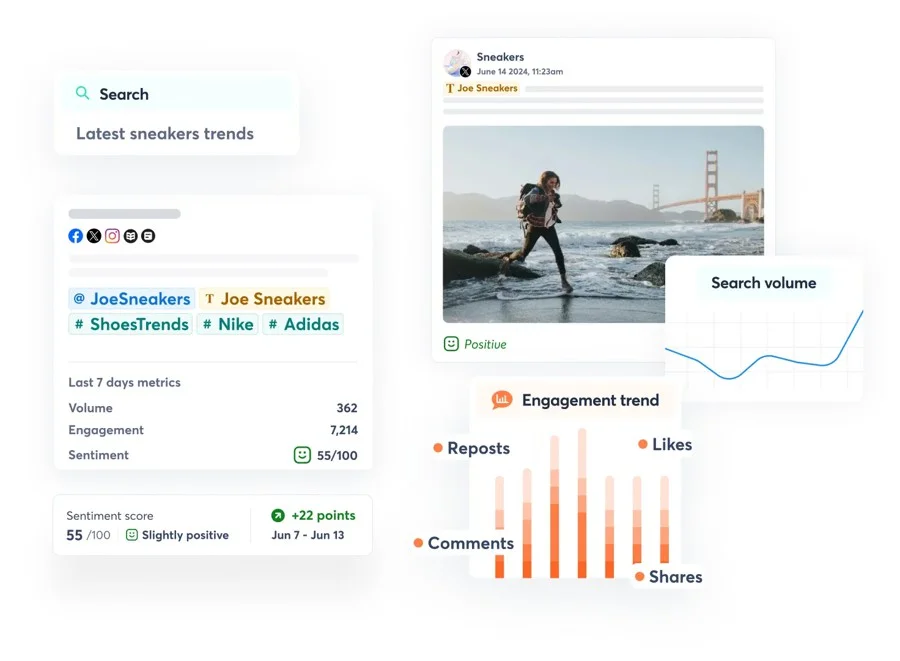
On Capterra, Sari G., a director of marketing in management consulting, found it “the best value” for a small company, then names the catch that matters most here: the “free analytic tools are very limited. If you want a ‘year in review’… can’t be done without buying the Power Reports which nearly doubles the price.”
That doubling is the pattern to watch, and it extends past reports. Agorapulse’s own 2026 release notes put Report Studio on the Advanced and Tailored plans only, so the entry tier does not get the feature the marketing leads with. Competitor Listening, Advanced Listening and Competitive Benchmarking are demo-gated add-ons rather than tier inclusions, and the pricing page does not publish what they cost.
The headline price also reads lower than it bills. Agorapulse’s paid plans start at $79 per seat per month billed annually, or $99 month to month, so a three-person team on Standard lists at $237. In fairness, another Capterra reviewer, Lindsey H., a social media consultant, values exactly the opposite: she can “add on a subcontractor without having to pay double like many platforms.” Both are true. Read the number as per person and price your real team.
What running Agorapulse standalone requires: scheduling, analytics, approvals and bio links are covered, so you would add a hashtag tool and a design app. Budget separately for the listening and benchmarking add-ons if competitor data is why you came.
5. Iconosquare
The most Instagram-native analytics tool here, priced in euros, which is the catch.
Coverage
- Scheduling
- Analytics
- Hashtags
- Design
- Influencer
- Bio links
What it actually looks like: Iconosquare was built Instagram-first and is still deepest there, with metrics that map to how Instagram works rather than a generic cross-network schema. The free tier is real rather than a trial: two profiles, one user, ten posts a month.

On Capterra, Jordan S., a director of content and communication strategy at a non-profit, states this article’s whole argument without being asked: “It’s so helpful with Instagram, who only shows you 30 days of data. It allows you to see your growth in realtime.” Then the catch: “It often has trouble staying connected to your social media accounts. You have to reconfirm the connection many times.”
Instagram depth is the real differentiator. Competitor benchmarking is unlimited on Excel, data retention is unlimited on that tier, and white-label reporting arrives without an enterprise conversation. Against that, every plan caps at five social profiles until Custom at twenty-plus, which is a hard ceiling for an agency, and extra users cost €16 a month each on top. A Capterra reviewer in construction notes there is no integration with Twitter or Pinterest either.
Iconosquare’s paid plans start at €33 a month on Launch, with Scale at €69 and Excel at €116, on a 14-day trial with no card. Euro-only billing means a US buyer takes on exchange-rate drift. That, plus the five-profile cap, is the honest answer to why teams search for an Iconosquare alternative. Need more accounts, or a dollar bill? Socialinsider covers pure analytics, and a scheduler with reporting attached covers breadth.
What running Iconosquare standalone requires: scheduling and analytics are both here, so a single Instagram-only brand can run on it alone plus a design app and a separate bio-link page, since Iconosquare has no link-in-bio product of its own. Any agency past five profiles needs a different anchor tool, not an add-on.
6. Socialinsider
Pure analytics and benchmarking, with the most generous profile counts in this category.
Coverage
- Scheduling
- Analytics
- Hashtags
- Design
- Influencer
- Bio links
What it actually looks like: No publishing at all. Socialinsider connects accounts, reports on them, benchmarks them against competitors and exports. Twenty accounts on the entry plan, four times what Iconosquare allows below Custom.
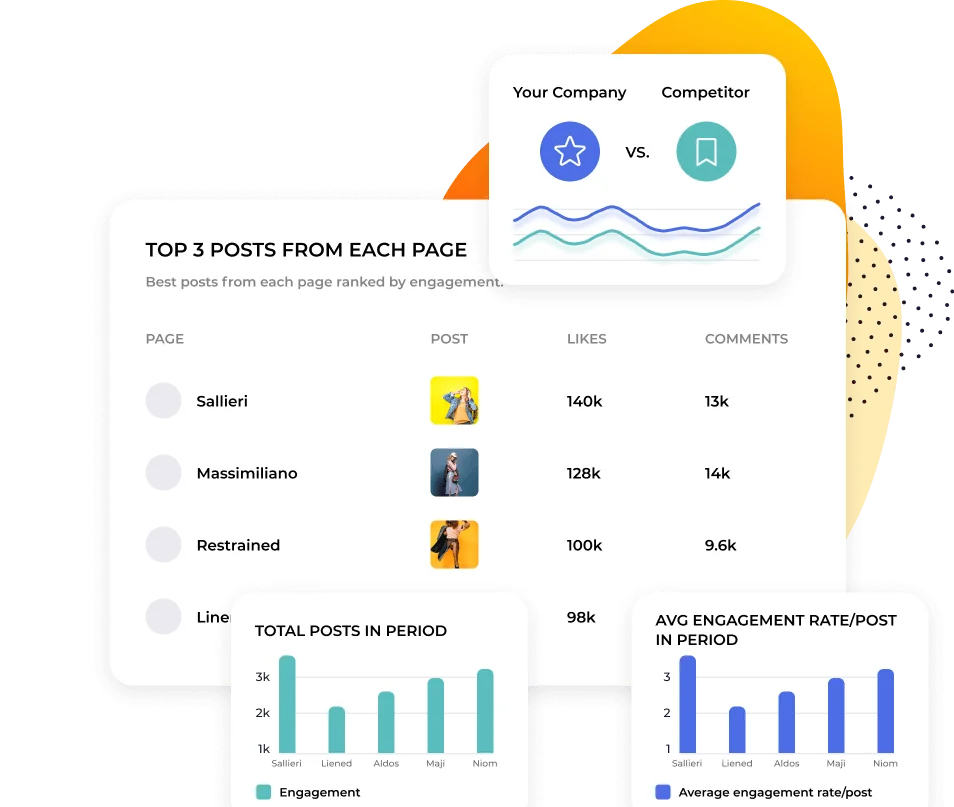
On Capterra, Dorra L., a director in marketing and advertising, values the “consolidated reporting for our clients and their competitors,” then asks for what is missing: “would love to see Pinterest reporting added.”
Worth reading that corpus with clear eyes. It skews unusually positive, with a long run of reviews answering “no downsides,” which is a signal about a happy niche rather than proof of a flawless product. The sharpest criticism comes from a web analyst on the same page, who finds it “messy, its metrics are not clear, you can’t configure dashboards.”
The structural limitation is simpler than either. It does not schedule, so it is always a second tool. And historical data is tiered as a feature, at three months on Adapt, six on Optimize and twelve on Predict, so the entry plan gives you barely more history than Instagram’s free ninety days. If year-over-year comparison is why you are buying, your real entry price is $199, not $82. Socialinsider’s paid plans run from $82 to $199 a month, with two months free on annual billing and a 14-day trial.
What running Socialinsider standalone requires: a scheduler, always, because publishing is absent by design. Pair it with SocialPilot or Buffer, and see our Instagram analytics tool if you would rather have reporting inside the scheduler.
Instagram Hashtag and Trend Tools
The widest price spread on this page: £11 to $179 a month for what sounds like one job. It is not one job. One tells you which tags to use, the others tell you which tags are dying. For the strategy behind either, read our Instagram hashtags guide.
| Tool | Scheduling | Analytics | Hashtags | Design | Influencer | Bio links | Starting price |
| RiteTag | |
|
|
|
|
|
$49/year |
| Flick | |
|
|
|
|
|
£11/mo |
| Keyhole | |
|
|
|
|
|
$179/mo |
7. RiteTag
Instant hashtag suggestions from a browser extension, at the lowest price on this entire page.
Coverage
- Scheduling
- Analytics
- Hashtags
- Design
- Influencer
- Bio links
What it actually looks like: A browser extension and mobile app that suggest hashtags for text or an image, color-coded by live engagement, wherever you happen to be writing. RiteTag offers tag sets that let you save and compare groups. It is not a dashboard you log into. It is a layer over whatever you already use.
The number is the story here. RiteTag’s own listing reads, verbatim, “RiteTag (Hashtag Suggestions): $49 / year.” Not per month. That is roughly $4 a month, and it makes RiteTag the cheapest paid tool on this page by a wide margin. Image-based suggestion is genuinely useful for Instagram, where the visual usually exists before the caption, and the extension model means no workflow change at all.
Two honest limits. nd buying it is more awkward than it should be: RiteTag has no working pricing page of its own, the price lives on the parent RiteKit site alongside three unrelated products, and hashtag reports are charged separately by data volume, so $49 is a floor rather than a ceiling. The interface has not changed much in years and feels dated next to Flick.
What running RiteTag standalone requires: everything else. It has no scheduling, no analytics and no reporting. Treat it as a $4-a-month add-on to whichever scheduler you already pay for.
8. Flick
Instagram hashtag research plus scheduling in one tool, and the best value in this category.
Coverage
- Scheduling
- Analytics
- Hashtags
- Design
- Influencer
- Bio links
What it actually looks like: Flick was built for hashtag research first. Search, collections, suggested tags, a randomizer so you stop repeating the same block, CSV export. Scheduling was added around it afterwards. Hashtag performance tracking then tells you which of your saved sets actually earned reach, which is the part suggestion tools skip.
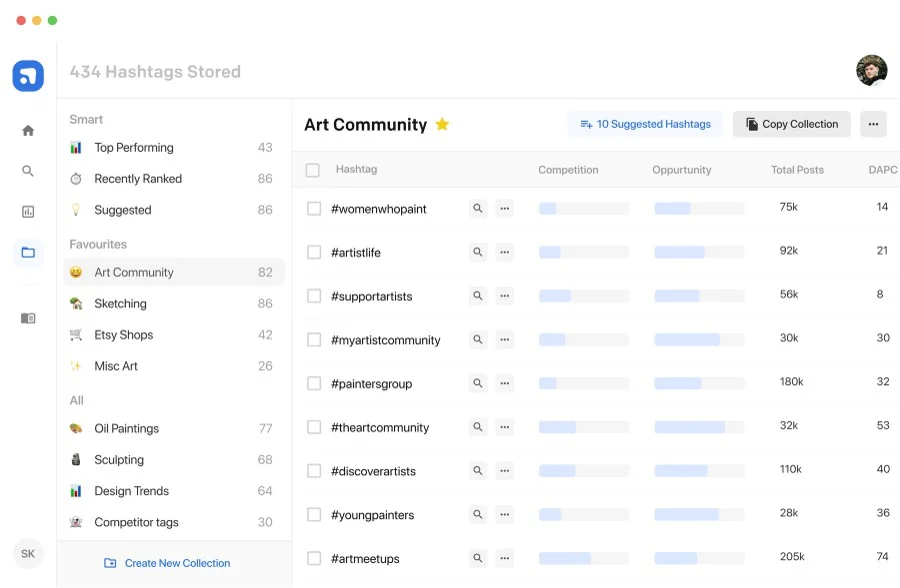
It is the only tool in this category that also schedules, so it can be your entire stack if hashtags and posting are your two jobs. Smart auditing and advanced search filters on Pro go past suggestion into real research. At £11 it undercuts Keyhole by more than ninety percent on the overlapping part of the job.
The limits are the usual small-tool ones. Flick’s paid plans are priced in pounds only, so US buyers take on exchange-rate drift, the same problem as Iconosquare in euros. Solo caps at thirty scheduled posts and thirty tracked Instagram posts a month, which an active account passes quickly, and extra profiles cost £4 each. Analytics stay basic next to a dedicated analytics tool. The trial is seven days rather than the fourteen most tools here offer.
One transparency note: Flick has no Capterra listing, so there is no verified review corpus to quote from the way there is for the tools above.
What running Flick standalone requires: a design app, and an analytics tool if reporting goes to anyone but you. Scheduling and hashtags together is genuinely enough for a creator running one account.
9. Keyhole
Hashtag and campaign tracking at agency scale, with a pricing floor that rules out everyone else.
Coverage
- Scheduling
- Analytics
- Hashtags
- Design
- Influencer
- Bio links
What it actually looks like: You set up trackers for a hashtag, a campaign or a keyword, and Keyhole collects against them in real time with roughly six months of history and customizable reports. It flags which tags are declining and which are starting to trend, which is the analytical layer neither RiteTag nor Flick provides.
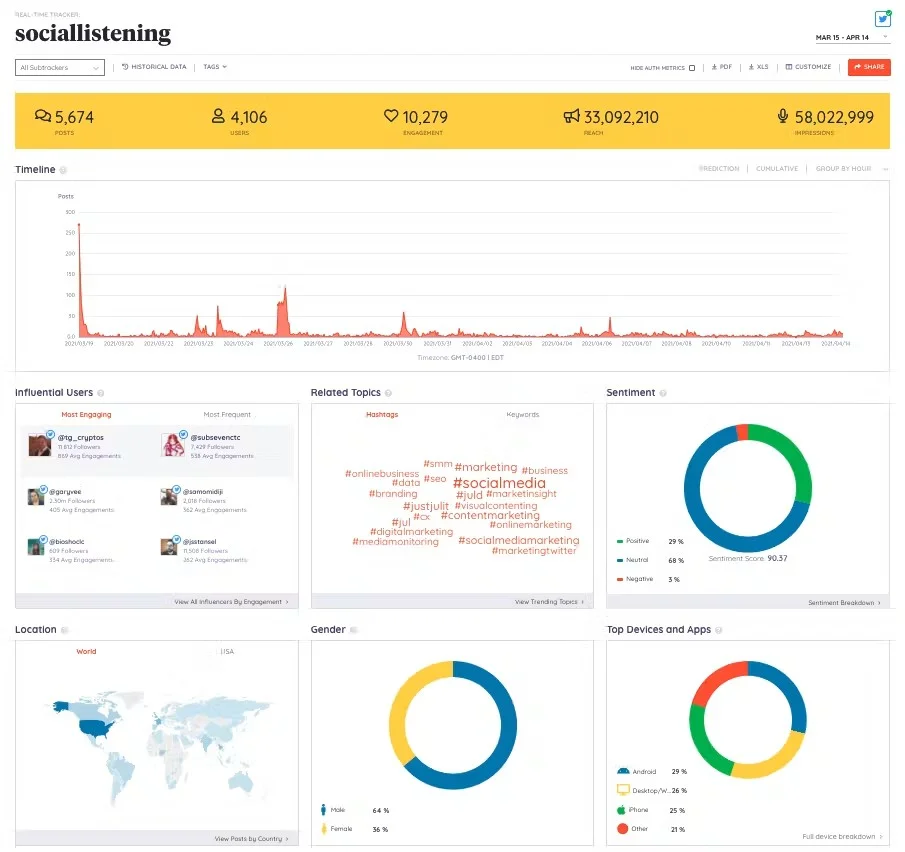
Keyhole’s G2 reviewers rate the clean interface, quick onboarding and customizable reports highly, and the declining-versus-trending signal is the genuine differentiator: it tells you when to retire a tag, not just which tags exist. Campaign-level tracking suits an agency reporting on a launch rather than a feed.
Then the price. Keyhole’s paid plans start at $179 a month for three trackers with no free plan, which is sixteen times Flick’s entry price for a narrower job, and the same G2 reviewers say so, describing the pricing as steep against services available free elsewhere. They also report no mobile app, occasional glitchiness with support that did not resolve it, weak filtering, and campaign and influencer tooling thinner than the price implies.start at $179 a month for three trackers with no free plan, which is sixteen times Flick’s entry price for a narrower job, and the same G2 reviewers say so, describing the pricing as steep against services available free elsewhere. They also report no mobile app, occasional glitchiness with support that did not resolve it, weak filtering, and campaign and influencer tooling thinner than the price implies.
Ownership matters too. Muck Rack acquired Keyhole on 31 August 2024, its first acquisition, and said it would fold Keyhole’s tools into the Muck Rack platform immediately. The product still runs independently, but when we tried to start a trial in August 2026 we were routed to a sales form rather than a self-serve signup, which is a slower path than anything else on this page.
What running Keyhole standalone requires: a scheduler and a design app, since it publishes nothing. It is an add-on to an agency stack, not a foundation.
Instagram Design and Editing Tools
Two of these three now schedule posts as well, which changes whether you need a separate scheduler. Check that before you buy one.
| Tool | Scheduling | Analytics | Hashtags | Design | Influencer | Bio links | Starting price |
| Canva | |
|
|
|
|
|
Free |
| Adobe Express | |
|
|
|
|
|
Free |
| Instasize | |
|
|
|
|
|
Free |
10. Canva
The default, with a free tier good enough that most Instagram accounts never upgrade.
Coverage
- Scheduling
- Analytics
- Hashtags
- Design
- Influencer
- Bio links
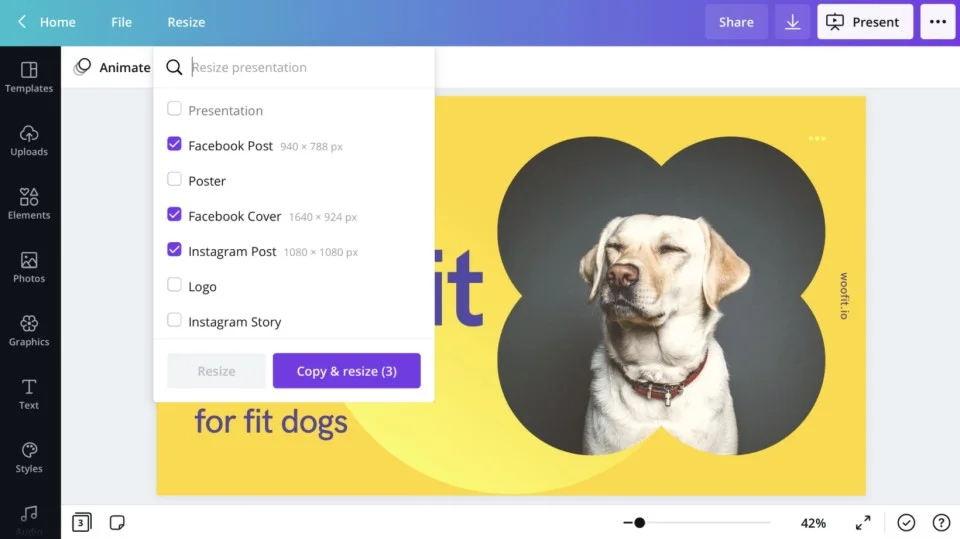
What it actually looks like: Drag-and-drop templates pre-sized to every Instagram format, covering the feed post, Story, Reel cover and carousel, plus a content planner that can publish directly. Canva puts over 1.6 million templates and 4.7 million free photos on the free plan.
On Capterra, Samuel B., a working graphic designer, says “Canva is incredibly easy to use and offers a wide range of templates,” then names the paywall: “Some of the best features are only available with Pro.”
He has picked the right complaint. Background Remover and Magic Resize both sit behind Pro, and those are the two features Instagram work needs most, since resizing one asset across a feed post, a Story and a Reel is precisely the job Magic Resize does. Premium assets stay watermarked until you pay, and free AI use is metered at 200 standard or 20 premium generations a month.
Against that, the free plan is permanent and unusually generous: the full editor, a thousand design types, real-time collaboration, exports to PNG, JPG, PDF, MP4 and GIF, and 5GB of storage. Brand kits on Pro keep a team’s colors and fonts consistent without anyone policing it. Canva’s paid plans put Pro at around $18 a month, roughly $12 billed annually, with Business near $25 per user. It integrates with most schedulers here, including ours.
What running Canva standalone requires: a real scheduler, because its planner is a convenience rather than a social media calendar with approvals. Design is fully covered; nothing else is.
11. Adobe Express
Free-tier design with a real content scheduler attached, which is the part people miss.
Coverage
- Scheduling
- Analytics
- Hashtags
- Design
- Influencer
- Bio links
What it actually looks like: Templates, generative AI editing and Adobe Stock, in a browser.. The overlooked feature in Adobe Express is scheduling: the free plan publishes to one account per social network and Premium to three, so a solo creator can design and post from one login at zero cost.
On Capterra, Jacqueline C., a brand designer, says it is “geared towards those who aren’t designers” and that “access to Adobe stock library is valuable,” then lands a criticism on exactly what Premium sells: “Found their A.I tools a little disappointing. It wasn’t as intuitive as one would hope.”
That is worth weighing, because generative credits are the main upgrade reason. What holds up is the free tier: 100,000 templates, a million Adobe Stock assets, 4,000 fonts and scheduling included. Adobe Express pricing puts Premium at $9.99, roughly half Canva Pro, adding 250 generative credits, 200 million Stock assets and 100GB.
The ceilings are firm. Three accounts per network means no agency use case survives it, generative credits run out mid-project, the template library is noticeably less Instagram-tuned than Canva’s, and fewer schedulers integrate with it. Teams pricing starts at $4.99 for the first year and renews at $7.99, so budget for year two.
What running Adobe Express standalone requires: almost nothing for one Instagram account, since design and scheduling are both here. Past three accounts you need a real scheduler alongside it.
12. Instasize
A mobile-first editor that repositioned around AI, and repriced accordingly.
Coverage
- Scheduling
- Analytics
- Hashtags
- Design
- Influencer
- Bio links
What it actually looks like: Instasize is now billed as an AI photo editor for creators, on iOS, Android and web. Resizing, cropping, text and layers are unlimited and free. The AI work runs on daily credits, covering generation, background removal, AI edits and chat editing.
It is genuinely good at its narrow job, which is getting a photo to fit Instagram without an awkward crop, and that part stayed free with no watermark. Mobile-first suits shooting and editing on a phone, which is how most Instagram content is actually made.
The pricing changed shape and got expensive. Instasize’s paid plans are now AI-credit tiers rather than feature tiers, and Pro starts at $40 a month, more than double Canva Pro and four times Adobe Express Premium for a narrower tool. If you want the AI features regularly, this is the costliest design option on the page. There is no scheduling, no collaboration and no brand kits, and like Flick it has no Capterra listing, so there is no verified review corpus to quote.
What running Instasize standalone requires: a scheduler and, realistically, Canva as well, since brand kits and template breadth are both absent.
Instagram Influencer Marketing Tools
The only category here where nothing has a published price. All three are quote-only, and two assume you already run a funded program. If you are testing creator marketing for the first time, none of these is your first purchase.
| Tool | Scheduling | Analytics | Hashtags | Design | Influencer | Bio links | Starting price |
| Upfluence | |
|
|
|
|
|
Quote only |
| Aspire | |
|
|
|
|
|
Quote only |
| Meltwater | |
|
|
|
|
|
Quote only |
13. Upfluence
Creator discovery at scale, with e-commerce attribution and no cut of your sales.
Coverage
- Scheduling
- Analytics
- Hashtags
- Design
- Influencer
- Bio links
What it actually looks like: Upfluence runs a searchable database of more than 14 million creators across Instagram, TikTok, YouTube, Twitch and Pinterest, with AI and lookalike search, audience data for vetting, recruitment pages creators apply through, and a CRM to manage them. Shopify, WooCommerce and Amazon integrations attribute sales back to individual creators.
On Capterra, Samuel P., a chief marketing officer in retail, calls the “search and filter functionality for finding influencers really clever” and “the strongest thing Upfluence has,” then names the weak half: “The way you organize lists and campaigns is very clunky in Upfluence.”
Search is what you are buying, then. The commercial terms are genuinely better than commission-based rivals, with fixed platform fees and no percentage taken from creator-driven sales, which matters once a program works. E-commerce attribution turns creator spend into a number a finance team accepts.
The contract is the part to read twice. Upfluence’s pricing is quote-only and modular across Find, Scale and Autopilot, so the quote depends on choices you make before knowing their cost, annual plans carry a twelve-month minimum, and the free trial only unlocks after a consultation call. Another Capterra reviewer working in influencer marketing reports a contract that “automatically renewed without reconfirm,” with the clause “buried in their terms and conditions.” Two independent signals pointing the same way.
What running Upfluence standalone requires: everything except creator discovery. No scheduling, no design, no hashtags. It sits alongside your stack, never inside it.
14. Aspire
Built for brands with a funded, ongoing creator program. Priced that way too.
Coverage
- Scheduling
- Analytics
- Hashtags
- Design
- Influencer
- Bio links
What it actually looks like: Three plans, Essentials, Pro and Enterprise, none priced publicly. . Aspire covers creator discovery, campaign workflow, content rights and payments, aimed at brands running continuous programs rather than one-off collaborations.
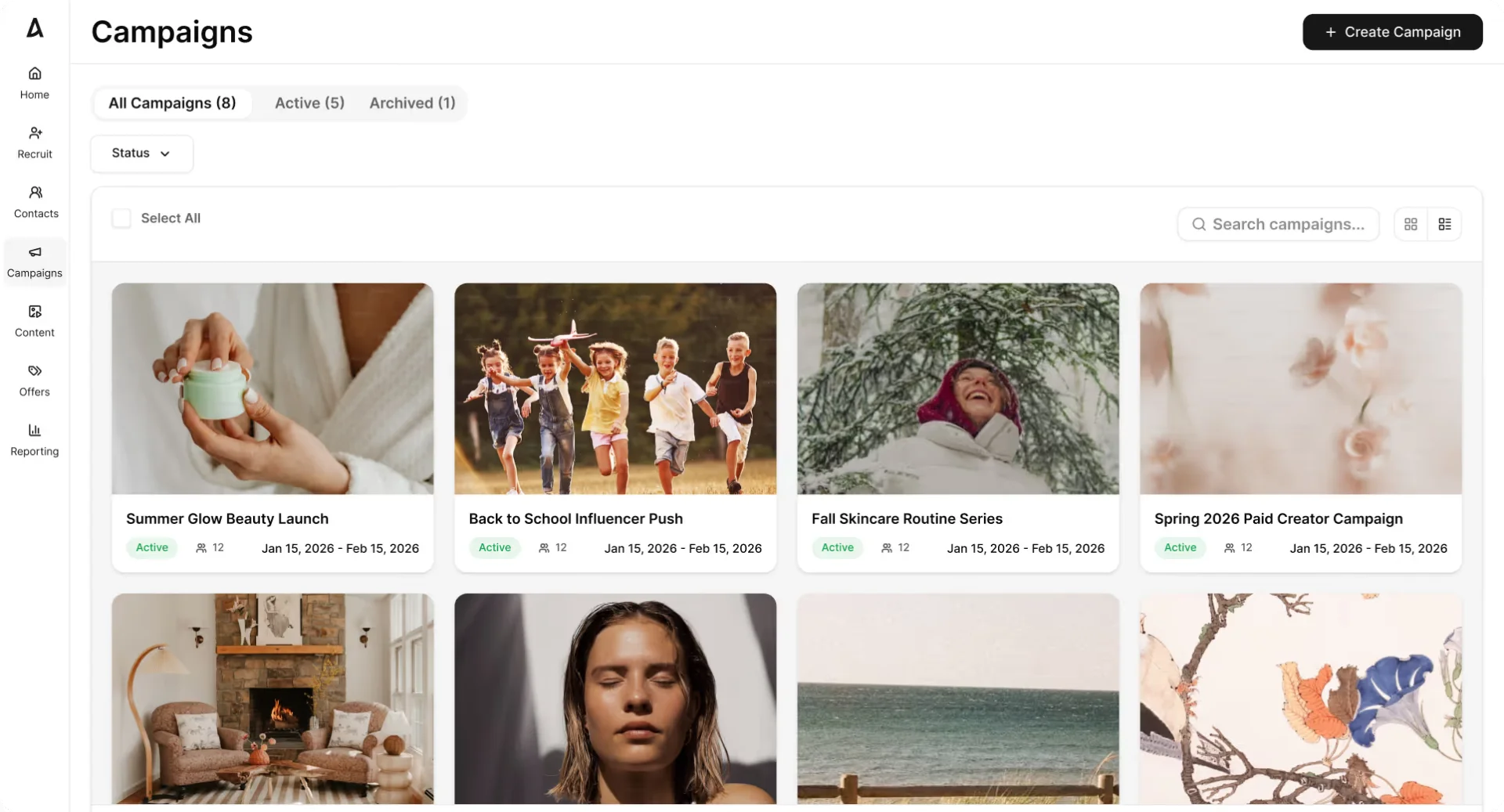
The workflow is the strength. Content rights and payments are handled in-platform rather than across spreadsheets and separate transfers, which is the difference between a program and a series of favors, and reviewers rate the creator relationship management highly.
The pricing opacity is worse here than at Upfluence. There is no published figure at any tier, and Capterra lists an estimated starting point around $2,499 a month. Treat that as a third-party estimate rather than Aspire’s own number, because Aspire publishes nothing. If it is close, it tells you the real fit: this is not a tool for a brand testing creator marketing, it is for one that already has a budget line.
What running Aspire standalone requires: the same as Upfluence, everything else, plus a procurement conversation before you can evaluate it.
15. Meltwater
A media intelligence platform with influencer marketing as one module among many.
Coverage
- Scheduling
- Analytics
- Hashtags
- Design
- Influencer
- Bio links
What it actually looks like: With Meltwater you choose modules and get a quote. Social listening runs across every tier from Starter to Agency, while influencer marketing is available only on Enterprise and Agency. If Instagram creator work is your single need, you are buying a platform to reach one part of it.
On Capterra, DeDe C., a communications manager in utilities, likes “the dashboard for easy monitoring of our media and social coverage,” then describes the commercial model exactly: “They charge separate pricing for everything… every cool new feature… it’s always extra.”
That is the module gating, said by a customer. Real breadth is the upside, with listening, media monitoring and influencer work in one contract, which suits a comms team that already needs monitoring. But gating influencer marketing to the top two tiers means the entry price for the job you actually want is the highest on this page, and Meltwater’s pricing is quote-only and tailored, so comparison shopping is slow. Another Capterra reviewer, a director in education, warns the contract “automatically renewed for the next year if they don’t give 90 days notice,” a clause “buried in your agreement.” The pricing page also never names Klear, the influencer product Meltwater acquired, so do not assume what a quote includes. Ask.
What running Meltwater standalone requires: nothing on listening or monitoring, which it covers deeply, but everything on publishing, design and hashtags. For a team that only wants Instagram creator discovery, this is the wrong shape of purchase.
Instagram Bio Link and Engagement Tools
The cheapest category here, and the one where the free tier is most often genuinely enough. Note first that Later includes Link in Bio from its entry plan, so if you already pay for Later you may need nothing in this section.
| Tool | Scheduling | Analytics | Hashtags | Design | Influencer | Bio links | Starting price |
| Linktree | |
|
|
|
|
|
Free |
| Milkshake | |
|
|
|
|
|
Free |
16. Linktree
The category default, more expensive than it was a year ago.
Coverage
- Scheduling
- Analytics
- Hashtags
- Design
- Influencer
- Bio links
What it actually looks like: : One page, many links, click data attached. Linktree gives unlimited links and basic analytics on the free plan, which covers most creators indefinitely. Paid tiers add design control, link scheduling, SEO settings and deeper analytics.
On Capterra, Rachel P., an influencer in cosmetics, likes how “simple and straightforward it was to set up,” then names the constraint every free user meets: “Not very customizable unless you pay.”
Recognition is part of the value, since visitors know what a Linktree is. But the money question is not the subscription, it is the commerce fee. Linktree takes 12% on Free, 9% on Starter and Pro, and 0% only on Premium, so if you sell through the page the cheap plans are not the cheap option and Premium at $35 can work out cheaper than Pro at $15 once volume is real. Removing Linktree branding also requires Premium.
Prices rose in November 2025 and not slightly. Third-party pricing trackers put Starter at $5 before the change, Pro at $9 and Premium at $24, against today’s $8, $15 and $35, with Pro up by roughly two thirds and Premium replacing the old Business tier. Linktree’s paid plans are worth re-checking if you priced them a year ago.
What running Linktree standalone requires: everything else, since it does one job. Free is the right starting tier unless you sell, in which case Premium’s 0% fee is the only one that makes arithmetic sense.
17. Milkshake
A free mobile site builder rather than a link list, if you accept that it is phone-only.
Coverage
- Scheduling
- Analytics
- Hashtags
- Design
- Influencer
- Bio links
What it actually looks like: With Milkshake you build a small multi-page site on your phone using cards, each a page you fill with text, images, video and links. No coding and no desktop.
This is the most capable free tier in the category. Unlimited links and cards, thirty days of analytics and digital product sales, at zero. Lite removes branding for $2.99 a month, the cheapest de-branding on this page by a wide margin, since Linktree charges $35 for the same thing. The result reads like a small site rather than a link list, which looks more like a brand and less like a stopgap.
The limitation is absolute and worth knowing before you start. It is iOS and Android only, with no desktop editor, so every change is made on a phone and building a longer page that way is slow. Free analytics stop at thirty days, custom domains and Google Analytics need Pro+ at $99.99 a year, and team collaboration does not exist. Milkshake’s paid tiers run $2.99 to $8.33 a month.
What running Milkshake standalone requires: everything else, and a tolerance for editing on a phone.
Find Deeper Instagram Tool Comparisons
This page compares 17 tools across six jobs. Three companion guides go deeper on one job each, and they are genuinely different pages rather than longer versions of this one.
All-in-One Instagram Management Tools
We cut the scheduling section to three tools deliberately. The full all-in-one field, Hootsuite, Sprout Social, Agorapulse, Planoly, Loomly, Planable, ContentStudio and more, is judged on breadth across fifteen instagram management platforms. Go there if you want one tool to do everything.
Instagram Analytics Tools
If reporting is the only reason you are shopping, see Instagram analytics compared for a wider field than the three tools above, with more depth on metrics, export formats and benchmarking.
Instagram Automation Tools
Deliberately absent from this page: DM automation and approval-workflow depth. Those belong to our Instagram automation tools guide, which sorts tools into five workflow layers: scheduling, approvals, DM automation, analytics and multi-account management. It covers a different product set including ManyChat, Chatfuel and Inro. None of them appears here.
Where Instagram’s Own Native Tools Already Have You Covered
Nearly every list like this one skips this section, which is strange, because it is the first thing a buyer should read. Instagram gives you real tools for free. Knowing exactly where they stop is what tells you which paid tool, if any, you actually need.
Instagram Insights and Meta Business Suite
Instagram Insights is free on any professional account and covers profile activity, content performance and audience activity, as Meta documents in its own help center. It is a real analytics product, not a teaser.
It stops in four specific places:
90-day retention. Data older than that is deleted permanently, so a year-over-year comparison is impossible. Instagram’s professional dashboard offers preset windows of 7, 14, 30 and 90 days and nothing beyond. Story metrics go after 14 days.
No export. Nothing leaves the app in a form a client can read.
No competitor data. Your own account only.
Instagram only. No cross-network view.
That 90-day wall is the reason most often given for buying a paid analytics tool at all, and you saw it stated independently further up this page by a non-profit content director on Capterra, who valued Iconosquare precisely because Instagram “only shows you 30 days of data.” You are usually not buying better metrics. You are buying memory.
Meta Business Suite is free and is now the official way to schedule Instagram posts from a desktop. It handles feed posts, Reels and Stories, and Meta’s help centre documents how.
Its limits are equally specific:
25 social media posts per day, per account.
75 days ahead at most.
No bulk scheduling. Every social media post is created individually.
No collaborative posts. They cannot be scheduled at all.
Stories publish, but stickers do not. Interactive stickers like polls and questions get stripped.
No personal profiles. Professional accounts only.
What Instagram Creator Studio Actually Does
If you came here searching for Instagram Creator Studio, here is the straight answer: the original no longer exists. It stopped being reachable around March 2023, redirecting to Business Suite, and Meta folded its tools into Meta Business Suite entirely. The classic dashboard cannot be opened in 2026.
Then the name came back, attached to something different. Meta announced a rebuilt, standalone, AI-powered Creator Studio app on 24 June 2026 and rolled it out officially on 12 August 2026, iOS only, in the United States and Canada only, with Android still waitlisted. It carries a Creator Assistant for guidance on reach, engagement and earnings, a daily priorities feed, comment triage with drafted replies in your own voice, and conversational answers to questions like “when should I post?”
The important part: it is a Facebook creator app, not an Instagram one. It will not manage your Instagram account.
So if Creator Studio is what you were looking for, the tool you want is Meta Business Suite.
When a Third-Party Tool Is Still Worth It
Meta documents every one of the limits above in its own help center, which is worth knowing: these are not rumors or throttling, they are the published product. You pay for a third-party tool when you cross one of these five lines, and not before:
You need history past 90 days. Insights deletes it. This is the most common reason to pay.
Someone else needs to read the numbers. No export means no client report.
You want competitor data. Instagram will never show you a competitor’s numbers.
More than one person touches the calendar. Business Suite has no real approvals or roles.
You post at volume or in batches. 25 a day, 75 days out, one at a time, becomes the bottleneck.
If none of those five applies to you, use Meta Business Suite and Instagram Insights, and spend the money somewhere else.
How to Choose the Right Instagram Tool
Start with one job, not a category. Look at your row in the matrix near the top of this page, find the columns marked Essential, and shop only for those. Two jobs means two tools, or one tool that covers both. Not a platform that claims six.
The pattern in public review data backs this up. The complaints that recur are almost never “this tool cannot do enough.” They are about caps hit sooner than expected and seats billed separately, which are both consequences of buying the wrong shape rather than the wrong brand.
Then check the free options. Meta Business Suite schedules, Instagram Insights reports, Canva and Adobe Express design, Milkshake and Linktree handle bio links, all at zero. Pay only where a free tool has a documented limit you will actually hit.
Combinations that work in practice. Where a job is only nice to have for your row, the tool below it is free:
| Team type | Anchor tool | Add for hashtags | Add for design |
| Solo creator | Buffer free or Meta Business Suite | Flick (£11) | Canva free |
| In-house SMB team | SocialPilot Standard ($50) | RiteTag ($49/yr) | Canva Pro |
| Small agency | SocialPilot Premium ($100) | Flick Agency (£55) | Canva Business |
| Larger agency | SocialPilot Ultimate ($200) + Socialinsider | Keyhole ($179) | Canva Business |
Note what is missing from every row: an influencer platform. None is a starting purchase. Add one when creator marketing has its own budget line.
How We Tested and Curated This List
What We Actually Did
Opened all 17 pricing pages in August 2026 and recorded the entry price, billing period and currency from the vendor, rather than repeating a figure from a previous version of this page.
Cross-checked every price against that tool’s own section here, so the table and the write-ups cannot disagree. Twelve of eighteen figures on the previous version were stale or wrong, one by a factor of twelve.
Verified each tool still operates. One did not. Hashtagify’s site returns a server error, Semrush shows its traffic down 93.3% month on month, and multiple 2026 sources describe it as discontinued. We removed it rather than price a product you cannot buy, and replaced it with Keyhole.
Tested the free tiers of Meta Business Suite, Instagram Insights, Buffer, Canva, Adobe Express, Linktree and Milkshake on live accounts to confirm the documented caps are the real caps.
Pulled every customer quote from a named, verified reviewer on Capterra or G2, with their role attached, including critical ones about our own product.
What We Couldn’t Verify
Quote-only pricing. Upfluence, Aspire and Meltwater publish no figures. The Aspire number is a Capterra estimate, not Aspire’s own, and we label it that way.
Three prices that resist automated checking. Canva, Linktree, and Keyhole withhold figures from automated requests. Those come from corroborating sources, flagged in place.
Two tools with no review corpus. Flick and Instasize have no Capterra listing, so their sections rely on documented specifications rather than customer quotes. We would rather say that than invent a reviewer.
Long-term reliability. We can test whether a tool works this month. We cannot tell you how its support answers in month nine, and no list can.
The Right Instagram Stack Is the Smallest One That Works
Most people reading a page like this buy one tool too many. Read your row in the matrix, count the Essential jobs, check whether Instagram’s free tools already cover them, and buy only what is left. For a lot of accounts that is nothing at all. For most of the rest it is one tool and a cheap specialist.
If your row came out as several accounts, more than one person on the calendar, and a client who wants a report, that is the shape SocialPilot was built for, and you can test the whole thing on a 14-day free trial without a card. If your row came out as one account and a phone, use Meta Business Suite and keep the money.
Frequently Asked Questions
What are the best free Instagram tools?
Meta Business Suite for scheduling. Instagram Insights for analytics. Canva and Adobe Express for design, and Adobe Express also schedules to one account per network free. Buffer's free plan covers three channels. Milkshake and Linktree have free bio-link tiers. Between them, a solo creator can run an Instagram account properly without paying anything.
Which Instagram tools help with analytics?
Iconosquare and Socialinsider are the two dedicated analytics tools on this page, and Agorapulse is the strongest on competitor reporting. SocialPilot includes analytics alongside scheduling if you want one tool for both. Start with Instagram Insights, though, because it is free and covers more than most buyers expect.
What tools do influencers use for Instagram?
Mostly free ones: Canva or Adobe Express for design, Meta Business Suite or Buffer for scheduling, Flick for hashtags, Linktree or Milkshake for bio links. Upfluence, Aspire and Meltwater are what brands use to find influencers, not what influencers use themselves.
Are Instagram tools safe to use?
Any tool connecting through Instagram's official API is safe, and every tool here does. What is not safe is anything promising automated follows, likes, comments or follower growth. That breaks Instagram's terms and risks the account. Check the tool authenticates through Instagram's own login and never asks for your password directly.
Can you schedule Instagram Stories with a third-party tool?
Yes, and it is one of the clearest reasons to pay for one. Meta Business Suite publishes Stories but strips interactive stickers, so polls and question boxes have to be added by hand at post time. Third-party schedulers here publish Stories on a schedule, and those with a mobile app can remind you to add stickers manually. Nobody can schedule a Story with a working poll automatically, because Instagram's API does not allow it. Any tool claiming otherwise is describing a reminder.
Are free Instagram tools good enough for a business account?
For a single account, usually yes. Meta Business Suite, Instagram Insights, Canva's free plan and a free bio-link page will run a professional account indefinitely at no cost. The point where free stops working is specific and rarely about features. It is when a second person needs access, when a client asks for a report, or when someone asks how this December compares to last December and the data is gone.
What's the best all-in-one Instagram management tool?
It depends on shape. SocialPilot suits agencies running several accounts, priced on accounts and users rather than per channel. Later suits creator-first brands who plan visually. Buffer is cheapest for one or two accounts. Fifteen more platforms are compared on the dedicated page.
Do I need a native Instagram tool or a third-party one?
Start native. Pay for a third-party tool only when you cross one of the five lines set out in the native-tools section above. If none of them applies to you, Meta Business Suite and Instagram Insights are enough.
What are the best Instagram growth tools?
Growth comes from hashtag and trend research plus analytics, not automation. Flick at £11 a month covers tag research and scheduling together, the best-value growth tool here. Keyhole tells you which tags are declining versus trending, if you have the budget. Pair either with analytics so you can see which content earned reach. Avoid anything selling automated follows. It risks the account and the followers are worthless.
About the Author












Where SocialPilot Fits, and Where It Doesn’t
Full disclosure: we make SocialPilot, and it is one of the 17 tools on this page.
SocialPilot is a scheduling and multi-account management platform built for agencies and teams running more than one Instagram account. Against the six jobs, it covers two natively, does two partly, and leaves two open:
Scheduling and Content Planning One calendar across every connected account, bulk upload from CSV, first-comment scheduling, Reels and Stories publishing.
Analytics and Reporting Native analytics with white-label reports an agency can send under its own name, no enterprise contract required.
Hashtag and Trend Research The AI assistant generates hashtags from your caption, and you can save groups to reuse while scheduling. What it does not do is research them. No trend scoring, no discovery, no saturation data, which is why Flick, RiteTag and Keyhole exist.
Design and Editing A built-in editor and AI assistant handle everyday posts. For real design work you will still open Canva.
Influencer Marketing Nothing here finds, vets or pays creators.
Bio Links and Engagement No link-in-bio product at all.
Two more things worth saying out loud. It is not the cheapest way to schedule Instagram posts, because that is Meta Business Suite, for free, and we say so in its own section below. And the fair criticism from our own customers is reliability, which you will find quoted in full in the SocialPilot entry rather than buried.