

Creating great content is one thing, and making sure it reaches the right people is another. With over 5.6 billion users scrolling through social media every day, not everyone out there is your audience. That’s where social media audience analysis comes in.
It’s all about understanding who your target audience is, so your every post, ad, or story feels like it was made just for them. When you know your audience, you stop sharing generic content and start creating the right content that shows up in the right people’s feeds.
In this guide, we’ll break down what social media audience analysis really means, why it’s essential, and how to do it step by step, so you can stop guessing and start connecting with the people who actually matter to your brand.
Key Takeaways
- Social media audience analysis is the process of understanding who your followers and potential customers truly are, their demographics, interests, behaviors, and motivations.
- It helps brands identify what their audience cares about, when they’re most active, and which content formats drive the most engagement.
By analyzing data from platforms, surveys, and competitors, businesses can create content that feels personal and relevant instead of generic.
- Audience analysis allows marketers to target the right people, improve ad performance, and boost ROI.
- Regular audience research helps brands adapt to changing trends, ensuring continued engagement and loyalty.
Social media audience analysis is the process of understanding who your audience really is—the people most likely to engage with your content, buy your products, or follow your brand. It’s not just knowing their age or where they live, it’s about finding out what they like, what problems they’re trying to solve, and how they engage on social platforms. So, it’s more like knowing them as a person. It helps you find out what content they want to watch, share, and engage with.
Take Spotify, for example. The brand capitalized on audience data and social listening to define its “Wrapped” campaign and customize content to individual users’ likes. The result? According to a Spotify spokesperson, over 60 million of its stories were shared across social media, and over 156 million users engaged with the campaign year after year.
Here’s what audience analysis usually looks at:
- Demographics: Age, gender, location, occupation, etc.
- Interests and hobbies: What topics, creators, or brands they follow.
- Online behavior: When and how they use each platform.
- Pain points and motivations: What challenges they face (pain points), solutions they’re looking for, or the objective of following your account.
- Engagement patterns: What kind of content they like, share, or comment on.
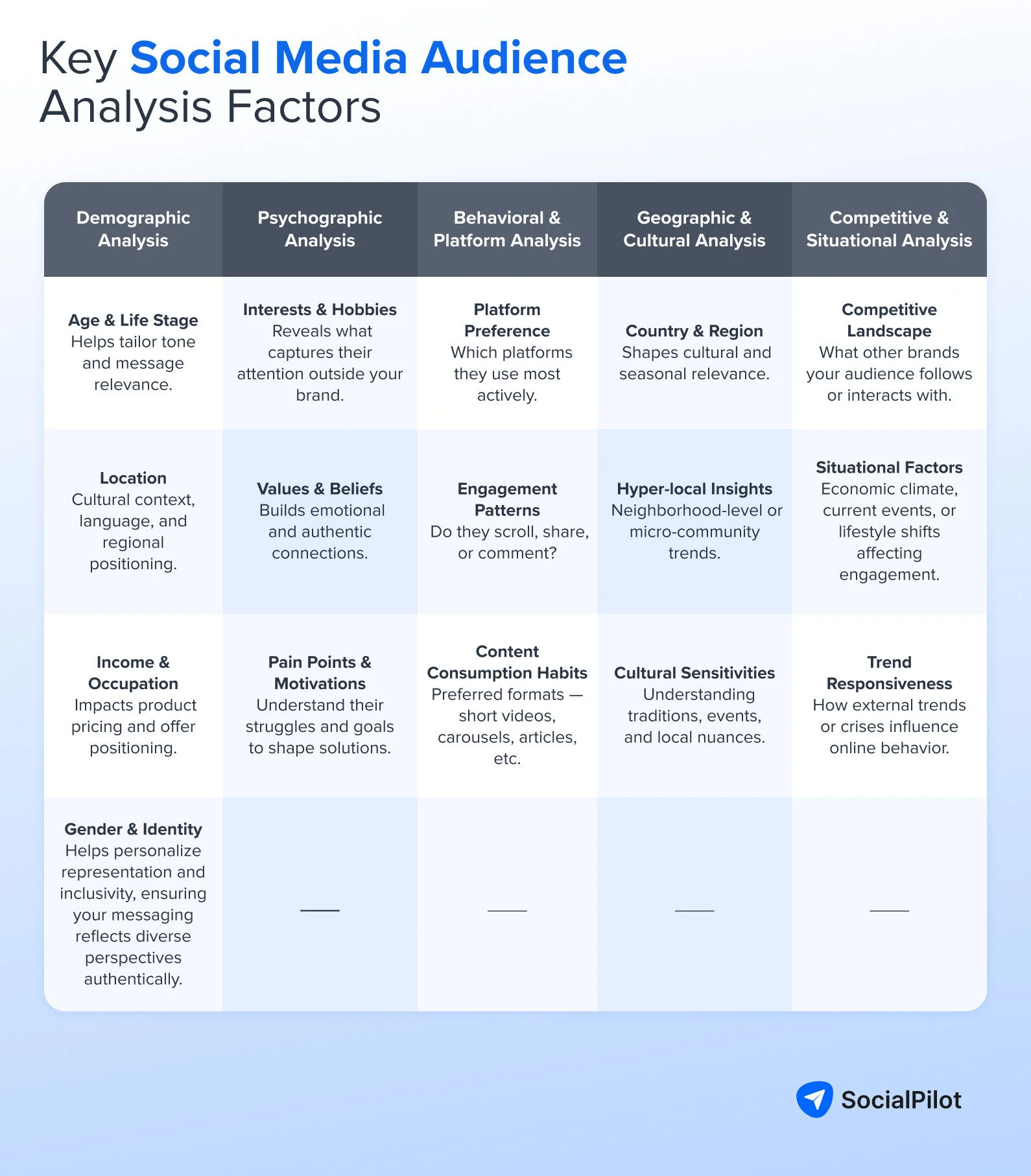
Based on the above factors, audience analysis can be divided into different categories:
Why Do You Need to Define a Target Audience?
With billions of people active on social media every day, it may seem like you can reach anyone, anywhere. But trying to talk to everyone often means connecting with no one, especially in 2025 when the organic content reach continues to decline across most social platforms.
Defining your target audience helps you focus your time, budget, and creativity on the people who truly matter to your brand. When you have clear customer segments, it becomes easier to understand their needs and pain points through research and insights. That understanding allows you to connect with them through the right social media strategies and ultimately achieve your business goals.
Here’s why it’s so important:
- Better use of resources: Your time and money are limited. Knowing exactly who you’re trying to reach helps you create content and campaigns that actually work, instead of spreading yourself too thin.
- More relevant content: When your posts and messages reflect your audience’s interests, problems, and goals, they’re more likely to pay attention and engage.
- Stronger relationships: Understanding what your audience values helps you earn trust and build a loyal community that keeps coming back.
- Competitive edge: When you know your audience better than your competitors do, it’s easier to stand out and offer something unique.
- Higher ROI: Focused marketing tends to perform better because it reaches the right people with the right message at the right time.
- Smarter insights: Once you define your audience, you can collect real data about what’s working and use it to make your strategy even stronger.
For example, if you’ve launched a beard-trimmer brand, your focus should be on men (ages 18 to 45) who are conscious of grooming and personal style, not the general public. You could create content around beard care tips, styling routines, and product demos to engage this specific audience effectively.
Defining your target audience isn’t about excluding people; it’s about creating the most impact by connecting with those who are most likely to follow your page or become potential customers.
Knowing who you’re talking to on social media is half the battle. Without a clear audience in mind, even great content can get lost in the noise. So before you plan campaigns or develop a social media strategy, take time to figure out who your ideal audience really is.
Here’s a simple step-by-step process to get started:
- Start with the audience data you already have
- Listen to Your Audience
- Talk to your current customers
- Study your competitors’ followers
- Build your audience personas
- Keep refining over time
1. Start with the audience data you already have
If you already have a social media account, then look at your existing followers, customers, and website visitors by diving into the analytics section. Like most social platforms, Instagram Insights, YouTube Analytics, and LinkedIn Page Analytics give you valuable details such as:
- Age, gender, and location
- When your audience is most active
- What type of content do they engage with most
Additionally, you can also connect Google Analytics to track how social media drives website traffic and see which social platforms or campaigns attract the right audience or generate sales.
Use SocialPilot to Understand Your Audience Better
Instead of switching between multiple tools, get a complete picture of your audience in one place with SocialPilot’s Social Media Analytics. Here’s how it helps you dive deeper into audience analysis:
- Audience Demographics: Discover who your followers are by age, gender, and location across different social platforms.
- Audience Activity Insights: Identify when your audience is most active, which content categories they engage with most, and which formats they prefer.
- Content Engagement Metrics: Track which types of posts (videos, stories, carousels, links, or images) and topics resonate most with your audience.
- Competitor Analysis: Benchmark your performance against competitors to see where your brand stands and what attracts their audience.
- Cross-Platform Comparison: Analyze how your audience behaves differently on Instagram, Facebook, LinkedIn, and more, from a single dashboard.
These insights help you refine your content strategy, target smarter, and build stronger connections with the people who matter most to your brand.
2. Listen to Your Audience
Social listening is the practice of tracking conversations happening online related to your brand, products, competitors, or industry topics. You can start by checking your DMs, brand mentions, hashtags, and comments across various social media channels under your posts or on discussion platforms. Also, there are many third-party tools like Brandwatch and Mention that help in tracking brand mentions and customer feedback over different social media platforms.
It helps you discover:
- Common questions or frustrations about your brand and competitors.
- The tone your audience uses when mentioning your product or service shapes brand perception.
- What trends or topics do they care about most at this time?
This audience sentiment analysis helps you gauge customers’ mood, emotions, and determine overall sentiment, whether it is positive, negative, or neutral. Those insights allow brands and businesses to adjust their tone, address concerns regarding products or services at the right time, and capitalize on positive feedback.
3. Talk to your current customers
Sometimes, social media managers or branding teams just guess, maybe people will like this, or maybe they won’t. Instead, directly ask your followers and existing customers who already engage with your social media. Businesses can conduct surveys, run polls, and host Q&As on social platforms. These are simple ways to learn directly from your audience.
Here are a few things you can ask:
- Which platforms do they use most
- What type of content do they like to see
- What problems they’re trying to solve
- What are the positive and negative aspects of your social media
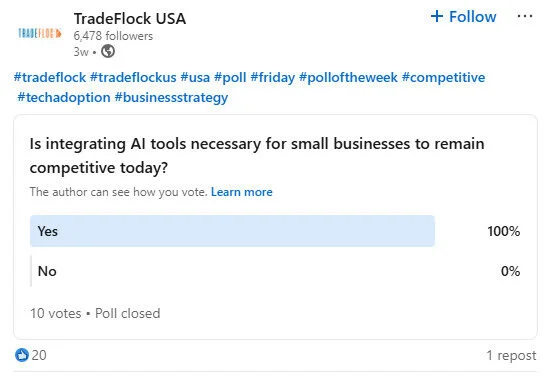
Nowadays, many brands run short polls in Stories or send direct surveys via email to better understand their audience. And sometimes even a few honest answers can help you refine your social media presence.
4. Study your competitors’ followers
Your top competitors can be one of the best sources for analyzing your target audience because they’re already attracting the people you want to reach. Take a closer look at who’s engaging with them and how. Create a report that includes everything by conducting a SWOT and competitor analysis; it’ll help you identify content gaps and audience pain points they’re not addressing.
You can check things like:
- Who’s following and interacting with their posts
- What kind of content drives the most likes, comments, and shares
- Which posts spark genuine conversations (not just emojis or one-word replies)
If Facebook is one of your key platforms, SocialPilot’s free Facebook Competitor Analysis Tool puts all of this in one place. Enter any two Facebook Page names and instantly get a side-by-side visual report comparing followers, engagement rates, posting frequency, content mix, top and least performing posts.
You might notice patterns; maybe their audience loves quick tips, success stories, or behind-the-scenes videos. These insights help you understand what resonates with your shared audience and where your brand can fill the gaps.
Don’t just copy what they do; look for opportunities to do it better or differently. Maybe you can offer more depth, a fresh perspective, or a unique tone that sets your content apart.
5. Build your audience personas
Before you start crafting your social media strategy, take time to build detailed audience personas because no brand talks to just one type of person or has every social person a potential customer.
Different audience segments often have different needs, behaviors, and reasons for engaging with your content. This allows you to do more targeted marketing campaigns and develop personalised content based on shared characteristics.
Once you’ve gathered enough data from your research and analysis, turn that information into clear, human-like profiles that represent your ideal followers.
Each persona should include details like:
- Who they are: Age, job role, interests, and location; this helps you create brand and content guidelines that actually fit your audience.
- What they care about: Their goals, challenges, and values; use this to build your content pillars and shape your messaging.
- What social platforms they use: Platforms they use most (Instagram, LinkedIn, or TikTok), so you can focus on the right channels instead of spreading thin.
- What type of content they mostly engage with: Whether they look for education, entertainment, or offers, this guides your content tone, style, and call to action buttons.
Next, compare your target audience with your personas. If there’s a mismatch, it’s a red flag. And, your content might be reaching the wrong people, or you’re sharing things that don’t connect with the audience you want.
How to get started? You don’t need to create several personas; just start with 2-3 strong ones that represent your primary audience.
6. Keep refining over time
Your audience and their interests aren’t static; they continuously evolve. New followers come in, trends shift, and even your most loyal fans may change what they care about. That’s why audience analysis shouldn’t be a one-time task.
Regularly review your social media analytics to spot patterns like what type of content performs best, when engagement dips, or which platforms are growing fastest for you. Use these insights to refresh your audience personas and fine-tune your content strategy.
Test new formats, experiment with different tones, and track how people respond. The brands that win on social media aren’t the ones who stick to one plan forever; they’re the ones who keep listening, learning, and evolving with their audience.
Social media audiences aren’t just scrolling like they used to; their habits, preferences, and expectations are evolving fast. As new platforms and technologies emerge, people are becoming more selective about where they spend time and what content they engage with.
Here’s how audience behavior is shifting in 2025-26:
1. Short-form video rules attention
Audiences now prefer quick, entertaining, and visually engaging videos over long-form posts. Reels, TikToks, and YouTube Shorts dominate because they deliver value fast, whether it’s humor, education, or storytelling, all within seconds. Furthermore, you can check the social media trends in our article.
According to a Google study on short-form video, 61% of total users said they discovered a new product or brand through short-form videos, and 53% of Gen Z made a purchase after seeing sponsored influencer content on these platforms.
2. Authenticity beats perfection
People are done with picture-perfect posts and overly polished content. What really connects today are real, unfiltered content like behind-the-scenes clips, the bloopers, the honest stories that show the human side of your brand.
It builds trust, improves transparency, and makes your audience feel like they’re part of something real.
3. People expect personalization
If you want better engagement and conversions, you need to create personalized content for your target audience.
As the 2025 Deloitte Marketing Trends Report says, 75% of consumers are more likely to purchase from brands that deliver personalized content.
This is only possible when brands know their audience well, allowing them to show relevant content, offers, and recommendations based on individual interests or behaviors. For example, one person may spend more time exploring Reels on Instagram, while another may prefer watching videos on YouTube.
4. Privacy matters more than ever
People are becoming more careful about what they share online and with whom, as data privacy becomes a global concern. They want to know their information is safe and that brands are being honest about how it’s used.
The latest Deloitte Survey on Digital Privacy revealed that 85% of consumers have already taken steps to protect their privacy, and nine in ten believe they should have the right to view and delete the data companies collect about them.
Moreover, 90% say tech companies should do more to safeguard their data, while 84% want stronger government regulation.
Brands like Apple have turned user privacy into a key selling point; it shows data security isn’t just a compliance issue, it’s a trust signal.
5. Conversations move to smaller spaces
According to the GWI Report, over 50% of Gen Z and Millennials now spend more time in private messaging apps and community groups than on public social platforms.
And many more are shifting from public platforms to private or semi-private communities, like WhatsApp Channels, Discord groups, Reddit communities, Telegram groups, or close-friend stories because they want more meaningful, personal interactions over mass content. Businesses are using specialized tools to discover these conversations and engage with the right audience.
Meta CEO, Mark Zuckerberg, “The future is private”
7. Brand values drive engagement
People increasingly support brands that stand for social causes such as environmental issues, veganism, inclusivity, gender equality, or mental health awareness. They’re more likely to interact with content that aligns with their beliefs.
Edelman Trust Barometer Special Report says 73% of Gen Z and 60% millennials purchase and advocate for brands that reflect their values and focus on solving social problems.
Get Social Media Audience Analysis Done Today!
Guessing who your audience is just doesn’t cut it anymore. Without the right data, you end up creating content that misses the mark and wastes time and effort.
Social media audience analysis takes the guesswork out of your strategy. It helps you understand who your audience really is, what they care about, and how they engage online.
With these insights, you can create content that truly connects, spend your budget smarter, and build lasting relationships that turn followers into loyal fans.
Ready to understand your audience better? Start your free trial with SocialPilot, no card details required. Get the insights you need to create smarter, data-driven social media strategies today.





 Join 55,000+ social media managers


