Struggling to get consistent views on TikTok, even when your videos are good?
The problem might not be your content. It’s that your content isn’t optimized for how TikTok’s algorithm finds and shows videos through its built-in search system.
TikTok SEO is how TikTok users, brands, and businesses make their videos discoverable, long after the initial For You Page (FYP) push dies off.
In this guide, you’ll learn exactly how to rank in TikTok search using keywords, captions, voice, and strategy, without guessing what the algorithm wants.

What Is TikTok SEO?
TikTok SEO is the process of optimizing your videos so they appear in TikTok’s search results when users type in specific keywords or phrases.
Instead of just relying on the For You Page (FYP) to go viral, TikTok SEO helps your content get discovered by intent-driven users, people actively searching for tutorials, reviews, ideas, or answers.
Unlike Google or other social media SEO, TikTok’s search algorithm uses a mix of text, voice, visual, and engagement signals to rank videos:
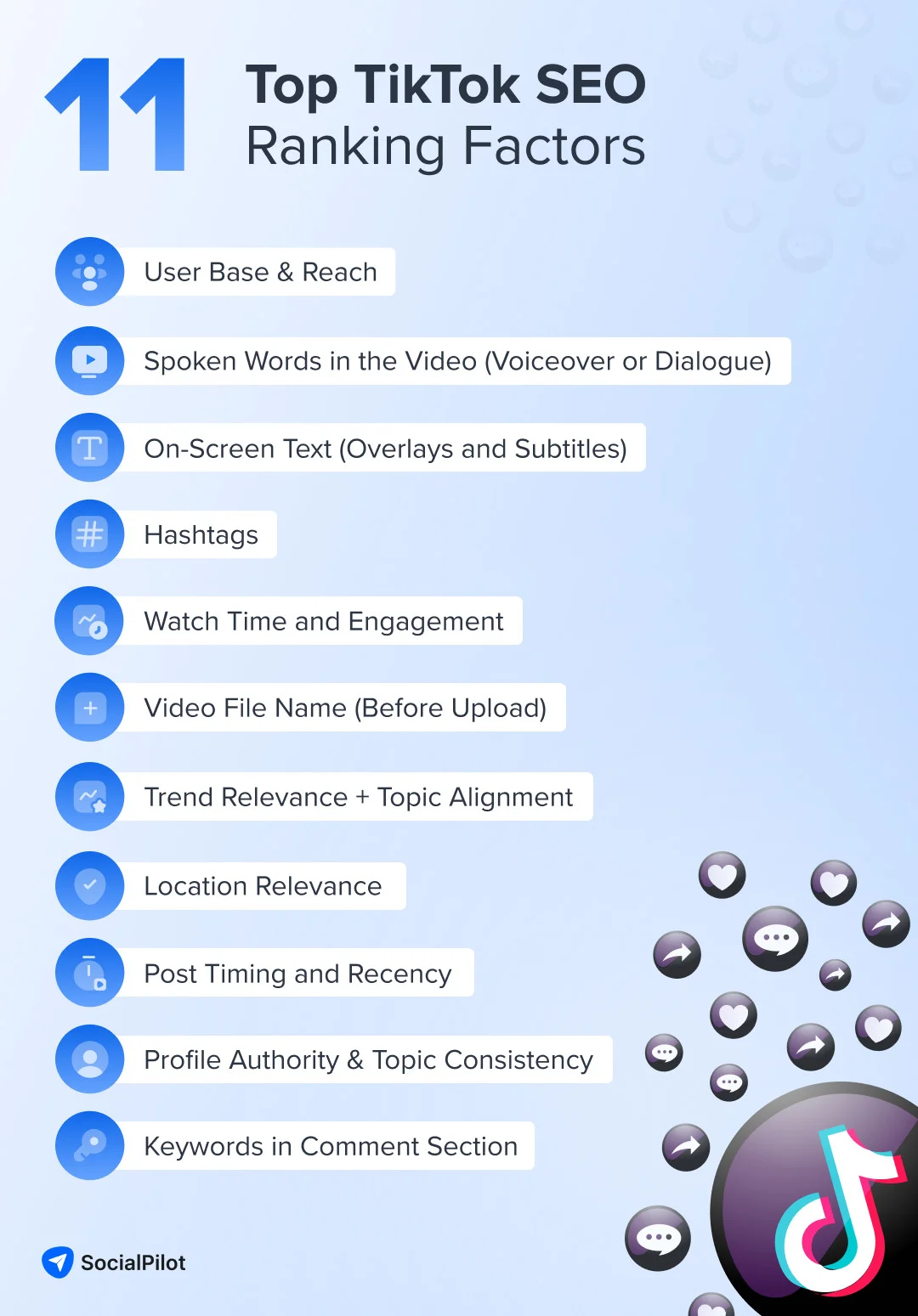
Here are the most important TikTok SEO ranking factors that determine your visibility in search:
Example: If someone types “minimalist bedroom ideas” into TikTok’s search bar, a video that uses that phrase in the caption, speaks it in the voiceover, and shows it on-screen is far more likely to rank.
In short, TikTok SEO is how you tell the platform, “This video is about exactly what that user is searching for.”
Why TikTok SEO Matters in 2026?
TikTok isn’t just a place to scroll anymore; it’s now one of the most-used search engines by Gen Z and younger millennials.
TikTok search has become:
- Smarter, with semantic AI that understands meaning, not just keywords
- More prominent, with a dedicated search tab and search-based recommendations
- Integrated with Google, meaning TikTok videos now show up in web search results
If your content isn’t optimized for TikTok SEO, you’re missing out on long-term discoverability, even if your videos are great.
Benefits of TikToK SEO in 2026
Relying on the For You Page (FYP) for views is a gamble. But TikTok SEO gives you:
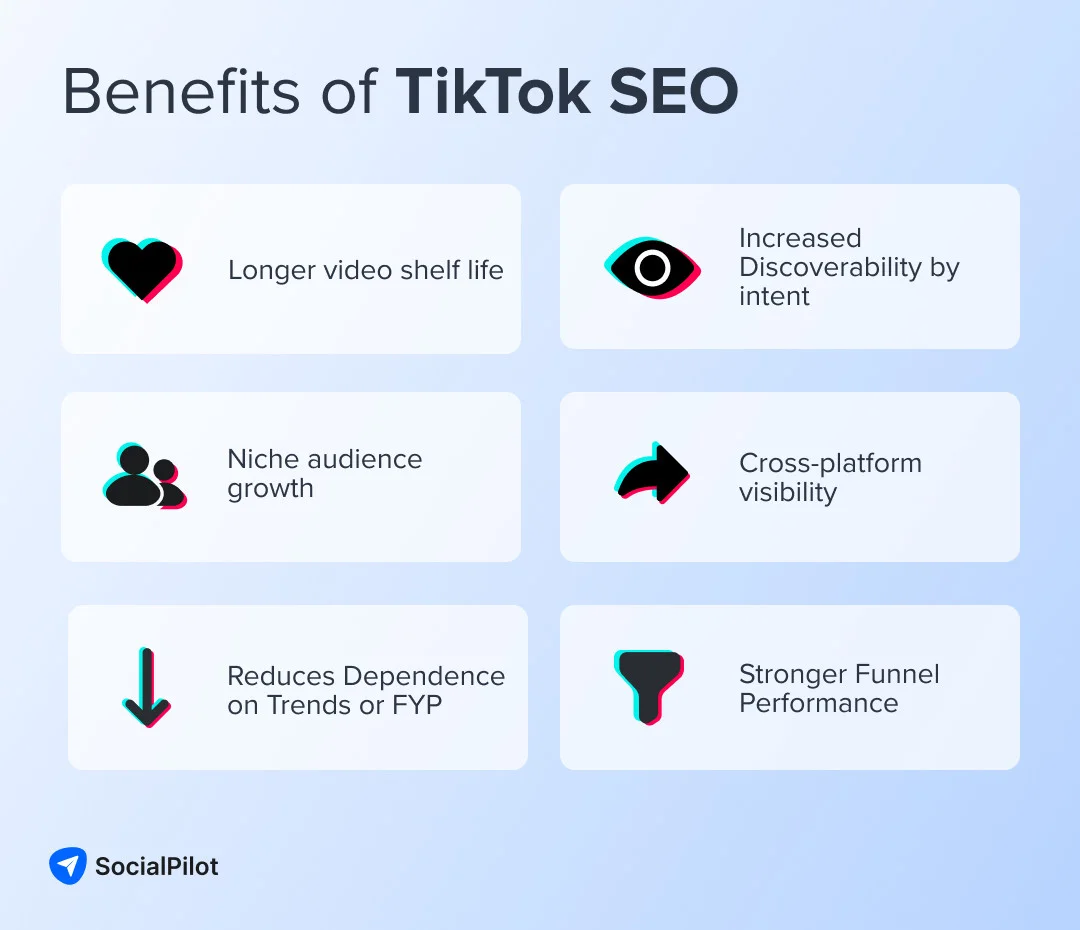
1. Longer video shelf life: Optimized videos can get consistent views from search weeks or months after posting.
2. Discoverability by intent: You’re reaching people looking for what you’re posting—not just casual scrollers.
3. Niche audience growth: Search helps you attract viewers who are interested in your topic or product, not just trending content.
4. Cross-platform visibility: Google and TikTok are blending; SEO helps your video show up in both places.
5. Reduces Dependence on Trends or FYP: TikTok trends are unpredictable and short-lived. SEO gives you a stable source of traffic that doesn’t depend on catching the next viral wave.
6. Stronger Funnel Performance: Search-based viewers are warmer leads. If you’re selling a product, offering services, or growing an email list, SEO-optimized videos pull in viewers who are already interested, not random scrollers.
TikTok SEO is the only repeatable way to build lasting visibility on the platform, without chasing trends every week.
Step-by-Step TikTok SEO Strategy
Understanding ranking factors is great, but applying them consistently is what makes SEO work.
This step-by-step strategy gives you a repeatable process for planning, creating, and optimizing TikTok videos that rank in search, earn ongoing views, and deliver real results.
1. Start by Doing TikTok Keyword Research
If you don’t know what people are actually searching for, your content might never be seen, no matter how good it is.
TikTok is now a search engine. Like YouTube or Google, it’s driven by real user queries, and you can find them right in the app.
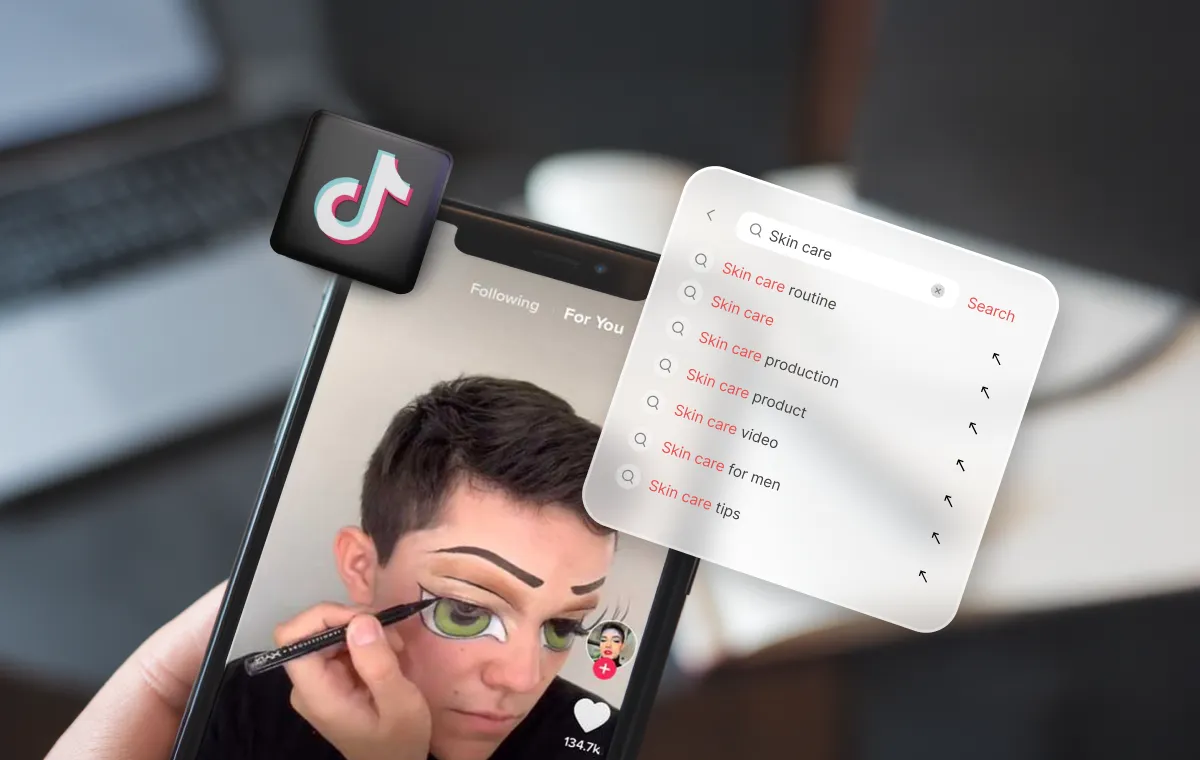
Use TikTok’s search bar and start typing a phrase related to your niche, and TikTok will show autocomplete suggestions based on real user queries.
Example:
Typing “productivity” might show:
- productivity apps for students
- productivity hacks
- productivity tips that actually work
Each of those is a long-tail keyword you can target.
Use TikTok Creative Center for Keyword Insights.
- Navigate to “Inspiration” → “Keyword Insights.”
- Filter by country, industry, and time range
- Discover high-performing keywords based on engagement data
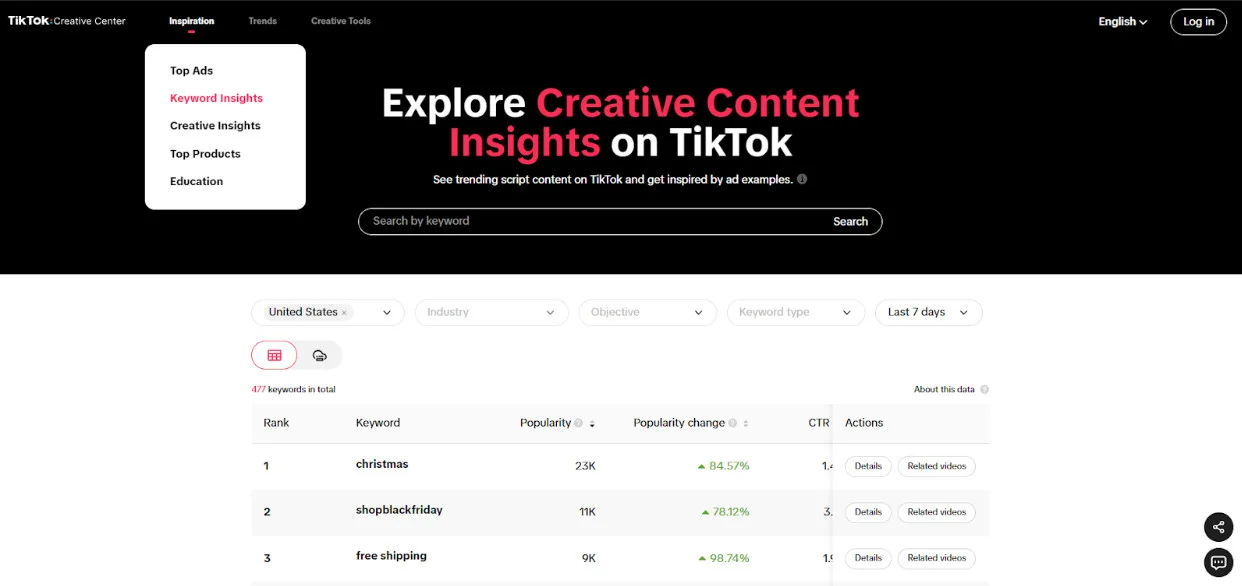
Use keywords with high popularity and a strong growth rate to find rising search terms.
Identify 1–2 long-tail keywords per video that align with real user search intent.
You can also explore TikTok One, TikTok’s official creator and insights hub, to discover trending keywords, content formats, and search-driven opportunities directly from TikTok’s own data. Learn how to use TikTok One with our detailed blog.
2. Plan Content That Matches Search Intent
TikTok doesn’t just index words; it analyzes what users expect to see when they search. Aligning your content with the searcher’s goal is essential for watch time and rankings.
Start with your keyword and ask:
- Is the user looking for a tutorial?
- A list of recommendations?
- A personal story or POV?
- Product comparison or review?
Then structure your video accordingly:
Example Keyword: “Meal prep for beginners.”
- Content format: 3-step visual tutorial
- Hook: “Here’s the easiest beginner-friendly meal prep I use every Sunday.”
- CTA: “Save this video and try it this week.”
Recommended Video Format Types:
- How-To: “How to style curtain bangs.”
- List: “3 apps that boosted my focus”
- POV: “POV: You finally start a real morning routine.”
- Product Demo: “Testing viral Amazon kitchen gadgets.”
Plan a format and hook that solves the query quickly and keeps viewers engaged past the first 3 seconds.
3. Script and Optimize for Keywords
TikTok’s algorithm doesn’t just see, it listens, reads, and semantically understands your content. Your keywords must be present in multiple touchpoints to be picked up and ranked.
Free AI TikTok Caption Generator
Generate catchy, compelling TikTok captions in no time using our AI-powered TikTok Caption Generator.
Here is the Generated Result
Captions are the most important place to use keywords. TikTok scans them to determine the topic of your video and match it with relevant searches.
- Use 1–2 long-tail keywords naturally within the caption
- Keep it conversational and readable
- Don’t just dump keywords or stuff hashtags
According to the TikTok Strategy Guide by SocialPilot, captions between 101–200 characters yield the highest engagement rate of 0.12%.

In the Voiceover or Spoken Dialogue
TikTok’s AI transcribes and indexes everything you say. If you speak your target keyword, it strengthens your ranking and also helps AI-generated captions be more accurate.
- Say your main keyword phrase in the first 3–5 seconds
- Repeat or reinforce it once if natural
- Avoid robotic delivery — make it sound like normal speech
In On-Screen Text (Overlays or Subtitles)
TikTok can read text you place on the screen. This reinforces the topic of your video visually and semantically.
- Add one keyword phrase as large, legible text early in the video
- Keep text high-contrast and easy to read
- Avoid overly decorative fonts
In Your Hashtags
While hashtags are no longer the most powerful ranking tool, they still help categorize your content and signal context.
- Use 2–3 niche-specific hashtags (e.g. #OilySkinRoutine)
- Include 1–2 broader or trending hashtags if relevant (e.g. #SkincareTips)
- Avoid unrelated hashtags just for reach
Use SocialPilot’s Free Hashtag Generator to generate relevant hashtags and save time.
In the Video File Name (Optional but Smart)
Before uploading your video, save the file with a keyword-rich name. It’s an optional step, but good metadata hygiene — and it mirrors how YouTube SEO works.
- Rename your file to something descriptive like: skincare-routine-oily-skin.mp4
- Avoid random auto-names like VID_3874629.mp4
4. Publish and Drive Early Engagement
Early performance metrics (watch time, shares, saves, comments) influence whether TikTok continues pushing your content in search results and suggested videos.
Post at Peak Times:
Publish your content at the best posting time on TikTok when your audience is most active. Use TikTok insights or other analytics tools to find out your best time to post on TikTok.

Encourage Interaction
Ask keyword-aligned questions to prompt comments. Example: “What’s your #1 oily skin product?” or “Should I try a night routine next?”
Add a Save CTA
“Save this to try tomorrow” → boosts saves, which improves ranking
5. Analyze and Repeat What’s Working
TikTok SEO isn’t a one-time setup; it’s a system you test, track, and evolve.
By reviewing what worked (and what didn’t), you can refine your strategy, replicate success, and grow faster.
How to Analyze Your TikTok SEO Performance
1. Open TikTok Analytics for a Posted Video
- Go to your TikTok Profile
- Tap “…” > Analytics > Content
- Choose a video and tap “More Data.”
Now look at:
| Metric | What It Tells You | What to Do |
| Traffic Source Types | % of views from Search, FYP, Profile, etc. | If Search is >5–10%, your SEO is working |
| Average Watch Time | Viewer retention | Low watch time = weak keyword-hook match |
| Audience Territories | Viewer locations | Helps tailor future keywords/hashtags |
| Shares & Saves | Content value & intent match | High saves = repeat the format |
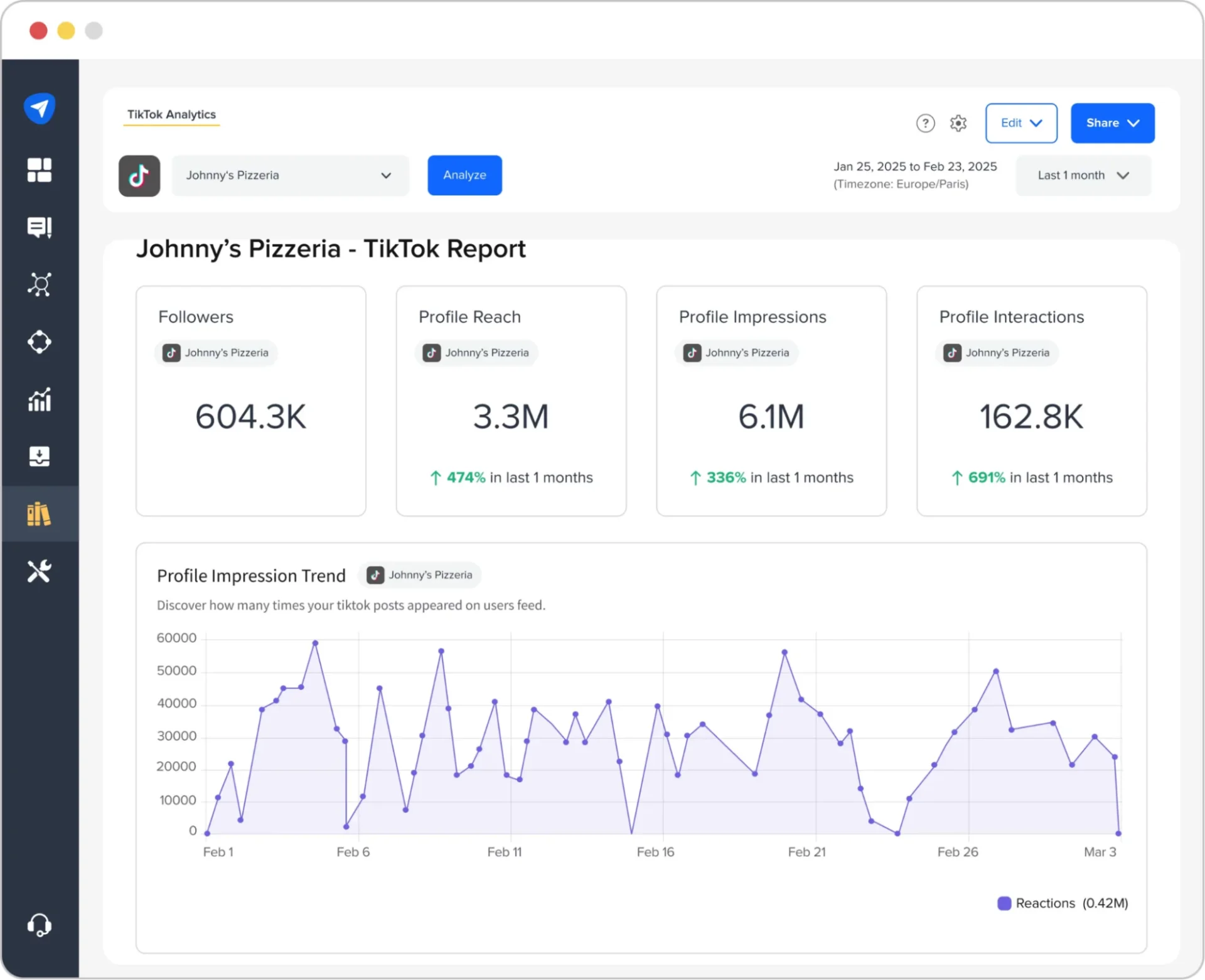
If you’re looking for deeper, more actionable TikTok insights, SocialPilot has you covered.
SocialPilot’s TikTok Analytics lets you track search views, hashtag performance, and keyword-driven engagement across multiple videos, all from a single dashboard. This makes it easy to understand what’s working, refine your SEO strategy, and repeat successful content formulas without switching tools or platforms.
With SocialPilot’s TikTok Analytics, you can:
- Analyze search traffic across multiple videos
- Compare hashtag performance to see what drives visibility
- Track engagement linked to specific captions, keywords, and content formats
Everything lives in one place, perfect for spotting trends, optimizing faster, and making data-backed decisions without juggling TikTok and spreadsheets.
How to Repeat and Scale What’s Working
Once you find a winner:
Break It Down:
- What keyword was used?
- What was the format (list, tutorial, POV)?
- Where was the keyword placed (caption, voice, on-screen)?
- How long was the video?
Create Variations:
Use the same structure with different keywords:
“Morning skincare for oily skin”
→ “Night skincare for oily skin.”
→ “Minimal skincare for students.”
Each version targets a new search query while building topic authority.
TikTok SEO for Voice Search & AI Discovery
TikTok is no longer just indexing what users type; it’s indexing what they say.
As of 2026, TikTok’s algorithm will increasingly use AI and speech recognition to understand the spoken content in videos. That means your voiceover, audio, and script directly influence how your video ranks in search.
This matters especially for businesses and agencies, where clarity, keyword relevance, and semantic consistency are critical.
TikTok auto-generates captions for most videos and uses speech-to-text AI to interpret the topic, tone, and relevance of what you say.
If your keyword is only in the caption or hashtag, you’re missing a huge opportunity.
Say it. Show it. And repeat it where natural.
How to Optimize for Voice and AI Discovery
Here’s what to do to align with TikTok’s AI indexing:
| Tactic | How to Apply |
| Say your primary keyword early | Within the first 3–5 seconds of the video |
| Speak naturally and clearly | Helps AI detect and transcribe accurately |
| Avoid slang-only intros | Ensure at least one search-relevant phrase is said clearly |
| Use branded or niche phrases | E.g., “Social media content ideas for realtors” not just “what’s up, guys.” |
| Manually review auto-captions | Edit any mistakes for keyword clarity |
5 Best TikTok SEO Tools to Use
TikTok SEO isn’t guesswork anymore. With the right tools, marketers, agencies, and brands can build data-driven strategies, discover real keyword demand, and track performance across multiple accounts — just like they would with Google or YouTube SEO.
Here’s a curated list of the best TikTok SEO tools in 2026, grouped by function: research, optimization, and analytics.
1. TikTok Creative Center
Explore trending keywords, hashtags, and ad creatives by industry, region, and time period. Ideal for identifying what’s working in your niche and discovering SEO opportunities based on real engagement data.
Manage and analyze TikTok content across multiple accounts with SocialPilot. Track Search Views, caption performance, and hashtag reach, especially useful for agencies optimizing SEO-driven content at scale.
3. CapCut
TikTok’s official video editor, CapCut, lets you add on-screen text, subtitles, and clean overlays — which are indexed by TikTok’s AI. Great for reinforcing your keyword strategy visually.
4. ChatGPT
Use ChatGPT to generate SEO-optimized captions, brainstorm long-tail keywords, and build content scripts that align with TikTok search intent. A time-saving tool for content planning.
5. TikTok Search Bar (Native Tool)
Use TikTok’s built-in autocomplete feature to discover what users are actively searching. Start typing a keyword, and let TikTok show you real-time query suggestions for inspiration.
Common TikTok SEO Mistakes to Avoid
Even the best strategy can fail if it’s built on bad habits. For marketers, agencies, and businesses, avoiding common TikTok SEO mistakes is just as important as implementing the right tactics.
Here are the most frequent SEO errors on TikTok in 2026, and how to fix them.
1. Ignoring Spoken Keywords
TikTok’s AI indexes the words you say, not just what you write. If your target keyword isn’t spoken in the video, you’re missing a powerful signal for discoverability.
Fix it: Say your primary keyword within the first 3–5 seconds of your video.
Overloading your caption or hashtag section with unrelated or repetitive keywords can confuse the algorithm — and reduce user engagement.
Fix it: Use 1–2 focused long-tail keywords in your caption, and limit hashtags to 3–5 relevant ones.
According to SocialPilot’s TikTok Strategy Guide, using 1–5 hashtags yields the highest reach rate (1.16%).

3. Using Generic, Unsearchable Hooks
Starting your video with vague lines like “Hey guys, welcome back” wastes the first few seconds, which are critical for watch time and search relevance.
Fix it: Begin your video with a search-optimized phrase like:
“Here’s how to build a content calendar for your agency.”
4. Skipping On-Screen Text or Visual Keywords
Many brands focus on visuals but skip adding text overlays, yet TikTok’s AI reads text just like it transcribes audio.
Fix it: Add clear, high-contrast text overlays with your main keyword early in the video using tools like CapCut.
5. Not Monitoring “Search Views” in Analytics
If you’re not tracking where your views come from, you can’t know whether your SEO is working. Many businesses overlook the “Search” traffic source in TikTok Analytics.
Fix it: After posting, go to TikTok Analytics → Content → Traffic Source Types to see if your views are coming from search.
Start Optimizing Your TikToks for Search
TikTok SEO isn’t a trend; it’s how serious marketers and agencies future-proof their content.
By now, you know where search fits into your TikTok strategy and how to align content with what users actually want to find. What matters next is consistency: using data to test, refine, and scale what works.
That’s where SocialPilot comes in. Its TikTok analytics make it easier to track search-driven performance across accounts, so you can turn insights into action without bouncing between spreadsheets.
The algorithm’s evolving. Your content strategy should, too.