Social Media Algorithm (June 2026): What Works and Why
Discover the latest social media algorithm updates across Instagram, Facebook, LinkedIn, TikTok, X, YouTube, and Pinterest. Learn how ranking factors have evolved, what content performs best, and the proven strategies and AI-powered tools you can use to increase reach, engagement, visibility, and long-term audience growth.
Imparate a navigare e a battere gli algoritmi dei social media nel 2026 con strategie specifiche per le piattaforme, consigli pratici e strumenti basati sull'intelligenza artificiale per aumentare la visibilità, il coinvolgimento e le prestazioni dei contenuti su tutti i principali canali.
As of July 2026, social media algorithms are more intelligent and predictive than ever, determining what users see across their feeds based on relevance, engagement, and user behavior.
Per un marketer di social media, un'agenzia o una piccola impresa, capire come funzionano questi algoritmi è fondamentale per aumentare la visibilità e il coinvolgimento. Gli algoritmi non si limitano più a classificare i contenuti, ma anticipano ciò che risuona con ogni utente.
In questo blog, ci addentreremo negli ultimi aggiornamenti degli algoritmi delle principali piattaforme e forniremo informazioni utili che vi aiuteranno a creare forti strategie di social media marketing e navigare tra i nuovi cambiamenti per rimanere al passo con la concorrenza in un panorama di social media in rapida evoluzione.
Punti di forza:
Social media algorithms in 2026 prioritize engagement, especially saves, shares, watch time, and meaningful interactions.
Follower count matters less, as platforms now recommend content based on user interests and behavior.
Original content gets rewarded, while reposted or low-value content sees lower reach.
Each platform has different ranking signals, making platform-specific strategies essential.
High-quality, engaging content is the key to improving reach and staying visible in 2026.
I principi fondamentali degli algoritmi dei social media
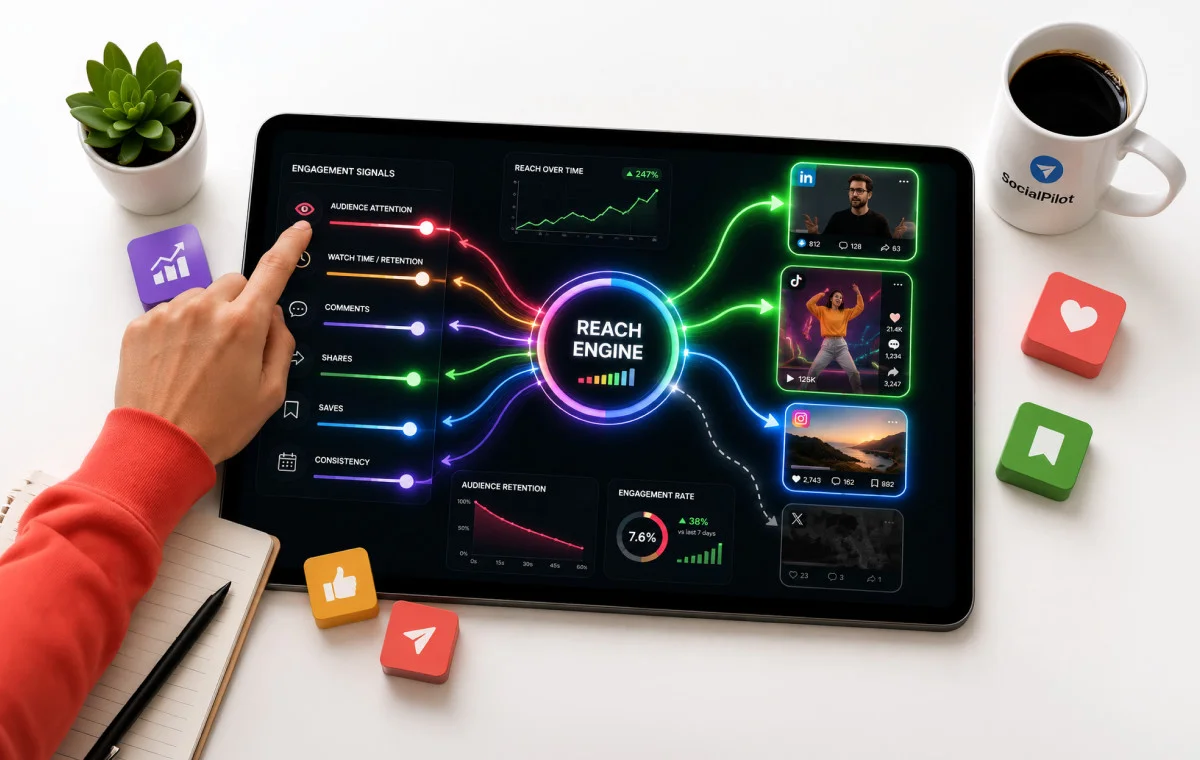
Every social media algorithm runs on the same three ideas. Learn these and you won’t need to memorize each platform’s signal list – the signals change often, but the principles don’t.
1. Engagement Signals
The algorithm predicts what you’ll engage with next by watching what you already do. But not every interaction counts the same.
The sub-signals that carry the most weight:
Risparmio — the viewer wants to come back to it later.
Shares and DM sends — the post was worth passing to a friend (the strongest signal on Meta apps).
Watch time and completion — people stayed to the end.
Commenti — real back-and-forth, not one-word replies.
Preferiti — still counted, but now the weakest of the group.
2. Content Personalization
Reach is matched to interests, not followers. A post shown to the right small audience beats a post shown to a big but uninterested one.
What decides the match:
Topic fit between your post and what a viewer usually engages with.
Early engagement velocity — how fast the post earns saves and shares in the first minutes.
Look-alike behavior — people who act like your existing fans get shown your content.
3. Recency
Fresh posts get a look, but being recent alone won’t carry a weak post.
What recency depends on:
Post age — newer content is surfaced first.
Engagement speed right after you post.
Your posting consistency — steady posting keeps you in rotation.
Quello che gli algoritmi dei social media non vi dicono
The signals that matter most are often the hardest to see. Platforms don’t publish their full ranking criteria, and the signals they do announce publicly are rarely their most powerful ones. Here’s what the data and engineering disclosures from 2025-2026 reveal:
DM shares are now the highest-weighted engagement signal on Meta platforms. When someone sends your post to a friend via direct message, that signals the content was worth a personal recommendation. On Instagram, a single DM share is worth significantly more than a like in the distribution algorithm.
The algorithm penalizes accounts that repost others’ content[source]. Instagram now uses an originality classifier to detect recycled content. If you consistently repost, your account gets suppressed from recommendations.
Your engagement rate matters more than your engagement volume. 200 genuine interactions from a relevant audience moves more content than 2,000 passive likes from a disengaged one.
Follower count is no longer a reliable proxy for reach. LinkedIn, TikTok, Instagram, and Facebook all shifted in 2025-2026 toward interest-graph distribution, meaning your content can reach people who’ve never followed you, and can be suppressed for people who have.
Latest Social Media Algorithm Updates 2026
Here are the confirmed algorithm changes, organized by month with the newest first. The last three months (June, May, April 2026) cover every confirmed change, even small ones, broken out by platform. Earlier months list the major shifts only. Updated for June 2026.
June 2026: Social Media Algorithm Updates
Instagram
Instagram switched on “Your Algorithm” for everyone who uses the app in English. People can now open Feed, Reels, or Explore, see the exact topics shaping their recommendations, and add or mute topics by hand. Those choices feed straight into what they get shown next, so your audience is partly telling Instagram what to send them, as About Instagram explains.
What this means for you: Pick one clear topic and stick to it. When your posts match a topic someone asked to see more of, you land in their feed.
Facebook
Facebook now checks who posted a video first. It fingerprints each clip, and if your Page mostly reposts other people’s content, your reach in recommendations falls. Posts inside active Groups still get a boost because Facebook treats Groups as high-intent spaces, per Social Media Examiner.
What this means for you: Post video you actually made and be the first to post it. If you run a Page, build an active Group next to it for extra reach.
TikTok
Oracle is still rebuilding TikTok’s US recommendation system on US-only data, and that work runs through mid-2026. While it retrains, the For You feed keeps shifting, so reach that worked last month may not hold this month, as CNBC reports.
What this means for you: Check your own TikTok analytics every week and adjust. Don’t trust old reach benchmarks while the model is still changing.
Other major platforms had no confirmed ranking changes in June month.
May 2026: Social Media Algorithm Updates
TikTok
After the US ownership deal closed in January, Oracle kept retraining TikTok’s US recommendation algorithm on US-only data, and by late May the new model was actively reshaping the US For You feed. The retrain also drew Senate questions about data safeguards. This is based on news reporting, with the work ongoing through mid-2026, per U.S. News.
What this means for you: Treat your US reach as a moving target right now. Re-test formats and posting times instead of assuming what worked before 2026 still works.
April 2026: Instagram Stops Recommending Aggregator Content
On April 30, 2026, Instagram confirmed it will no longer recommend photos and carousels from aggregator accounts in Explore and other discovery spots. If most of your posts over a rolling 30-day window are reposts, Instagram labels you an aggregator and stops showing your posts to non-followers. Your existing followers still see your content as normal, per I social media oggi.
What this means for you: Post content you made yourself. Original photos, carousels, and how-to series still count, but reposting cuts your reach to new audiences in Explore.
March 2026: LinkedIn Rebuilds Feed Ranking with an LLM-Based Interest Graph
On March 12, 2026, LinkedIn replaced five separate ranking systems with one model built on a large language model. It reads what your post is actually about and shows it to people interested in that topic, instead of leaning on who you’re connected to. Breaking-industry posts now surface within minutes, while engagement bait, recycled “thought leadership,” and misleading video-plus-text posts get pushed down, per LinkedIn Engineering.
What this means for you: Post from your personal profile, and keep your headline, bio, and topics consistent so the model files you under the right subject. Write for saves and three-sentence-plus comments, not likes.
January 2026: Social Media Algorithm Updates
X Updates
On January 20, 2026, X published its For You ranking code and confirmed the old recommendation system was replaced by a Grok-based model. The model now learns what’s relevant straight from how people engage, with no hand-tuned rules, and X says it will post public algorithm updates every four weeks, per TechCrunch.
What this means for you: On X, an AI model now reads engagement patterns to rank posts. Stay on a clear topic and earn quick early replies and reposts, because the model uses those first signals to decide how far your post travels.
TikTok Update
The TikTok US joint venture closed on January 22, 2026. Under the deal, Oracle received a licensed copy of the recommendation algorithm and began retraining and running it on US-only user data inside its US cloud. The US For You feed started shifting to this US-only model right away, per CNBC.
What this means for you: Expect US distribution to be driven by a US-only data model. Re-test what works for your US audience rather than assuming pre-2026 reach patterns still hold.
December 2025: Meta and YouTube Shift to Interest-Graph, Original-First Distribution
Several big changes landed together at the end of 2025.
Instagram
Instagram fully turned on its originality classifier, cutting accounts with 10 or more reposts in 30 days out of recommendations.
Facebook
More than 40% of Feed posts started coming from accounts users don’t follow, chosen by Meta’s AI rather than your friend list.
YouTube
YouTube split the Shorts recommendation engine off from long-form, so how your Shorts do no longer helps or hurts your long-form videos.
TikTok
TikTok moved to follower-first distribution and raised the completion-rate bar for wider reach to roughly 70%.
What this means for you: On every major platform, reach is earned through good content and fast early engagement, not follower count. Make original posts, hook people in the first few seconds, and create content worth saving or sending to a friend.
Ripartizione degli algoritmi dei social media specifici per piattaforma
Tutte le piattaforme di social media hanno algoritmi che comprendono vari segnali di ranking. Non è possibile determinare tutti questi segnali di ranking, ma è sicuramente possibile modellare la propria strategia di contenuti per ottenere la propria quota di visibilità sui social media.
Ecco alcuni segnali di ranking specifici per ogni piattaforma di social media da tenere a mente.
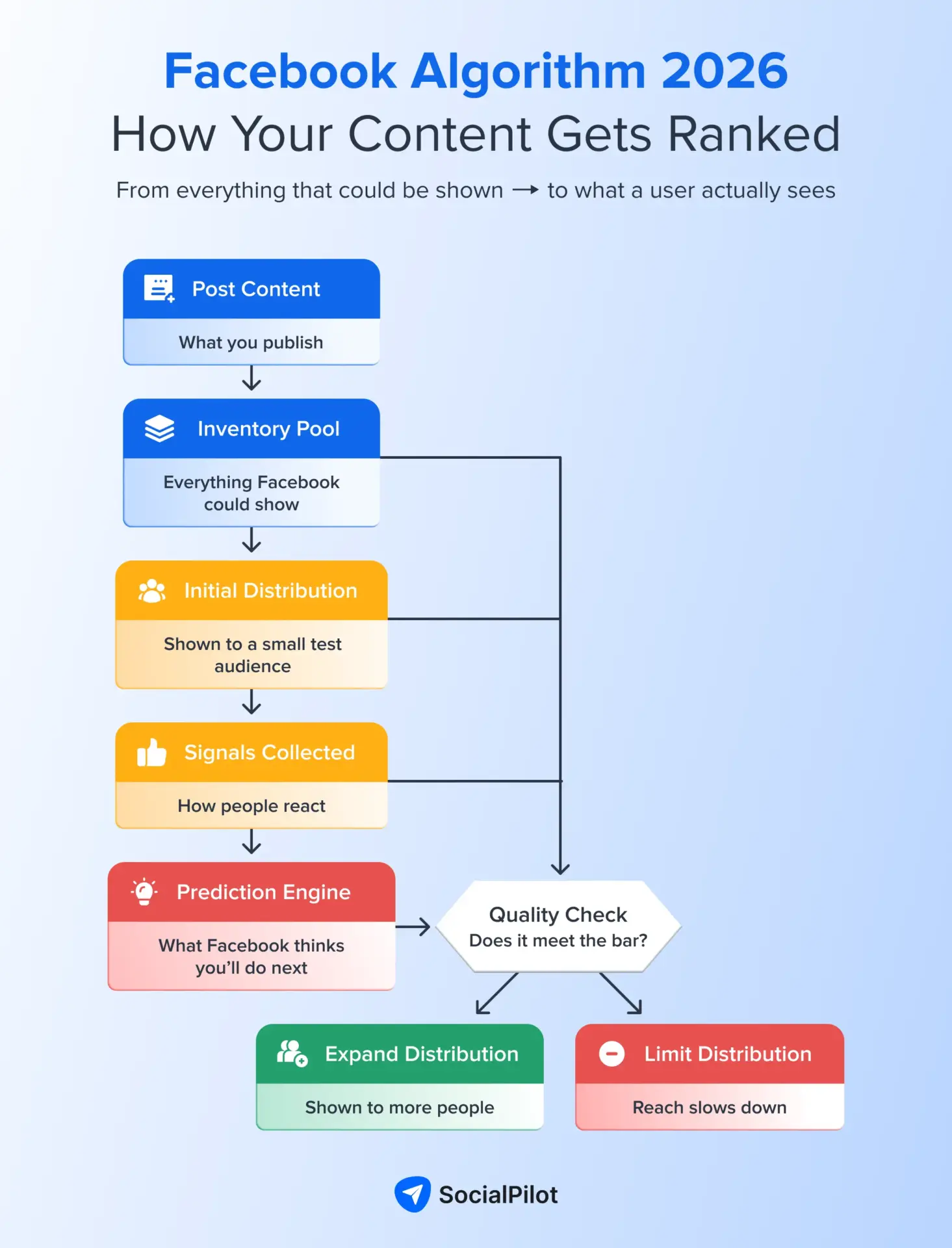
1. Algoritmo di Facebook
Facebook è la principale piattaforma di social media, con 2,28 miliardi di utenti nel mondo. Con questo numero, è fondamentale per i brand e i marketer vincere l'algoritmo di Facebook e raggiungere un pubblico più ampio.
Ecco quindi alcuni segnali di ranking da tenere in considerazione durante la creazione delle vostre strategie di marketing:
Friends and Followers: Facebook dà priorità ai contenuti degli amici degli utenti e delle pagine seguite.
Il fidanzamento: I post con un elevato coinvolgimento (like, condivisioni, commenti) vengono incrementati, segnalando la popolarità.
Tipo di contenuto: L'algoritmo promuove i tipi di contenuto con cui l'utente interagisce maggiormente (ad esempio, filmati o video).
Qualità dei contenuti: Sono favoriti i contenuti autentici e informativi. Meta utilizza i fact-checkers per declassare i post con informazioni false.
Location and Language: Facebook personalizza i feed in base alla regione, mostrando contenuti locali o argomenti di tendenza rilevanti per la zona.
AI Recommendations: As of late 2025, over 40% of Facebook Feed posts come from accounts users have never followed, recommended purely by Meta’s AI based on interest signals. This means your content can reach entirely new audiences without paid promotion, but only if it earns strong early engagement: saves, shares, and watch completion.
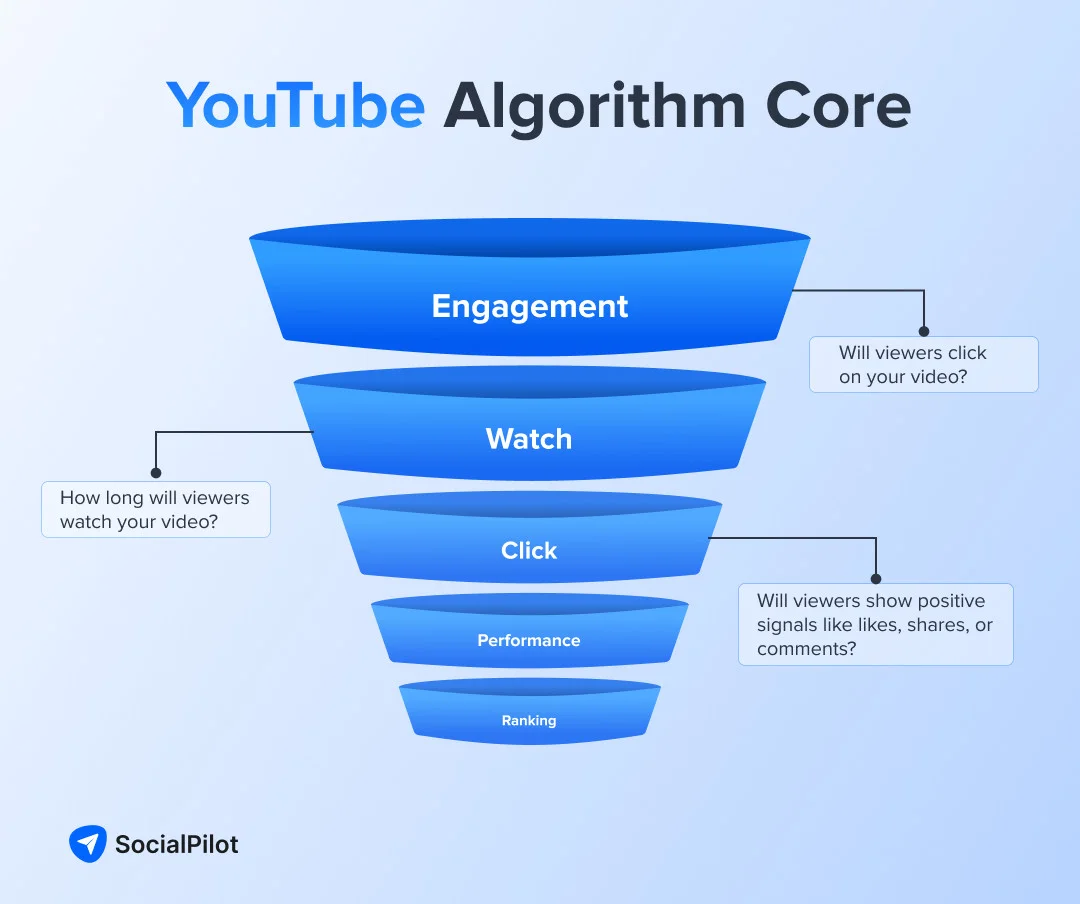
YouTube è in grado di tenere i suoi utenti incollati per ore, grazie ai suoi segnali di ranking, che sono i seguenti:
Fattori importanti:
Guarda la storia: Algoritmo di YouTube consiglia i video in base alle visualizzazioni precedenti, adattando i suggerimenti ai vostri interessi.
Prestazioni video: I contenuti con un alto tasso di like, visualizzazioni e click vengono privilegiati.
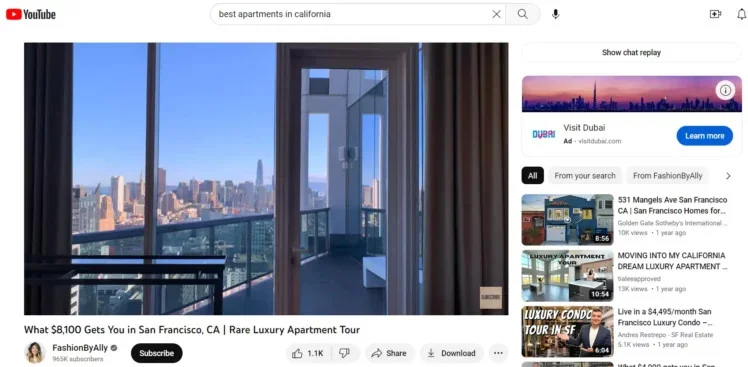
Contesto: YouTube promuove anche i video che vengono guardati spesso insieme o che sono correlati al video corrente.
Ore di guardia: Un tempo di visione più lungo aumenta il posizionamento dei video. Più tempo gli spettatori passano a guardare il vostro video, più alte sono le sue possibilità di posizionamento.
Shorts vs. Long-Form: As of late 2025, YouTube runs separate recommendation engines for Shorts and long-form content. Shorts are ranked on swipe-through rate, loop rate, and early shares. Long-form is ranked on watch time, CTR, and audience retention. Performance in one format no longer affects distribution in the other.
YouTube utilizza l'intelligenza artificiale per fornire raccomandazioni personalizzate basate su esperienza, competenza, affidabilità, e autorevolezza.
La piattaforma filtra inoltre attivamente i contenuti fuorvianti e promuove video autorevoli e credibili, assicurando che gli utenti vedano contenuti di cui si possono fidare.
3. Algoritmo di Instagram
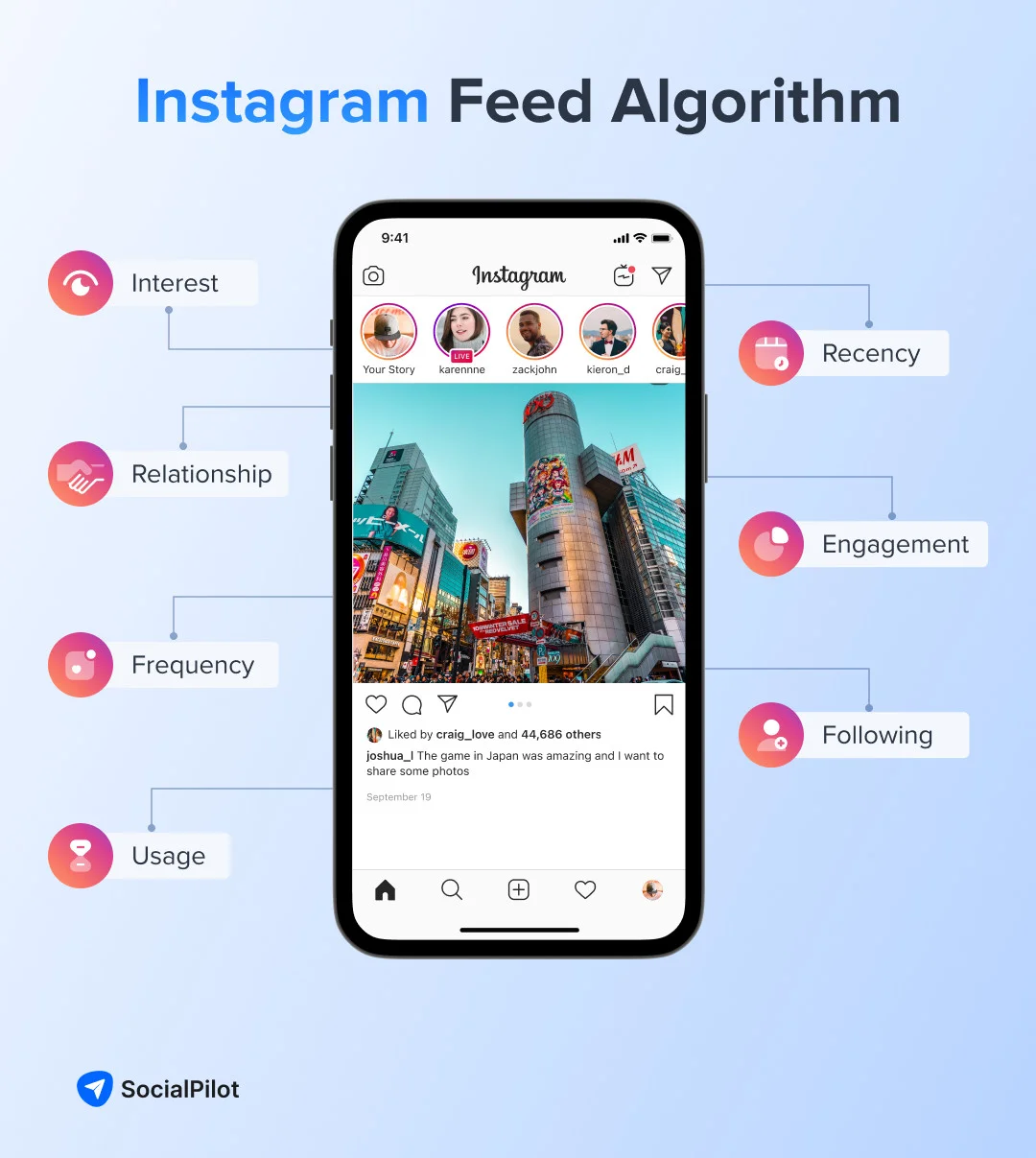
Instagram no longer uses a single algorithm. The platform runs separate AI-powered ranking systems for Feed, Stories, Reels, and Explore, each with its own signals and logic.
Feed e Storie di Instagram
Il Feed e le Storie danno priorità ai contenuti degli account che seguite, insieme a suggerimenti basati sulla vostra attività.
Il Algoritmo di Instagram plays a significant role here by ranking content based on various factors. These ranking factors include:
Fattori di alimentazione:
La vostra attività: Più ci si impegna con account specifici, più è probabile che appaiano contenuti simili.
Informazioni postali: Il numero di "mi piace", di condivisioni, di commenti e il momento in cui il post viene pubblicato giocano un ruolo importante per la visibilità.
Informazioni sul profilo: La frequenza con cui si interagisce con un profilo influenza il ranking dei contenuti.
DM Shares: Since late 2025, sending a post to a friend via DM is the highest-weighted engagement signal on Instagram. It signals to the algorithm that your content was worth a personal recommendation.
Originality: Instagram now applies an originality classifier to all content. Original posts receive significantly more distribution than reposts. Accounts that post 10 or more reposts within 30 days are excluded from Explore and Reels recommendations entirely.
Instagram Esplora
Il Esplorare La sezione offre nuove raccomandazioni di contenuti in base alla vostra attività recente, a ciò che vi è piaciuto, che avete commentato e con cui vi siete impegnati.
Esempio: Se vi piacciono i contenuti del creatore @XYZ, Instagram vi suggerirà i contenuti del creatore @ABC, soprattutto se altri utenti che hanno apprezzato i contenuti di @XYZ si sono impegnati anche con @ABC.
Se si visita la pagina dell'audio, indicando che è possibile creare il proprio Reel
Whether you send the Reel to someone via DM, the highest-weighted signal since late 2025
Le bobine danno inoltre la priorità ai creatori più piccoli, rendendo più facile la loro visibilità.
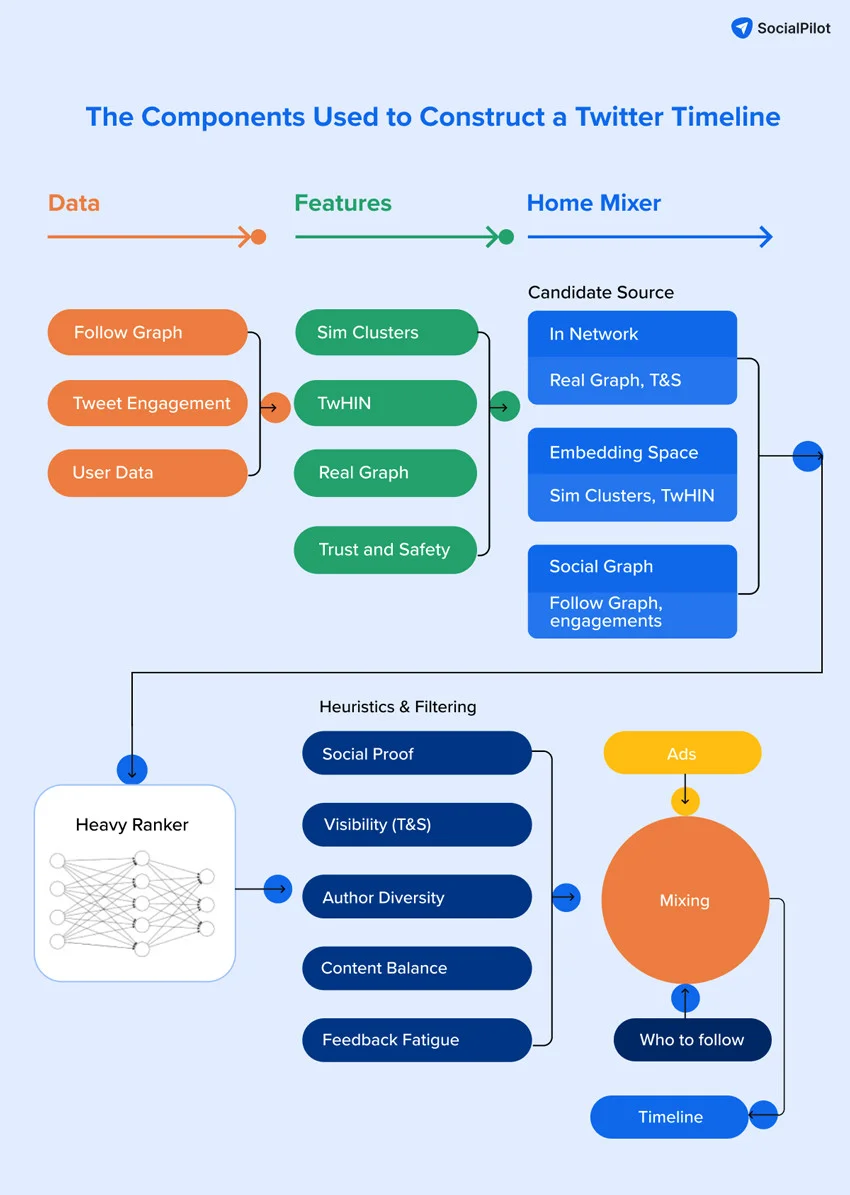
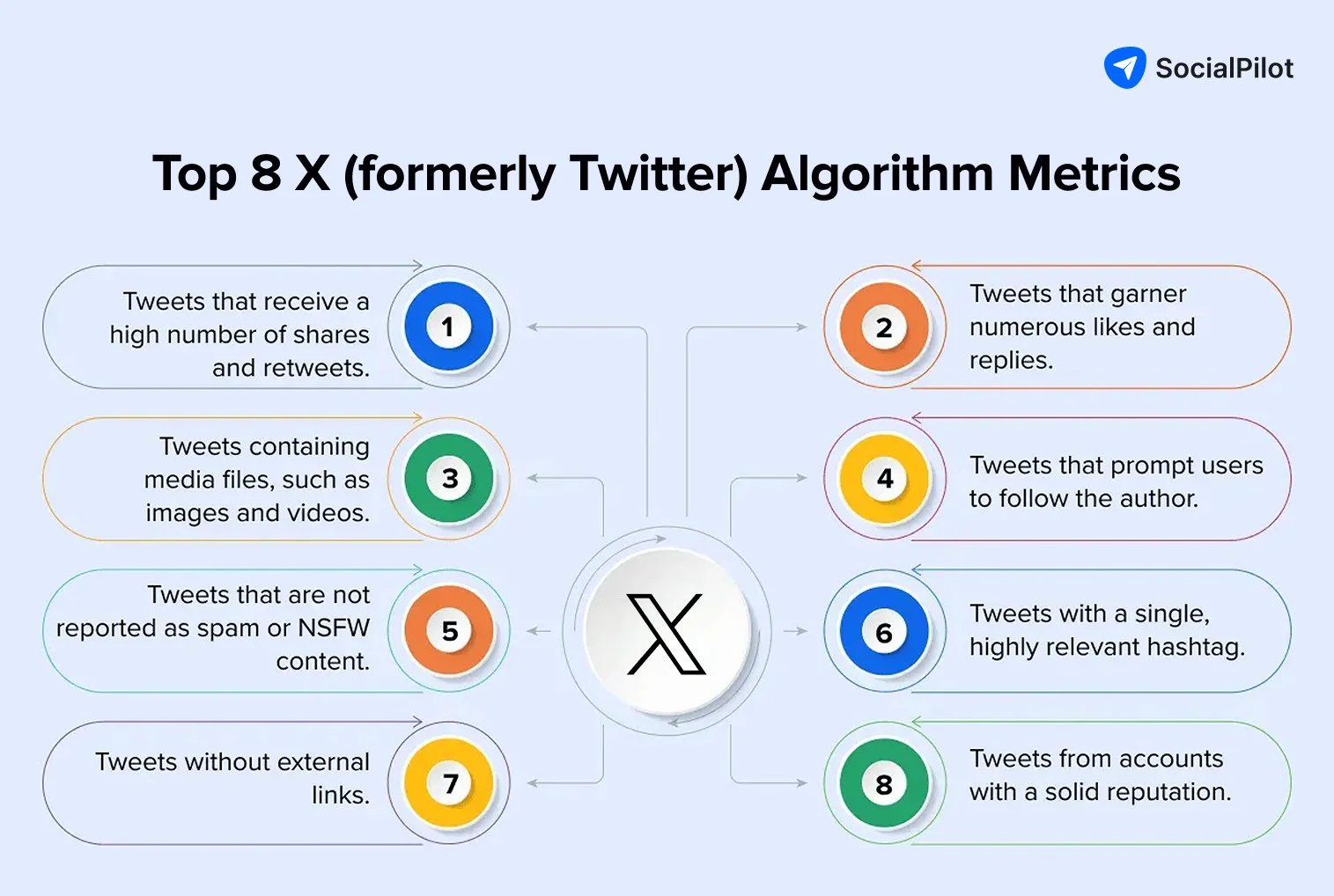
4. Algoritmo Twitter/X
L'algoritmo di Twitter utilizza diversi segnali di ranking per classificare i contenuti sulla sua piattaforma. Questi segnali di ranking includono:
Interazioni con gli utenti: Include gli account e i tweet con cui ci si confronta di frequente.
Argomenti recenti: Twitter privilegia anche gli argomenti recenti che compaiono nelle sezioni “Cosa succede”. D'altra parte, la posizione influisce su ciò che viene visualizzato nelle tendenze.
Popolarità: Twitter considera anche il current popularity of a topic, trend, or tweet, including the level of engagement and activity from users in your network.
Recenza: L'algoritmo di Twitter enfatizza anche la frequenza nel determinare quali tweet mostrare nella timeline di un utente. Come regola generale, Twitter dà priorità ai tweet recenti nella timeline di un utente, facendo apparire i tweet più recenti in alto e spingendo quelli più vecchi in basso.
Grok-Based Ranking: Since January 2026, X’s For You feed runs on a Grok-based transformer that learns relevance from your engagement patterns instead of hand-tuned rules. Post on clear topics and earn fast early engagement to signal relevance.
5. Algoritmo di LinkedIn
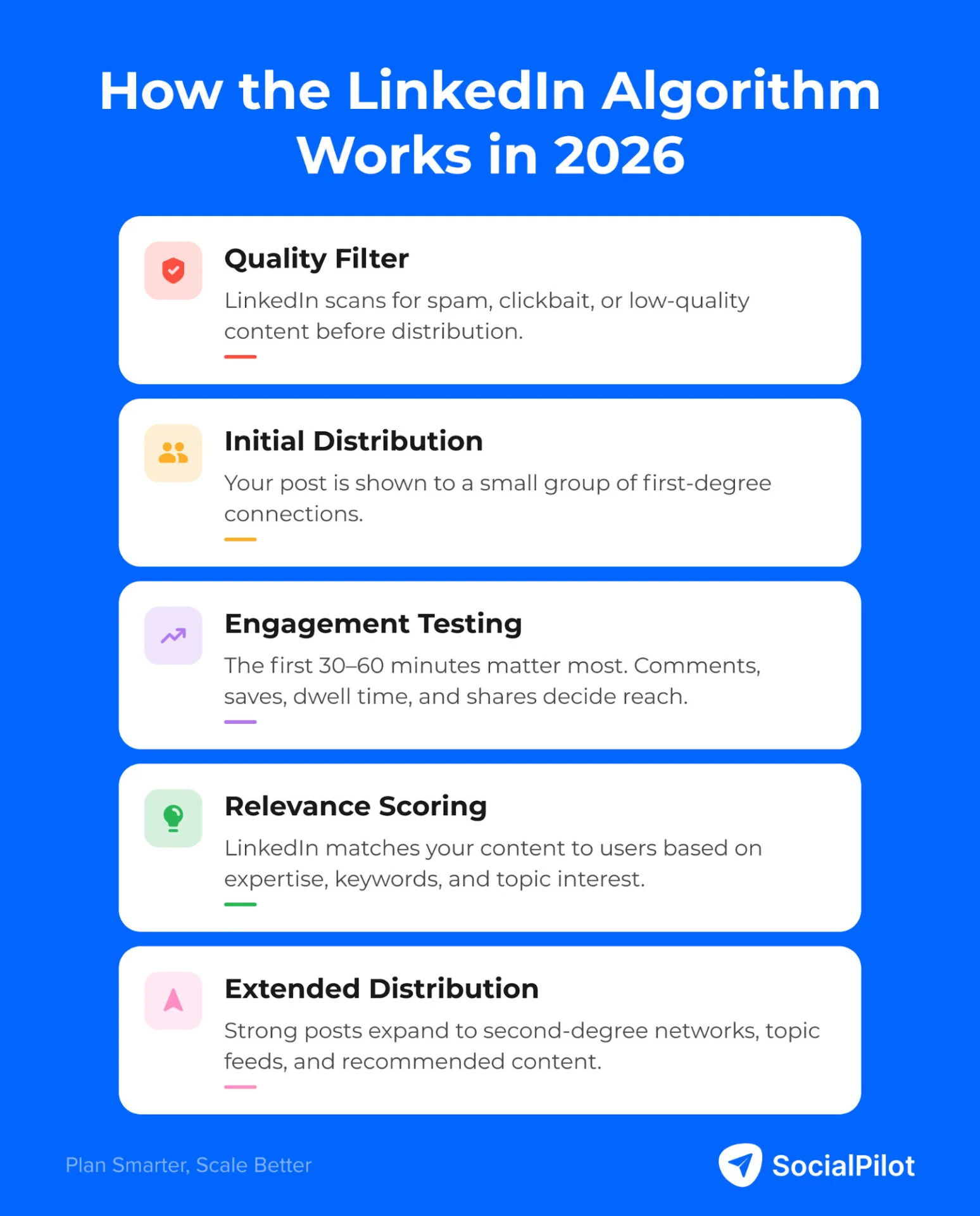
L'algoritmo di LinkedIn was rebuilt in early 2026. The new system uses a large language model to read content semantically and match it to users based on topic interest, not just professional connections.
Here are the current LinkedIn ranking signals:
Topic-Interest Match: The LLM-based system categorizes your content by topic and surfaces it to users interested in that topic, regardless of whether they follow you. Your profile headline, bio, and content must align to the same topic for maximum distribution.
Risparmio: The strongest engagement signal since the March 2026 rebuild. A save carries 5x the algorithmic weight of a like.
Substantive Comments: Comments of three or more sentences carry 8-15x the weight of a reaction. Short comments carry almost no weight.
Early Velocity: Approximately 70% of a post’s total reach is determined in the first 90 minutes. Posts that get quick, quality engagement get pushed to broader audiences.
Personal Profile vs. Company Page: Personal profiles now account for an estimated 65% of feed allocation; company pages account for roughly 5%.
6. Algoritmo TikTok
L'algoritmo di TikTok changed significantly in late 2025. Key ranking signals now include:
Informazioni video: TikTok classifica i video in base a metadati come hashtag, didascalie, suoni ed effetti per capire il tipo di contenuto e la rilevanza per la pagina “Per te”.
Interazioni passate: L'algoritmo analizza il comportamento degli utenti, come i like, le condivisioni, i commenti e i following, per adattare i contenuti alle preferenze individuali.
Account and Device Indicators: Fattori come il tipo di dispositivo, la lingua, il paese e le categorie di contenuti aiutano TikTok a ottimizzare il feed.
Rilevanza geografica: TikTok considera la posizione e le tendenze (ad esempio, le sfide o i suoni locali) per mostrare contenuti più rilevanti a livello regionale.
Follower-First Distribution: Since late 2025, new videos are first shown to your existing followers, not a random pool of interest-matched strangers. If followers complete, share, or save the video, TikTok distributes it to a broader audience. Follower engagement quality is now a gateway to wider reach.
Tasso di completamento: The threshold for broader distribution has moved to approximately 70%, up from around 50% in 2024. Shares and saves outweigh likes in the ranking hierarchy.
7. Algoritmo di Pinterest
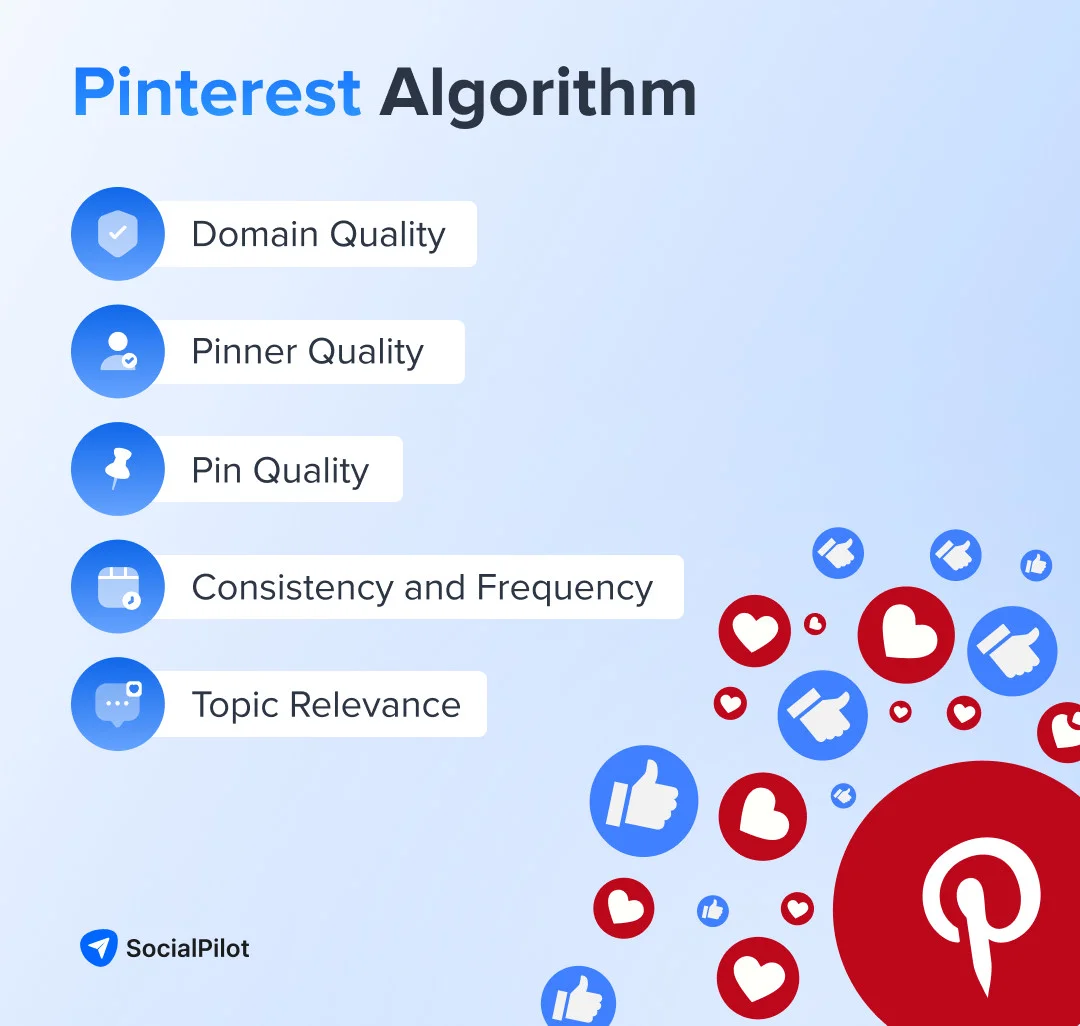
Pinterest funziona in modo leggermente diverso da altre piattaforme in termini di algoritmi e si concentra su questi principali segnali di ranking:
Qualità del dominio: Privilegia i contenuti collegati a siti web affidabili e i siti web più popolari ottengono maggiore visibilità.
Qualità dei pin: L'attrattiva visiva e l'informatività dei pin giocano un ruolo fondamentale nell'engagement.
Qualità Pinner: I pinner attivi con contenuti coinvolgenti e di alta qualità si posizionano meglio.
Consistency and Frequency: L'uso regolare dei pinning aumenta la visibilità e il coinvolgimento.
Rilevanza dell'argomento: I pin che corrispondono agli interessi degli utenti e alle query di ricerca hanno un rendimento migliore.
8. Algoritmo del filo
L'algoritmo del thread è progettato per mostrare contenuti che interessano agli utenti. Questo sistema di algoritmi è alimentato dall'intelligenza artificiale e utilizza segnali di ranking AI. Essendo parte di Meta e Instagram, ogni contenuto dell'app Threads deve seguire le linee guida della community di Instagram.
The Threads algorithm adheres to several ranking signals, such as:
Controllo e intenzioni dell'utente: Su Thread, l'esperienza dell'utente è supportata dai contenuti a cui è interessato e con cui è più probabile che si impegni. Le loro preferenze vengono costantemente analizzate in base ai contenuti con cui interagiscono e alle preferenze impostate nelle impostazioni dell'applicazione.
Profilo Instagram dell'autore: L'impegno e la presenza sull'app di Instagram contano anche quando l'algoritmo del filo spinge i vostri contenuti verso il pubblico.
Prestazioni postali: Quando l'algoritmo di Thread invia un contenuto ai suoi follower, legge le loro risposte e, in base al feedback e al coinvolgimento, lo invia a un pubblico più ampio; pertanto, la popolarità e le prestazioni del post sono importanti su Thread.
Padroneggiare gli algoritmi per un successo a lungo termine
Per avere successo sui social media nel 2026, la padronanza degli algoritmi è fondamentale. Concentratevi sulla creazione di contenuti di alta qualità, sull'aumento del coinvolgimento, sulla pubblicazione dei post nei momenti giusti e sulle tendenze. Sperimentate con i formati e perfezionate la vostra strategia in base alle metriche di performance.
As of June 2026, the direction is clear across every platform: interest-graph distribution, original-content priority, and AI-driven recommendations decide who sees your posts, not your follower count.
Tools like SocialPilot make it easier to manage your social media, offering AI-driven posting times and detailed social media analytics to keep you ahead of algorithm changes.
Quale piattaforma di social media ha l'algoritmo migliore?
Dipende dai vostri obiettivi. L'algoritmo di TikTok eccelle nella scoperta dei contenuti, mentre Instagram e YouTube sono ottimi per gli algoritmi basati sul coinvolgimento. Facebook privilegia l'interazione con gli utenti e LinkedIn si concentra sui contenuti professionali. Il "migliore" dipende dal vostro pubblico di riferimento e dal tipo di contenuto.
Quali sono i quattro tipi di algoritmi?
I quattro tipi principali sono:
Basato sui contenuti: Raccomanda contenuti in base alle preferenze dell'utente.
Filtraggio collaborativo: Raccomanda contenuti in base alle preferenze di utenti simili.
Ibrido: Combina più tipi di algoritmi.
Basato sulla conoscenza: Utilizza informazioni esplicite come le preferenze dell'utente.
Come posso controllare l'algoritmo dei social media?
Partecipate attivamente ai contenuti che vi interessano, seguite gli account pertinenti, utilizzate le funzioni specifiche della piattaforma (ad esempio, i "mi piace", i commenti, le condivisioni) e aggiornate le vostre preferenze per influenzare i contenuti che vedete. Il coinvolgimento e l'interazione regolari sono fondamentali per dare forma al vostro feed.
Qual è l'algoritmo più utilizzato?
L'algoritmo più utilizzato è quello basato sull'engagement, che dà priorità ai contenuti che ottengono il maggior numero di like, condivisioni, commenti e interazioni complessive con gli utenti. È utilizzato da piattaforme come Instagram, Facebook e Twitter per personalizzare i feed.
Come superare gli algoritmi?
Per superare gli algoritmi, concentratevi sulla creazione di contenuti altamente coinvolgenti, postate con costanza, sperimentate diversi formati (video, caroselli) e utilizzate hashtag strategici. Tenersi al passo con le tendenze e utilizzare gli strumenti di intelligenza artificiale per ottenere un tempismo ottimale può aiutare a incrementare la visibilità sulle varie piattaforme.
Om Prakash è un professionista esperto di content marketing con oltre 5 anni di esperienza nel social media marketing e nella gestione delle recensioni.
In SocialPilot sviluppa contenuti e strategie d'impatto per aiutare le aziende a entrare in contatto con il proprio pubblico, a migliorare la propria presenza online e a gestire efficacemente il feedback dei clienti. Le sue competenze consentono ai marchi di costruire una solida reputazione e di promuovere relazioni durature con i clienti.
Social Media Algorithms: June 2026 Updates & Winning Strategies
Explore the latest social media algorithm updates for June 2026 and discover proven strategies to boost reach, engagement, visibility, and growth.
Casa
Blog
Social Media Algorithm (June 2026): What Works and Why
SocialPilot
Strumenti di gestione e programmazione dei social media
Quale piattaforma di social media ha l'algoritmo migliore?
Dipende dai vostri obiettivi. L'algoritmo di TikTok eccelle nella scoperta dei contenuti, mentre Instagram e YouTube sono ottimi per gli algoritmi basati sul coinvolgimento. Facebook privilegia l'interazione con gli utenti e LinkedIn si concentra sui contenuti professionali. Il "migliore" dipende dal vostro pubblico di riferimento e dal tipo di contenuto.
Quali sono i quattro tipi di algoritmi?
I quattro tipi principali sono:
Basato sui contenuti: Raccomanda contenuti in base alle preferenze dell'utente.
Filtraggio collaborativo: Raccomanda contenuti in base alle preferenze di utenti simili.
Ibrido: Combina più tipi di algoritmi.
Basato sulla conoscenza: Utilizza informazioni esplicite come le preferenze dell'utente.
Come posso controllare l'algoritmo dei social media?
Partecipate attivamente ai contenuti che vi interessano, seguite gli account pertinenti, utilizzate le funzioni specifiche della piattaforma (ad esempio, i "mi piace", i commenti, le condivisioni) e aggiornate le vostre preferenze per influenzare i contenuti che vedete. Il coinvolgimento e l'interazione regolari sono fondamentali per dare forma al vostro feed.
Qual è l'algoritmo più utilizzato?
L'algoritmo più utilizzato è quello basato sull'engagement, che dà priorità ai contenuti che ottengono il maggior numero di like, condivisioni, commenti e interazioni complessive con gli utenti. È utilizzato da piattaforme come Instagram, Facebook e Twitter per personalizzare i feed.
Come superare gli algoritmi?
Per superare gli algoritmi, concentratevi sulla creazione di contenuti altamente coinvolgenti, postate con costanza, sperimentate diversi formati (video, caroselli) e utilizzate hashtag strategici. Tenersi al passo con le tendenze e utilizzare gli strumenti di intelligenza artificiale per ottenere un tempismo ottimale può aiutare a incrementare la visibilità sulle varie piattaforme.