

Did you know that acquiring new customers can cost companies 5 times more than retaining their existing ones?
But that’s not all. According to Marketing Metrics, Existing customers are significantly more valuable than new ones — existing customers are 50% more likely to try new products and have a 60–70% chance of converting on a purchase, compared to just 5–20% for new prospects.
But the sad truth is that while most businesses pour in massive budgets towards acquiring new clients, retention often takes a backseat. But, in reality, client retention is not just cheaper; it is also more profitable and statistically more predictable.
Additionally, sustainable business growth isn’t built on one-time buyers; it is built on relationships that last.
And this is exactly what this blog explores. We will discuss how businesses can actually measure their customer retention and all the retention techniques they can use to build a profitable business.
“Businesses that want more sales should look at the customers they already have.”
Olivia Carr, Shhh Silk founder
To begin with, let us first understand what client retention is:
What is Client Retention?
Client retention refers to the practice of keeping your existing clients or customers. Intuitively, no business wants its customers to run to their competition, especially after trying their products or services.
Retaining customers is more than just getting repeat purchases; it is an act of building a loyal customer base, so that your business becomes a “default choice” in their minds.
But how do businesses measure client retention? Here is a simple formula for it:
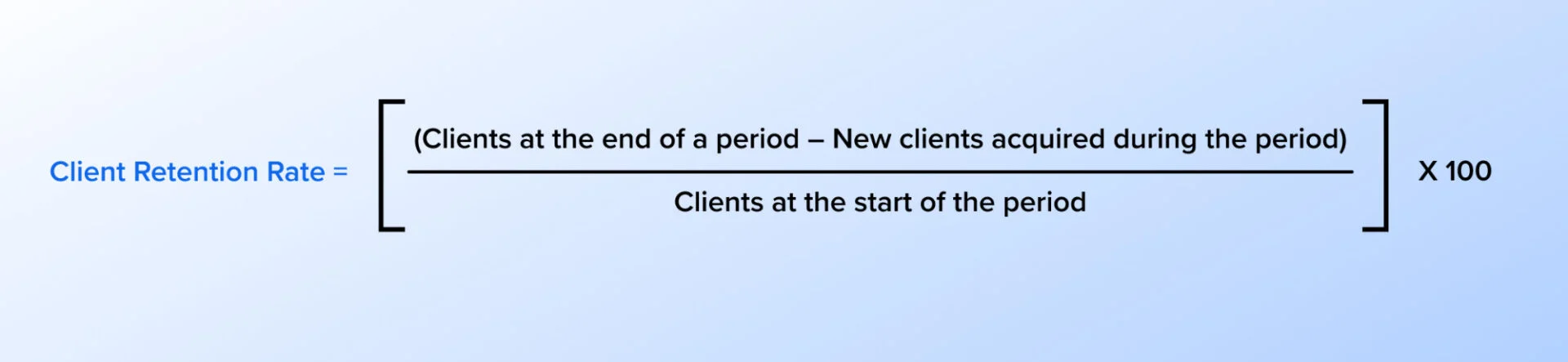
To begin with, determine a period for which you want to calculate your client retention; it could be monthly, quarterly, or annually. Next, identify the number of clients you had at the start of that period, the new clients you onboarded during that time, and the total number of active clients at the end of the period.
Put those numbers into the formula above, and you’ll get your client retention rate.
Why is Client Retention Important for Agencies?
Simply put, client retention is important because it turns one-time transactions into long-term revenue streams. It shifts your focus from constantly chasing new buyers to building deeper, more profitable relationships with your existing customers.
Let’s break down the benefits of agency client retention:
1. Retention is More Cost-Effective Than Acquisition:
While winning a new client can feel like a victory, it is significantly more expensive than retaining an existing one.
According to Gartner’s 2025 CMO Spend Survey, marketing budgets have flatlined at 7.7% of company revenue while competitive pressure continues to intensify, making the cost of acquiring new customers one of the most pressing financial challenges brands face today.
On the contrary, when an old client returns on their own; your cost of serving them drops dramatically. This means lower customer acquisition cost (CAC) pressure and smarter use of marketing budget.
2. It Builds Loyalty and Reduces Competitive Risk
In today’s market, people have plenty of options, and if your client retention strategies only revolve around price-based competition, you will lose them the moment someone undercuts you.
Your client retention program should focus on building customer loyalty by making them feel valued, supported, and understood. Doing so will increase your customer lifetime value and make it unattractive for your existing customers to switch to another business.
3. It Offers Revenue Stability
When your existing clients become a predictable source of your revenue, it reduces the pressure of acquiring new customers. This stability allows you to forecast better, invest confidently, and scale sustainably.
It also reduces your reliance on new client acquisitions and prevents you from fluctuating revenues caused by frequent turnovers.
Additionally, your sales cycle becomes shorter, and your conversion rates eventually go up, thus increasing your revenue and improving operational efficiency. For more such tips, you can check out our guide on how to grow a digital marketing agency.
4. Better Growth Opportunities
Long-term client retention can offer agencies multiple opportunities for cross-selling, upselling, and expanding the scope of their services.
It becomes easier to introduce new services, propose strategic expansions, or pitch higher-value campaigns because the client already believes in your expertise. Also, if your clients are satisfied with your services, they would rather invest more in your services than explore other vendors.
So, how can agencies really retain their customers? Let’s find out
8 Powerful Client Retention Strategies for Agencies in 2026
Retaining clients is not something that happens accidentally; it requires deliberate actions, consistent communication, and value-driven engagement.
Here are 8 effective client retention techniques to help agencies meet their customer expectations and reduce churn.
1. Create a Strong Onboarding Experience
Client retention will not start soon after customer acquisition, but the onboarding experience you provide them is your first and best chance to build clarity, momentum, and trust.
Whenever a client signs up for your service/product, help them understand how it works and what the next step will be.
A good client onboarding experience typically includes:
- A clear welcome message that sets expectations
- Step-by-step guidance on how to get started
- Educational resources (videos, FAQs, walkthroughs)
- Proactive check-ins during the early days
- Milestones that show progress
This could start with:
- A quick welcome call.
- A personalized onboarding email.
- A helpful walkthrough session.
When customers feel supported during their early days, they are far more likely to stay long-term.
Grammarly, for instance, has an onboarding process with what they call the “learning-by-doing” approach.
The process starts with a product tour, after which the new user is shown a sample document to demonstrate how Grammarly operates in real-time.
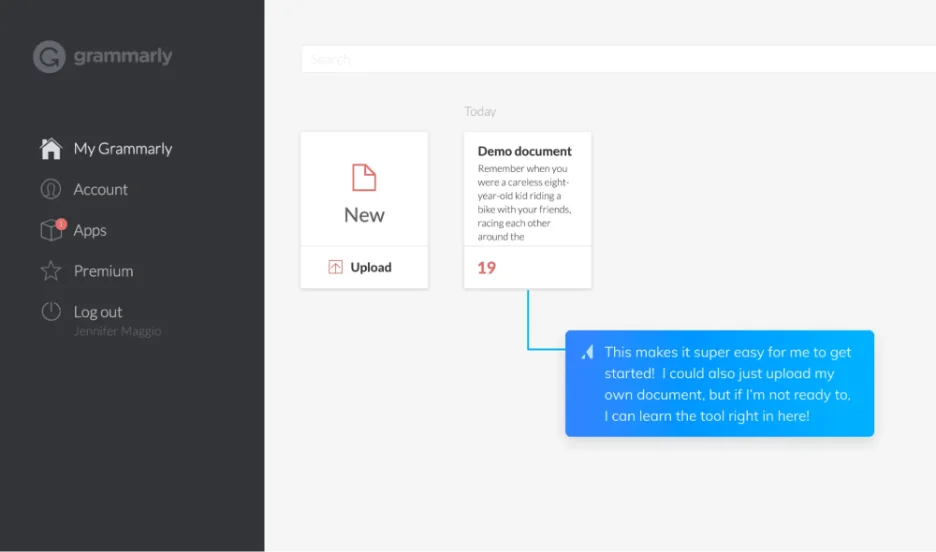
By providing an interactive and visual experience to new users, Grammarly helps them understand the platform thoroughly before they begin using the tool.
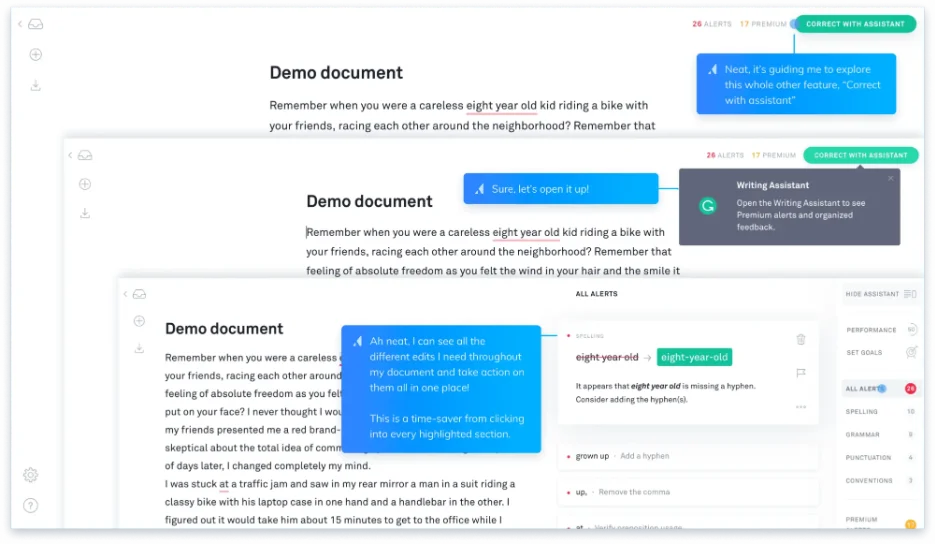
This is a good way to offer memorable experiences to their users.
When your clients see a lack of effort from your end, they tend to leave.
As an agency, you may be strategizing, planning, analyzing data, creating social media SEO plans – but if your client’s social media presence looks inconsistent, inactive, or scattered, they may start looking for alternatives.
Clients want to see their brand active across all channels. They want to see posts going live regularly. They want to keep their customers engaged. They want momentum.
Consistent social media visibility reassures clients that:
- Campaigns are moving forward
- Their brand is staying relevant
- Their audience is being nurtured
- Their investment is producing visible output
On the contrary, when posting becomes irregular, and clients see a gap of several days or weeks, they presume a lack of direction and that their account is not being prioritized.
This is where retention weakens, and doubt creeps in.
We understand that manual posting is inefficient and time-consuming.
That is why using a social media scheduling platform like SocialPilot can help:
With SocialPilot, agencies can:
- Schedule posts for their clients across multiple platforms
- Bulk upload and plan entire campaigns in advance
- Visualize content through a unified social calendar
- Maintain posting consistency even during busy cycles
When clients see structured content flow, aligned campaigns, and steady engagement, it reinforces your agency’s reliability and builds retention.

3. Build a Strong Loyalty Program
A loyalty program is a business’s way of showing appreciation, enhancing customer loyalty, and rewarding loyal customers for their repeat behavior.
Whether it’s points, cashback, tier upgrades, early access, or exclusive perks, it is all about giving something extra to your repeat customers so that they stay with you.
80% of Americans are at least a part of one loyalty program, and being in these programs increases the chances of repeat purchases by approximately 60%.
Here are some ways in which loyalty programs help businesses:
- Increase brand recall and repeat clients
- Discounts can increase average order values.
- Discounts and incentives can increase a customer’s lifetime value
- Decrease churn rates for agencies
The Atlas Coffee Club has devised a rewards program that looks like this:
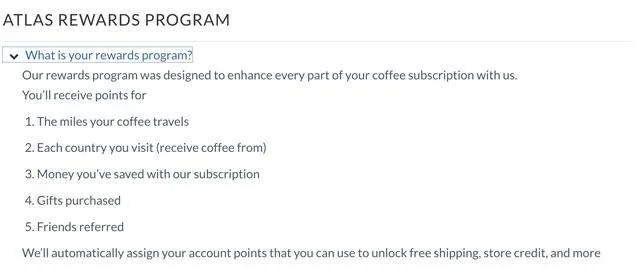
This example is an excellent example of how brands can come up with their unique selling points and monetize them.
Such loyalty programs not only deliver real value to your customers but also help build stronger relationships and achieve sustainable business growth.
4. Create a Referral Program
Referral programs are an effective marketing tactic that businesses use to increase customer retention and acquire new ones. When an existing client refers your business to their acquaintance, they are doing something powerful – they’re putting their reputation behind your brand.
By leveraging loyal clients to influence their network and bring in new customers, you can reduce your client acquisition costs, increase sales, and improve client satisfaction.
But how can you encourage your satisfied customers to refer your business?
You can offer them incentives such as:
- Discounts for both the referrer and the new customer
- Cashback or credits
- Free months of service
- Exclusive bonuses
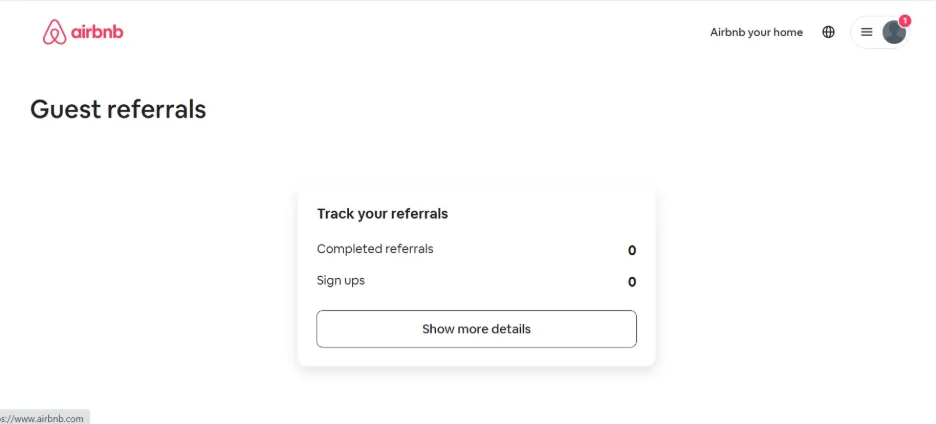
For example, Airbnb’s referral program offers both the referrer and the referred user a credit toward their next Airbnb booking. This encourages users to share Airbnb with friends and family and has helped the company proliferate in new markets worldwide.
5. Deliver Transparent, Data-Driven Reporting
Agencies must ensure that their clients clearly understand the results that they are offering. That being said, do not make the mistake of sending them raw data exports or overwhelming spreadsheets.
That’s not reporting. That’s data dumping.
Instead:
- Highlight the key metrics that matter to the client’s goals
- Explain to them what changed and why
- Connect your performance with their business impact
- Show them the trends, not just snapshots
- Recommend to them the next steps based on insights
Use social media analytics tools to understand advanced analytics and cross-platform performance for your clients. Link the analytics to their business outcomes
- How are you making their brand grow?
- How are you helping them reach the right audience.
- What’s improving month over month?
- How are you justifying their investment?
Provide them with a structured, visually clean, social media report that looks professional and feels strategic. This will help improve your agency’s authority.
Sometimes, just sending social media reports to your clients is not enough. You must also conduct monthly strategy review meetings to tell them what happened and what you are planning next.
When you shift your social media marketing strategy from reactive reporting to proactive planning, it improves customer experience and strengthens your retention.
Monthly strategy reviews allow you to:
- Highlight performance trends
- Identify what’s working across platforms
- Spot declining engagement early
- Suggest campaign pivots
- Recommend new content formats
- Align future goals with real data
When you tell them things like “Short-form videos drove 40% more engagement last month than static posts, and so we recommend increasing video output for next month,” your decisions are not random; they’re data-driven.
Giving them a clear picture of their cross-platform performances will help you reduce confusion and prevent unrealistic expectations.
7. Collect Feedback and Improve
Problems with customer retention do not emerge overnight. They build up slowly through small friction points. Getting customer feedback can help businesses detect problems early, before they lead to churn.
But to increase customer retention, you must also act on customer feedback. If your customers are repeatedly complaining about something – be it slow response times, poor customer service, unclear pricing, or complicated onboarding – your business must make improvements based on their suggestions.
So, the real customer retention strategies are the ones that start with feedback and end with improvements, ultimately leading to customer satisfaction. When existing customers feel progress, they are convinced to stay.
As an agency, you’re busy managing content, engagement, and campaigns for your clients and end up neglecting your own social media.
Most clients expect you to practice what you preach. If you claim to build brand loyalty, visibility, grow engagement, and deliver strategic social media execution, your own platforms should reflect that expertise.
Your agency’s social media presence serves as:
- A live portfolio of your capabilities
- A credibility signal
- A trust-building tool
- A positioning asset
- A lead generation channel
Actively sharing social media marketing tips, case studies, performance wins, and industry trends is a surefire way to improve customer retention and build trust. It also reminds your clients why they hired you in the first place.
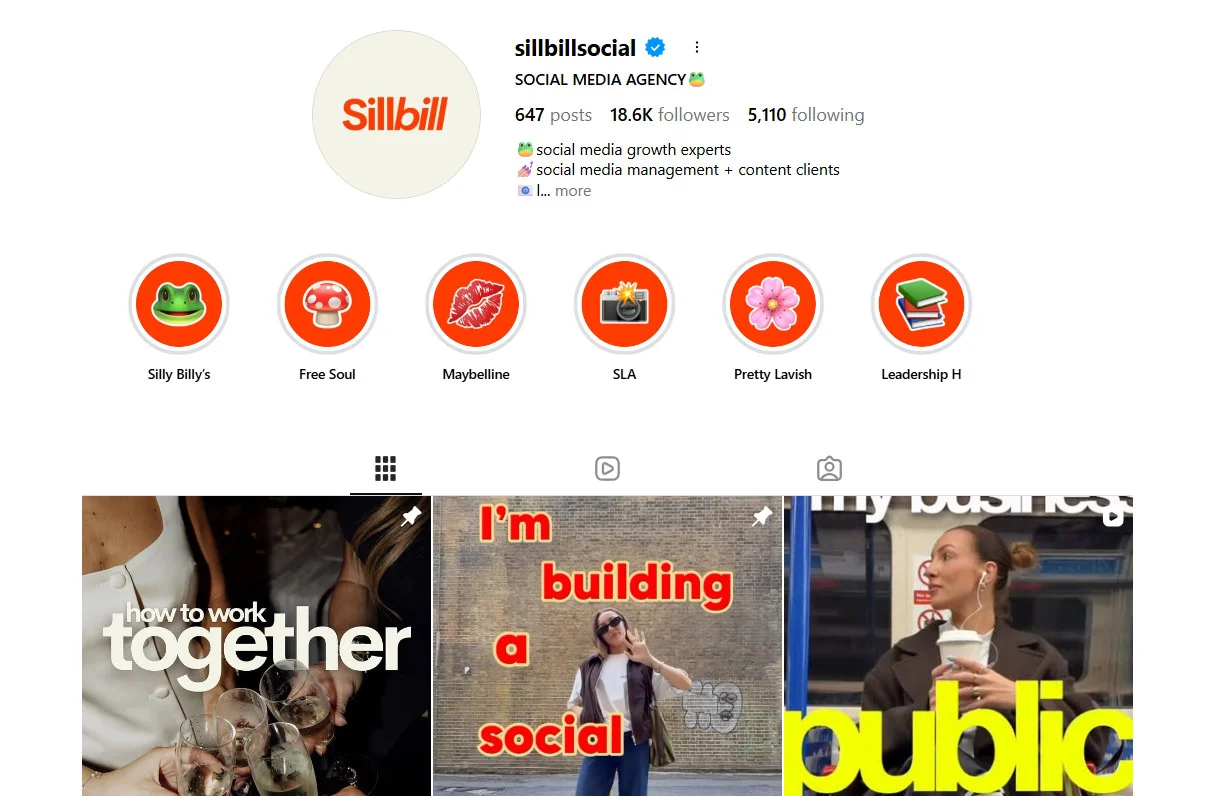
Here is the social media page of Sillbill Social, a social media agency, where they regularly post about their client collaborations and performance wins
Now that we have talked about client retention tips, let us discuss some metrics that help us measure client retention.
Key Client Retention Metrics to Track and Their Formulas
Client retention is not an esoteric concept or something that just happens overnight. You must pursue it with actionable plans and measure your results through quantifiable metrics.
Here are some ways to measure agency client retention — along with formulas and simple examples
1. Client Retention Rate (CRR)
This is the most direct way to measure agency stability. Client Retention Rate shows the percentage of clients your agency retains over a specific period, whether that’s monthly, quarterly, or annually.
Formula:
Client Retention Rate = [(Clients at end of period – New clients acquired during period) ÷ Clients at start of period] × 100
Example:
If you start the quarter with 40 clients, onboard 8 new clients, and end with 42 total clients:
Retention Rate = [(42 – 8) ÷ 40] × 100
Retention Rate = (34 ÷ 40) × 100 = 85%
That means you retained 85% of your original clients.
For agencies, this metric reflects trust, performance delivery, and communication quality. The higher your CRR, the stronger your long-term partnerships.
2. Client Churn Rate
If retention shows who stayed, churn shows who left. Client Churn Rate measures the percentage of clients that terminated contracts or did not renew within a given period.
A high churn rate may signal issues such as:
- Misaligned expectations
- Poor reporting clarity
- Weak performance results
- Communication gaps
- Pricing friction
Formula:
Client Churn Rate = (Lost clients during period ÷ Clients at start of period) × 100
Example:
If you started the quarter with 40 clients and lost 4:
Churn Rate = (4 ÷ 40) × 100 = 10% churn
Retention and churn are directly linked:
Client Retention Rate ≈ 100% – Churn Rate
Monitoring churn regularly helps agencies identify red flags early before their revenue takes a hit.
3. Client Lifetime Value (LTV)
Client Lifetime Value (LTV) measures the total revenue your agency expects to earn from a client throughout the entire relationship.
For agencies operating on retainers, this metric is extremely important.
Formula:
LTV = Average Monthly Retainer × Average Client Lifespan (in months)
Example:
If your average client pays $3,000 per month and stays for 24 months:
LTV = 3,000 × 24 = $72,000
This metric helps agencies understand how valuable long-term retention truly is. Losing one client early doesn’t just cost one month’s revenue; it can cost tens of thousands in lifetime revenue.
4. Net Promoter Score (NPS)
Net Promoter Score (NPS) measures client satisfaction and their likelihood of recommending your agency to others.
It answers one simple question:
“How likely are you to recommend our agency to a colleague or friend?”
Clients are scored from 0–10 and categorized as:
- Promoters (9–10)
- Passives (7–8)
- Detractors (0–6)
Formula:
NPS = % Promoters – % Detractors
For agencies, NPS is a powerful early warning signal. A declining score indicates creeping dissatisfaction.
High NPS often correlates with:
- Strong referrals
- Better renewal rates
- Higher account expansion
5. Net Client Change
Net Client Change measures overall growth by comparing the total new customers acquired against those lost.
Formula:
Net Client Change = New Clients – Lost Clients
If you gained 8 new clients but lost 4:
Net Client Change = +4
This metric helps agencies understand whether growth is coming from acquisition alone or is also supported by strong retention.
But client retention is not as simple as it sounds and comes with its own set of challenges that we have discussed below.
What are the Challenges of Retaining Clients?
Client retention may sound simple, but it is far more nuanced. You’re not just selling a product. You’re selling strategy, execution, communication, performance, and trust.
Here are some of the biggest challenges agencies face when trying to retain clients long-term.
1. Automation Without Losing the Human Touch
As agencies grow, automation becomes necessary. Reporting tools, scheduling platforms, CRM systems, and onboarding workflows become important.
But over-automation can make customer interactions feel robotic and impersonal.
When businesses incorporate chatbots, automated emails, and drip campaigns, customer satisfaction often drops because there is a loss of emotional connection.
So, the real challenge lies in blending automation with personalization. While your clients expect fast responses and structured systems, they also want to feel understood. They want to know their brand isn’t just another account on your dashboard.
So, maintaining this mix of efficiency and empathy can sometimes become challenging.
Customer retention rate begins to weaken when agency communication feels mechanical instead of strategic.
2. Maintaining Long-Term Engagement
For agencies, the highest churn risk often appears after the initial onboarding phase.
The first 60–90 days are exciting – strategy decks, campaign launches, new content rollouts. But once the excitement of the initial transaction fades away, it’s hard to keep the client engaged. To improve customer retention, businesses must continuously offer value.
Agencies must:
- Share performance insights (not just numbers, but interpretation)
- Propose new campaign ideas
- Highlight growth opportunities
- Educate clients about platform updates
- Conduct regular strategy reviews
Staying proactive on social media and keeping clients engaged and confident in your partnership is the key to retaining them in the long-run.
3. Proving Value in a Results-Driven Market
Clients today have multiple options with freelancers, in-house teams, and competing agencies – all competing for the same budgets.
If your agency’s value proposition isn’t clearly demonstrated through results and reporting, clients may start questioning ROI.
Since social media algorithms change constantly, performance can quickly fluctuate, thus making communication even more critical.
Agencies must repeatedly reinforce their differentiation:
- What makes your strategy unique?
- How are you improving customer engagement or conversions?
- What insights are you uncovering from social data?
- How are you adapting to trends?
Strong positioning combined with transparent reporting reduces competitive pressure. Without it, clients may drift.
4. Building a Strong Retention Plan
Effective retention strategies must be proactive and structured. Without a system – defined metrics, engagement processes, feedback loops, and clear accountability, customer retention becomes inconsistent.
You need measurable processes to continuously track retention and take measures to improve it. Besides this, businesses should also have a feedback mechanism in place to get early feedback from their clients. Teams must constantly work towards tracking retention metrics and improving social media customer experience.
Start Implementing Your Client Retention Plan Today!
Client retention for agencies isn’t about sending renewal reminders at the end of a contract. It is a system built on proactive communication, consistent execution, transparent reporting, and visible results. When agencies treat client relationships as long-term partnerships, retention automatically follows.
For most of your clients, social media is the most visible proof of your agency’s work. It’s where their brand lives publicly. When managed strategically, social media becomes a powerful tool for customer retention.
This is where SocialPilot becomes invaluable. It helps you manage your clients’ social media, monitor their engagement trends, audience growth, and catch performance dips before your clients notice.Try SocialPilot today and manage your clients’ accounts in a more structured, data-driven, and strategic way.


