
LinkedIn is a professional network that is used by over 1.3 billion people across the globe. It is also the most powerful social media platform for B2B growth, partnership building, and employer branding.
So, it is no surprise that every company today wants to build its presence on LinkedIn. But simply building a company page is not enough.
Leveraging LinkedIn for business requires strategic planning, consistent execution, and a clear understanding of your goals.
This blog will help you understand how to use LinkedIn for businesses the right way. We will cover everything, right from creating a business page to creating a LinkedIn marketing strategy that helps you amplify your reach on this platform.
What is a LinkedIn Business Page?
As per LinkedIn’s own directory, a LinkedIn business page, popularly called a company page, is a dedicated page that businesses use to share regular posts and updates, showcase their products and services, post job openings, run ads, and engage with their LinkedIn followers.
Unlike a personal profile on LinkedIn that is for individual users, company pages are for organizations, brands, agencies, startups, and institutions.
This is what LinkedIn’s company page looks like on LinkedIn
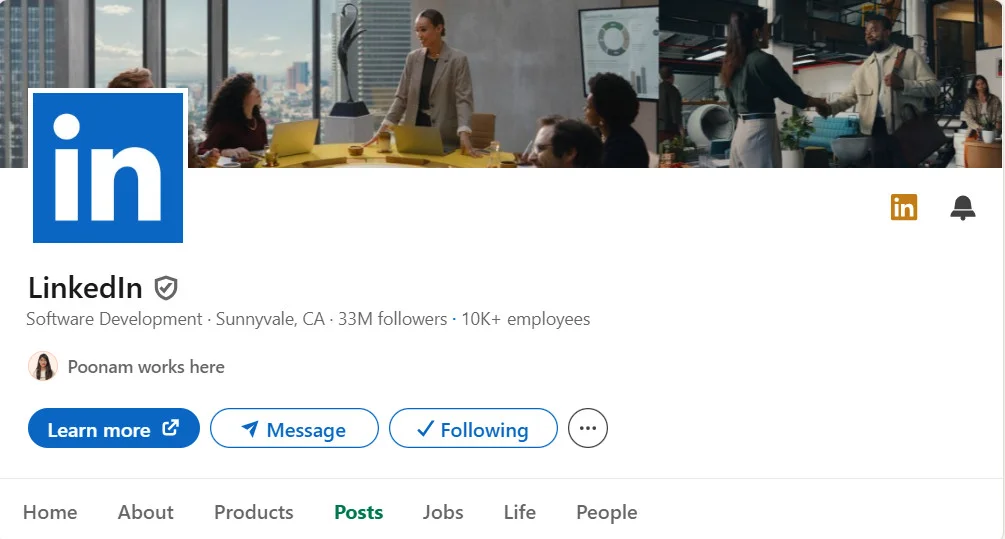
Simply put, a company’s page on LinkedIn is an official, searchable, content-driven identity of a business on LinkedIn, designed to help it build authority, attract opportunities, and grow strategically. This page has several customizable sections, such as Home, About, Posts, Products, People, and Jobs, where businesses add their relevant information.
Here are some features that are exclusive to LinkedIn Company Pages (and not available on personal profiles):
- LinkedIn Ads that you can run directly from your company’s page
- Add multiple page admins with different access roles
- Create Showcase Pages and Product Pages to display your offerings
- Add a customizable Call-to-Action (CTA) button (like, Visit Website, Contact Us, Learn More)
- Access Lead Gen Forms for advertising campaigns
Please Note: You must have a LinkedIn profile before you create a business page on LinkedIn. Once you have set-up your profile, you can set-up, access and manage your business page directly from your LinkedIn profile.
Types of LinkedIn Business Pages
There are multiple types of LinkedIn pages that businesses can create depending on their size, goals, and growth strategy.
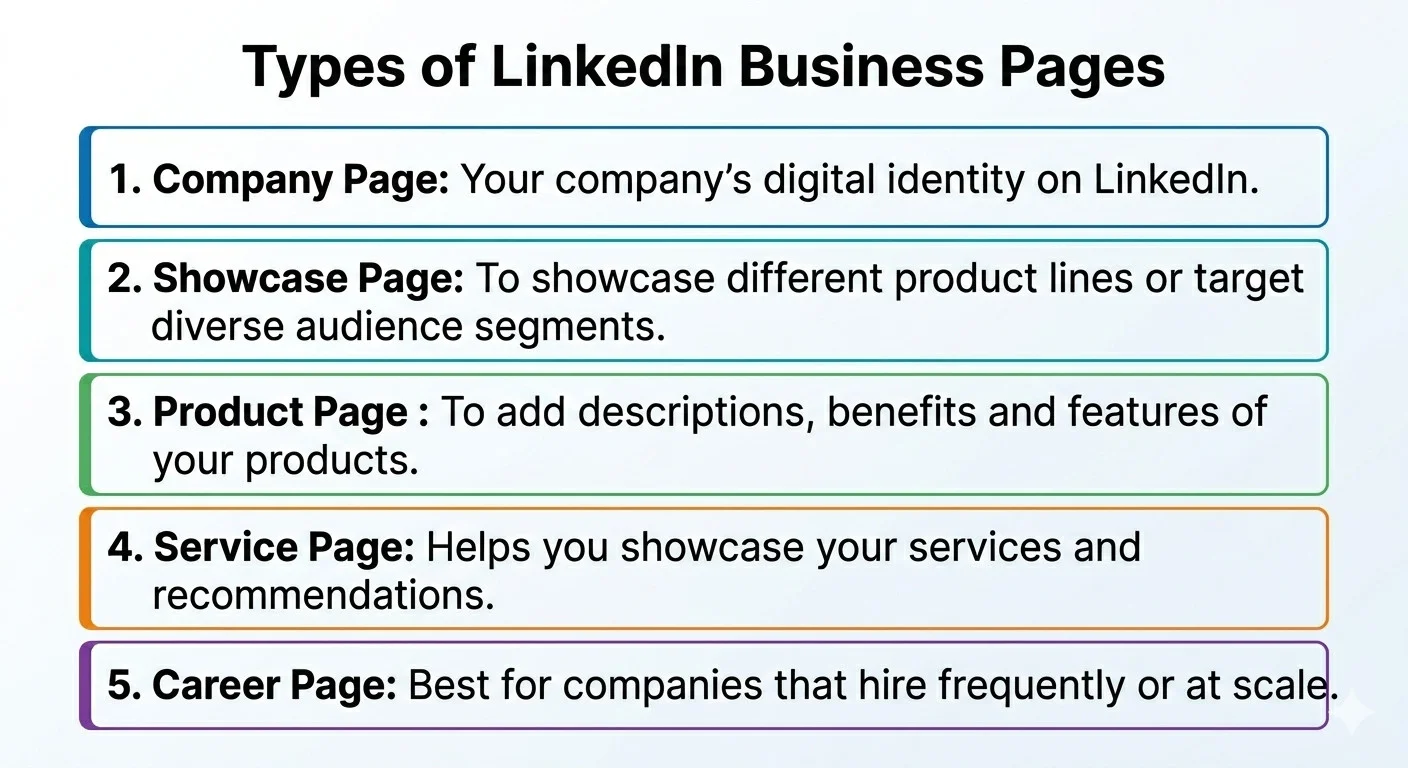
These are:
1. Company Page: You can create a free company page, which acts as your digital identity on LinkedIn. This page can be used to:
- Share LinkedIn posts and publish regular updates
- Engage with your followers
- Track analytics to understand your audience
- Attract and convert leads by adding CTAs
2. Showcase Page: LinkedIn showcase pages are sub-pages connected to your main Company Page and work well for businesses that serve different industries, have diverse product lines, or different target audience segments.
For instance, an agency offering both “Performance Marketing” and “Brand Strategy” can create LinkedIn Showcase Pages if their target audiences for these services differ significantly.
3. Product Page: Product Pages allow businesses to feature specific offerings within their Company’s LinkedIn profile. This page works well for businesses selling digital products like online courses, e-commerce platforms, and administrative support.
On product pages, you can add descriptions, benefits, and features of your products. These pages also improve your discoverability inside LinkedIn search.
4. Service Page: These are slightly different from the product pages and can be linked with both personal profiles and company pages. This is why individual consultants, freelancers, and agencies mostly use service pages to showcase their services and client recommendations.
Service pages also help you build credibility and amplify your reach on LinkedIn.
5. Career Page: Career Pages are paid extensions of Company Pages where businesses can highlight their company culture, feature testimonials, and target job-seekers. This page is more relevant for companies that hire frequently or at scale.
Benefits of Using LinkedIn for Business in 2026
We know that by leveraging LinkedIn for businesses, brands can connect with their prospective buyers, partners, and future employees on LinkedIn.
But there are many more benefits of LinkedIn marketing in 2026. Let’s talk about them:
1. Build a Professional Reputation
In the world of business, perception matters.
One of the first things that people do when they hear about your company for the first time is visit your LinkedIn page. If your LinkedIn business page is well-positioned, active, and insightful, it signals credibility.
LinkedIn offers a great platform for businesses to position themselves as an authority in their field. Posting value-driven content consistently is a great way to build trust and recognition.
2. Generate more Targeted Leads
LinkedIn is a platform where different founders, marketing heads, HR leaders, and decision-makers are actively looking for solutions to their business problems.
This means that businesses can get more qualified inquiries from this platform if they use the right LinkedIn lead generation strategies as compared to other social media platforms.
Additionally, if you are a B2B company or an agency, you can also use LinkedIn Ads to target specific industries, job titles, and company sizes to get more qualified leads and better conversions.
3. Boost Brand Trust and Visibility
By keeping the company page well-optimized and posting valuable content, businesses can ensure better visibility and build brand trust on LinkedIn.
When your brand shows up consistently in the feeds of your network, it creates familiarity. And familiarity drives credibility. Eventually, people will start recognizing you as a reliable voice in your space.
4. Boost Discoverability Through SEO
By optimizing your headline, description, and content with relevant keywords, you improve discoverability both on LinkedIn and in search results.
When your company page is well-optimized, it increases your chances of appearing on the first page of LinkedIn search results.
But that’s not all. LinkedIn pages also rank well in Google search results when someone near you looks for a similar product/service on Google.
5. Better Partnership Opportunities
LinkedIn is not just for finding customers or potential clients; it also helps you expand your network by finding suppliers, collaborators, media professionals, partners, and industry influencers.
When your Company Page clearly communicates what you do and whom you serve, it becomes easier to find the right people and build valuable relationships. You can also join LinkedIn groups and participate in industry-related forums to make better business connections.
6. Reach Decision-makers and Future Collaborators
LinkedIn is the only social media platform where founders and senior leaders actively participate in conversations. It offers you a platform to directly reach out to CEOs, CMOs, HR Directors, Startup founders, and Industry leaders through meaningful posts and messages.
How to use LinkedIn for Businesses in 2026?
A strong LinkedIn marketing strategy goes far beyond simply creating a Company Page and posting occasionally.
Businesses must use this platform strategically for smart positioning, targeted engagement, and data-driven optimization.
Here are LinkedIn best practices for businesses in 2026:
Step 1: Set up and Complete your LinkedIn Company Page
Before you start creating your company page, make sure you have a personal profile on LinkedIn. Your personal LinkedIn profile will also be the administrator of your LinkedIn business page.
Start by logging into your personal account and then click on the “For Business” icon at the top right corner of your browser, followed by “Create a Business Page” at the bottom right of the pop-up window.

Next, choose from the three available page options: company, showcase page, or educational institution.
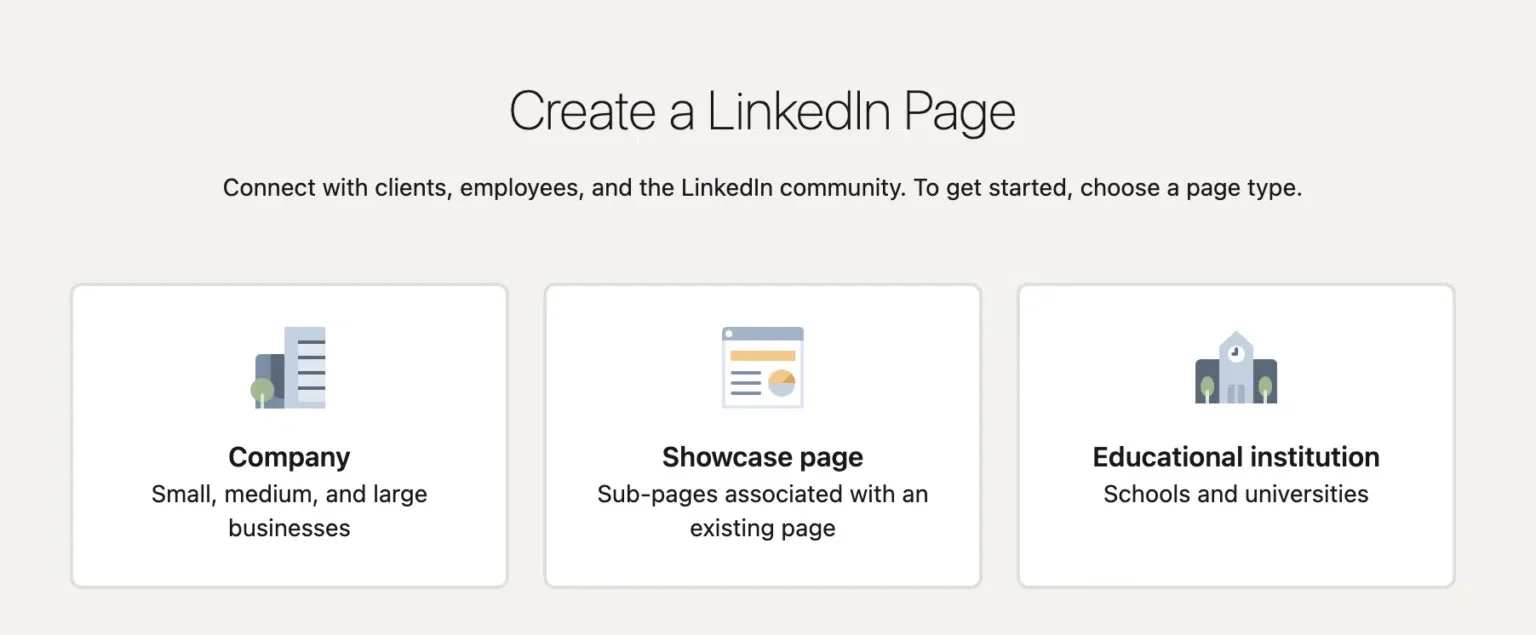
In this blog, we will be talking about setting up a company page, so click on the first option, i.e., Company.
In the next pop-up window that opens up, start filling in the company details, like your business name, company logo, website, industry, organization type, size, etc.
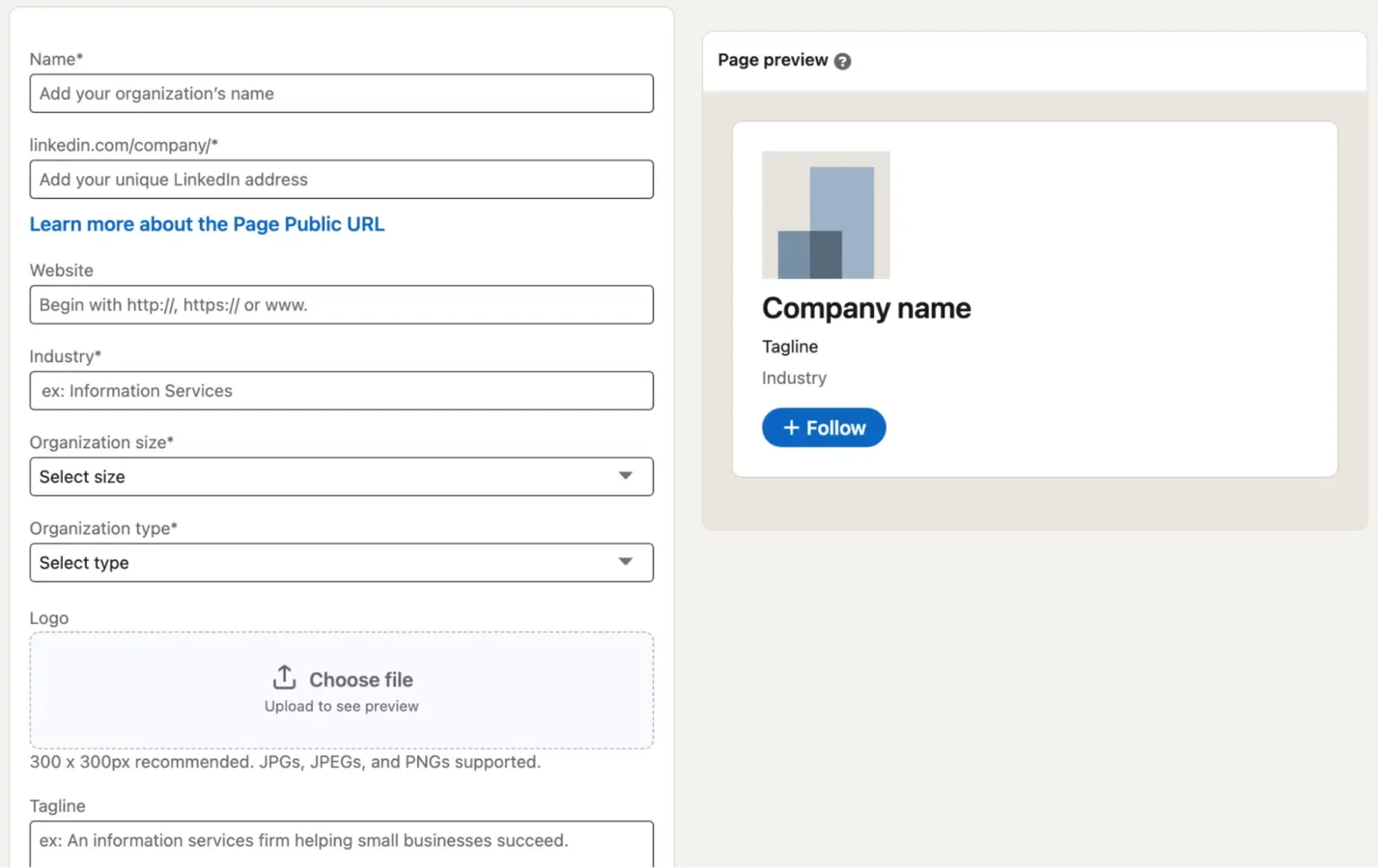
Make sure to add a clear company logo and a catchy tagline; these two are the first things that people see on your company page.
Once you add in all the details, this is what your company page will look like:

Step 2: Optimize the Page Elements for Better Discoverability
After you finish setting up your LinkedIn business page, LinkedIn will prompt you to set up some more important sections for your page. Completing these pages helps you optimize your page for better discoverability on LinkedIn.
If you are still wondering whether or not to set up these pages, here’s what you need to know. Companies with complete profiles tend to get 30% more weekly views from LinkedIn users compared to those with incomplete profiles.
In the additional information sections, you will first be prompted to add your location and follow some relevant pages.

Once this is done, here are other optimization tips to follow:
1. Add an Overview About Your Company
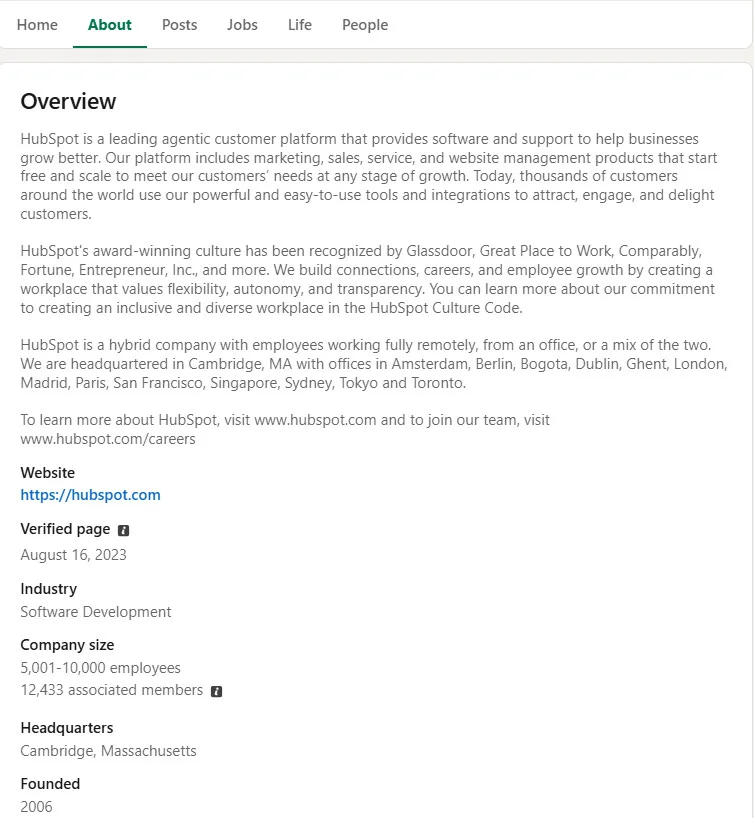
Your company’s overview (About section) is your company’s positioning statement. This section appears as an expandable snippet at the top of your business page. Here you can talk about your products/services, key accomplishments, your company values, mission, etc.
This is how you can structure this section:
- Start with who you are, who you help, or what problem you solve
- Talk about your company’s mission
- Explain your USPs or what makes you different
- You can mention proof (like experience, results, industries served)
- Add your company’s website, size, Industry, headquarters, etc
- Close with a subtle call to action
Since the overview section is the first thing people see about a company, make sure it’s compelling. The image below shows the Overview section of HubSpot, where they talk about their offerings, key achievements, work culture, etc.
2. Add Industry-Related Keywords
When you incorporate the relevant keywords in a natural way throughout your company page, it helps search engines like Google index your LinkedIn business page.
To begin with, look for keywords that LinkedIn users usually search when looking for your business, like a B2B marketing agency, SaaS automation tool, or Performance marketing services, etc.
Then add these keywords in key areas like:
- Your company overview
- Your tagline
- Your specialties section
- Your content posts
- Product descriptions, etc.
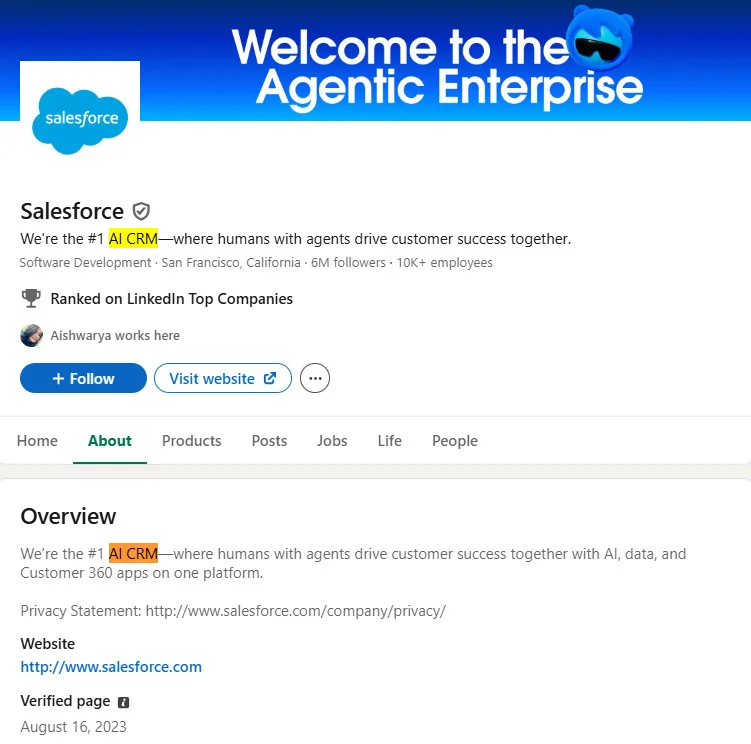
Here is an example of how Salesforce, an AI CRM company, incorporates the keyword “AI CRM” in its tagline and company’s overview.
3. Use Translations (If You Serve Multiple Markets)
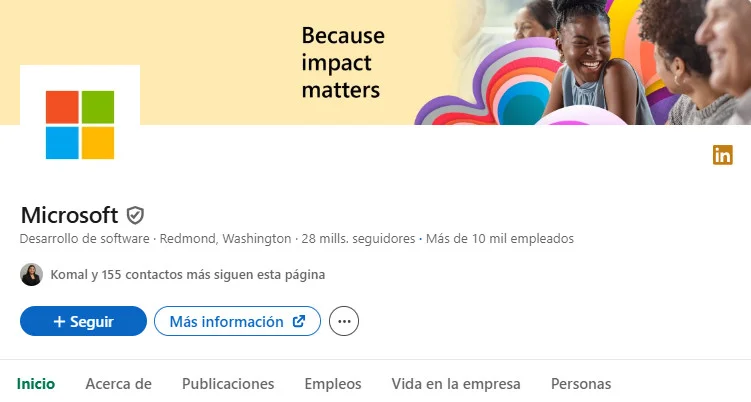
LinkedIn allows you to create page descriptions in multiple languages. This feature is great for companies that operate in multiple countries, different regional markets, or cater to multi-lingual audiences.
Even though it’s a small effort, it signals your global readiness and helps improve your reach significantly.
The image below shows Microsoft’s LinkedIn Company Page displayed in Spanish, demonstrating how LinkedIn automatically presents localized versions of a page based on the user’s language settings.
4. Create Showcase Pages to Highlight Your Products/Services
If you are a business with different sub-brands or business units that cater to distinct target audiences and require tailored messaging, then you can create different Showcase pages under a parent company page.
Only a Super Admin can create a Showcase page, and a maximum of 25 such pages can be created for a single parent page.
Here’s how you can create it:
- Access your LinkedIn company page from the super admin account.
- Click the Create button in the upper-left corner.
- Select Create a Showcase Page from the options.
- Add logo, cover image, and enter details like name, URL, industry, etc.
5. Add a Custom CTA Button
Businesses can also add a CTA button on their pages that lies just next to the “Follow” button. When used properly, it can nudge people into taking action.
Here are some CTA buttons you can use:
- Visit Website
- Contact Us
- Learn More
- Sign Up
- Register
- Visit Portfolio
- Visit Store
In the “Header” options, click “Buttons” and then select a button that is most suited for your business type.
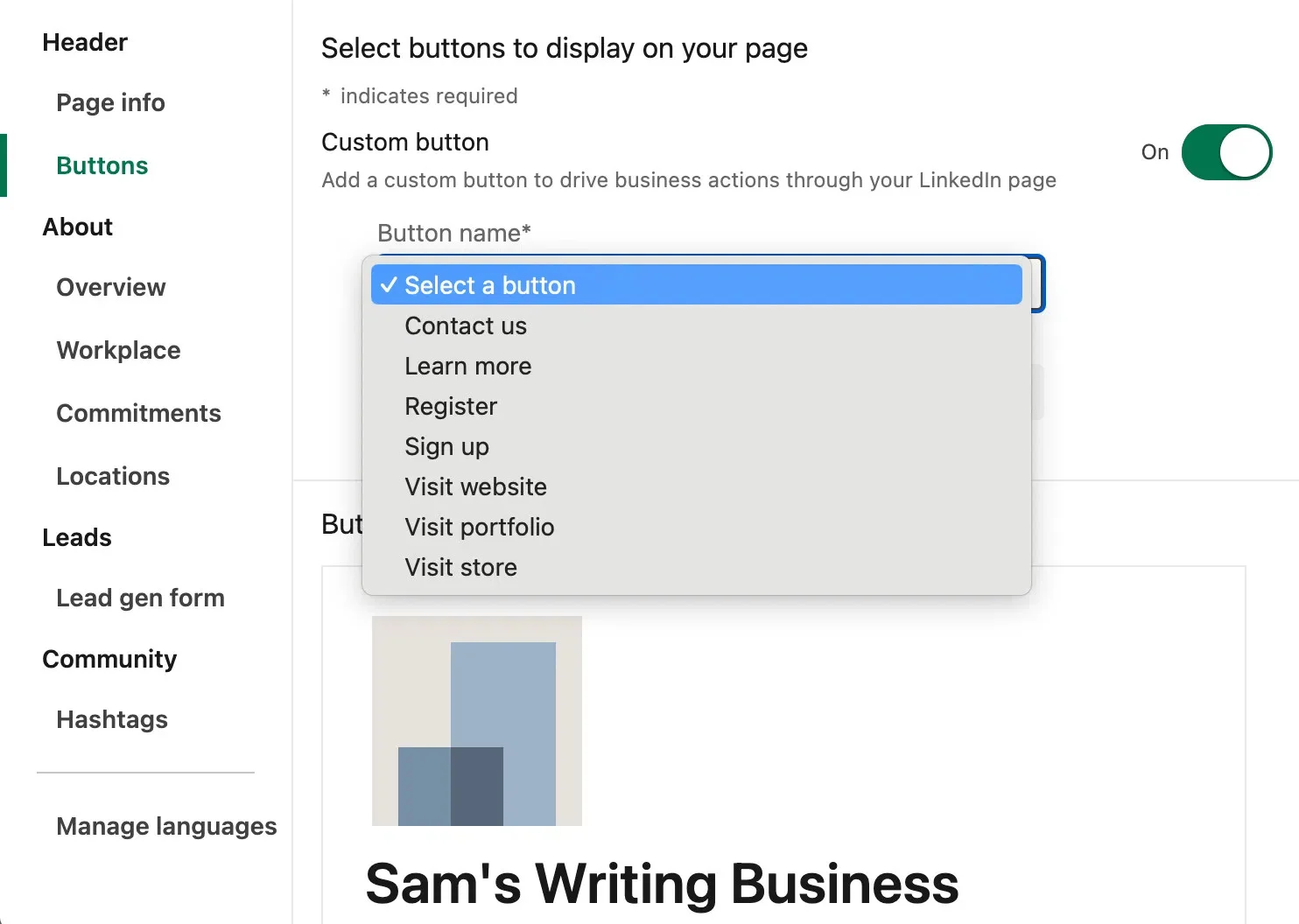
Also, you can change this custom button depending on the types of campaigns that you run on LinkedIn.
For instance,
- Use “Sign Up” for Lead generation
- Use “Learn More” for Awareness campaigns
- Use “Contact Us” for Sales
Step 3: Set Clear LinkedIn Marketing Goals
Now that your LinkedIn page is all set and optimized, it’s time to start growing it strategically.
To begin with, here are some critical questions that you must answer:
- Who are you trying to reach?
- What business outcome are we aiming for?
- How will we measure success?
Let’s break this down:
1. Define Your Target Audience
The very first step is to decide who your prospective clients are on LinkedIn. Also, be as precise with your answer as you can.
So, instead of saying you’re targeting professionals, lay out their roles, the industries they work in, and whether they are the real decision-makers.
Go beyond the surface-level demographics and define their:
- Job titles (CMO, Founder, HR Manager, Procurement Head)
- Industry (SaaS, Healthcare, Finance, Education, Real Estate)
- Company size (SMBs vs enterprise)
- Location (local, national, global markets)
- Seniority level (entry-level vs decision-maker)
This clarity will influence your tone of content, the problems you address, and the types of ads you run on LinkedIn.
2. Set Measurable LinkedIn KPIs
Based on your objectives, you need to come up with some key performance indicators to track the success of your marketing efforts.
Here are some KPIs for different goals
- Brand awareness: Follower growth, Post reach, Impressions, and Engagement rate.
- Lead generation: Website clicks, CTA button clicks, Form submissions, or Cost per lead (if running ads)
- Authority building: Saves and shares, Comment quality, Inbound messages, and Profile visits
3. Determine Parameters for Success
Just setting KPIs is not enough. You must also ensure that your marketing strategy helps you meet your business goals.
For this, keep your company’s quarterly or monthly objective in mind, it could be:
- To increase demo bookings by 20%
- Drive 30% more traffic to the landing page, etc.
Based on these targets, create campaigns that help you move closer to them.
Step 4: Create and Post Content on LinkedIn
Now comes the part that actually drives growth: content execution. Start creating content that positions you as an authority in your industry, and then start posting it consistently and strategically.
Here are some content types you can post on your company’s LinkedIn accounts:
1. Text-based posts
They are the most used and powerful content forms on LinkedIn, because text posts feel native, conversational, and human.
To make them work:
- Start with a strong hook (a bold statement, contrarian take, or question).
- Break text into short, readable lines.
- Use spacing intentionally.
- Add light formatting like bullet points or emojis for structure.
- Include data or real-world insights.
- Add relevant and industry-related hashtags
These posts are ideal for sharing thought leadership, business lessons, industry observations, and founder perspectives.
To generate relevant hashtags for your text-based posts, try out SocialPilot’s free LinkedIn hashtag generator, for tailored hashtags so you can amplify your post reach on LinkedIn.
Free AI LinkedIn Hashtag Generator
Get tailored LinkedIn hashtags that amplify your reach and boost professional engagement.
Here is the Generated Result
2. Carousel Posts
Posting document-style carousels (PDF slides) encourages people to keep swiping and increases the dwell time on a post. As dwell time increases, algorithms push your posts more.
Use carousels to:
- Break down frameworks
- Share step-by-step guides
- Present case studies
- Offer actionable checklists
Just make sure to keep the slides clean and minimal. Don’t make them too text-heavy. Lead with a strong cover slide that promises a clear benefit and end the carousel with a CTA.
3. Image Posts
Posts with candid pictures, showing real people at their jobs, receive higher engagement on LinkedIn. Image posts work well if you share:
- BTS moments
- Team highlights
- Event snapshots
- Infographics
- Product screenshots with context
Also, posting images of people helps humanize your brand and make the content more relatable.
4. Video Content
Video posts get 5 times more engagement, and live videos get 24 times more engagement compared to text-based conventional posts on LinkedIn. Create short, informative videos, preferably under 90 seconds, as these perform exceptionally well on LinkedIn.
Also, videos work best:
- For breaking down complex topics
- Providing quick industry insights
- For product walkthroughs
- Showcasing client success highlights
5. Articles and Case Studies
LinkedIn also allows you to publish long-form articles and detailed case studies directly on the platform. While short posts help you stay visible, long-form content helps you with authority building on LinkedIn.
You can create LinkedIn articles around a whole lot of complex industry topics, or you can share detailed case studies breaking down the frameworks and methodologies you used.
While short-form posts quickly disappear in people’s feeds, articles live on your profile and Company Page as evergreen assets. They signal expertise, depth, and credibility.
We understand that creating LinkedIn posts – both short-form posts and long-form articles – can be time-consuming.
This is precisely why most businesses also struggle with content execution on LinkedIn
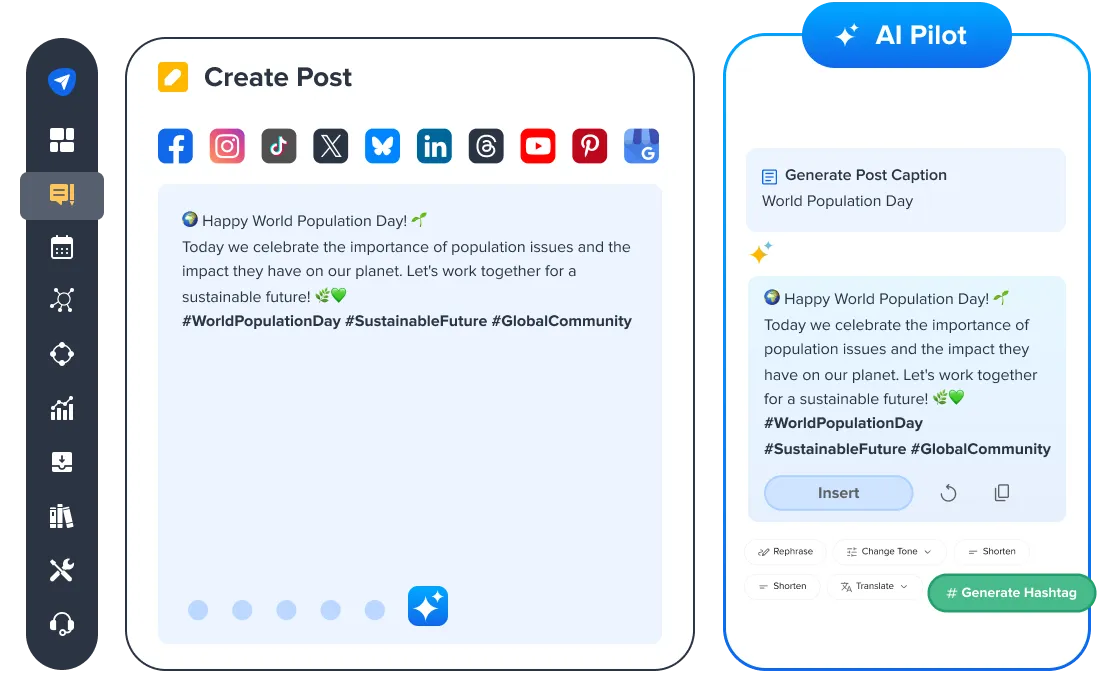
But SocialPilot’s AI Pilot can be your one-stop solution to creating value-driven LinkedIn content in a matter of minutes.
From topic ideation to post creation and hashtag generation, everything can be done with just a few simple clicks.
But that’s not all. AI Pilot also helps you:
- Shorten or expand the posts as per your requirements
- Change its tone to meet the voice brand voice
- Translate your posts for your multi-lingual readers.
Step 5: Understand Posting Frequency and Best Posting Times
On LinkedIn, your posting frequency and the time of posting are just as important as the content you post.
So, how often should you post on LinkedIn?
While there is no definite answer to this, posting 2–4 times per week is both sustainable and effective for businesses and agencies.
We do not recommend daily posting, as it can dilute your visibility. Also, posting too infrequently can slow down your growth. Just make sure to post consistently, so that your page remains active and relevant.
Also, schedule your posts for when your customers are most active, since LinkedIn evaluates your content’s performance in the first 60–120 minutes after posting.
Look for the best posting times on LinkedIn based on your industry and location. Scheduling your posts during these time slots will ensure maximum engagement.
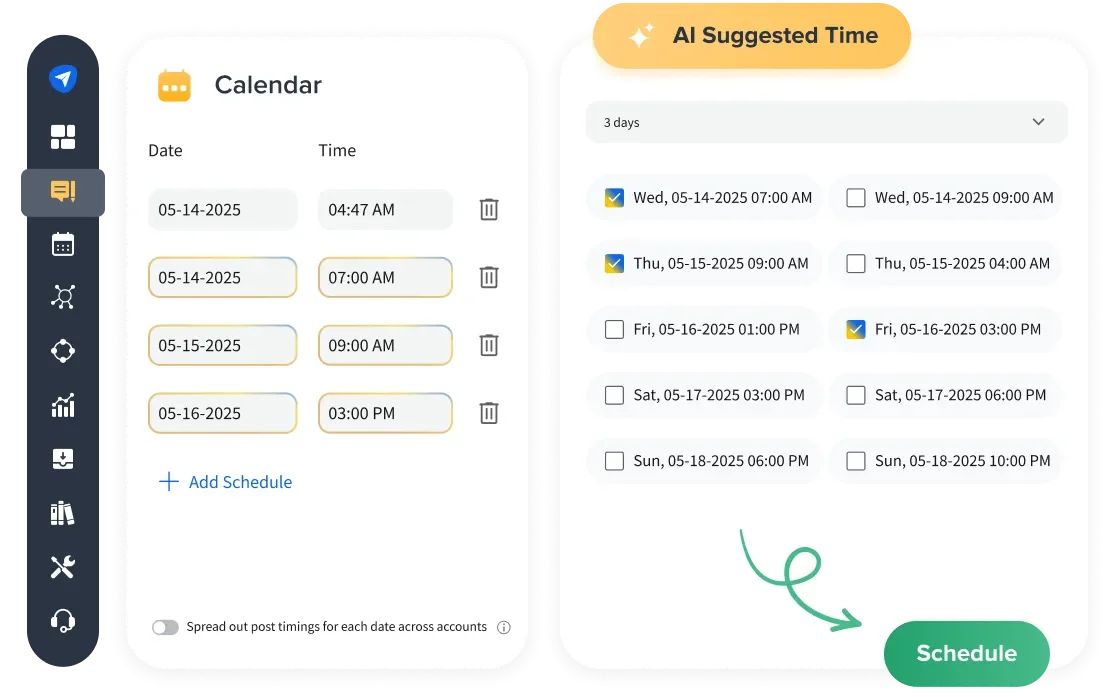
Schedule your posts using SocialPilot’s LinkedIn scheduler, so that you never miss out on the peak engagement hours.
This tool helps you schedule posts with all different content formats, recommends you AI-suggested best time slots, and also helps you better engage with your network on LinkedIn.
Step 6: Engage With Your Network
When using LinkedIn for business, brands often underestimate the power of intentional engagement.
Just like other social platforms, LinkedIn also requires you to actively participate in conversations within your industry. Engage with the content of other LinkedIn members, especially those in your network.
Visibility and engagement often have a reciprocal effect. When you engage more, your content is more likely to reach more people.
Here is what you should do:
- Like and comment on posts from other accounts
- Add insights to discussions
- Repost relevant content with your perspective
- Reply to comments on your own posts
Step 7: Use LinkedIn Analytics to Optimize Performance
Tracking analytics is an indispensable part of your LinkedIn marketing strategy. Using LinkedIn for businesses is not about guesswork; it is about taking data-backed decisions to constantly optimize your performance.
LinkedIn has built-in analytics features to track basic, surface-level metrics; however, if you want to dive in deeper, you can use third-party LinkedIn analytics tools that come with advanced features like custom reports and cross-platform analytics.
Follow this LinkedIn analytics guide, which breaks down all important metrics that you should be tracking for your business growth on LinkedIn.
Step 8: Use Ads to Promote Your Business
Growing your LinkedIn page organically will take time. So, if you are looking to accelerate this whole process or want to reach out to a very specific target group, then you can do so by using LinkedIn ads.
You can create ads for different objectives like awareness, promotions, lead generations or website visits. Also, ads can be posted in all different formats like feed posts, image posts, carousels, videos, etc.
When running ads, start by narrowing down your prospective clients based on:
- Job title
- Industry
- Company size
- Seniority level
- Skills
- Location
- Company name
Targeting the right audience will help reduce wasted spend by speaking directly to them.
For more insights, read our LinkedIn ads guide – an in-depth resource that walks you through different ad formats, targeting options, budgeting tips, and more, so you can plan your ads better.
LinkedIn Case Studies: What Top Brands Are Doing Right
Let us now talk about some brands that have turned their LinkedIn homepages into lead magnets by consistently standing out in terms of user engagement and authority-building.
1. Canva
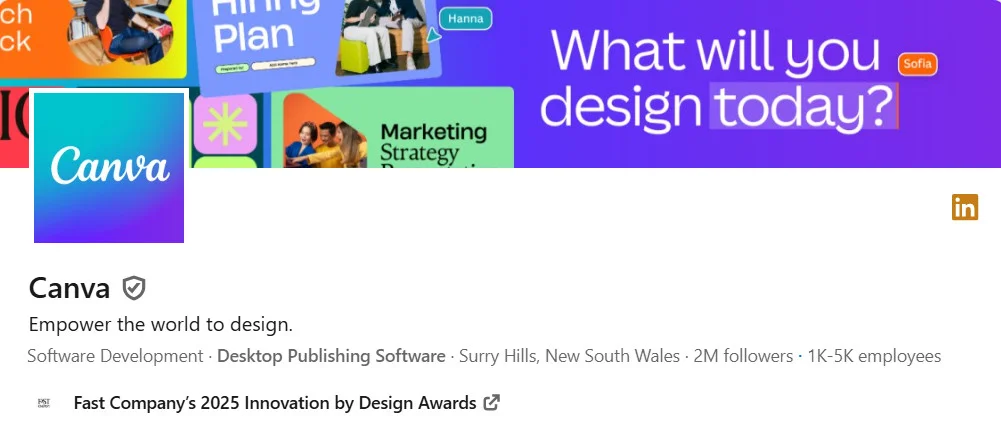
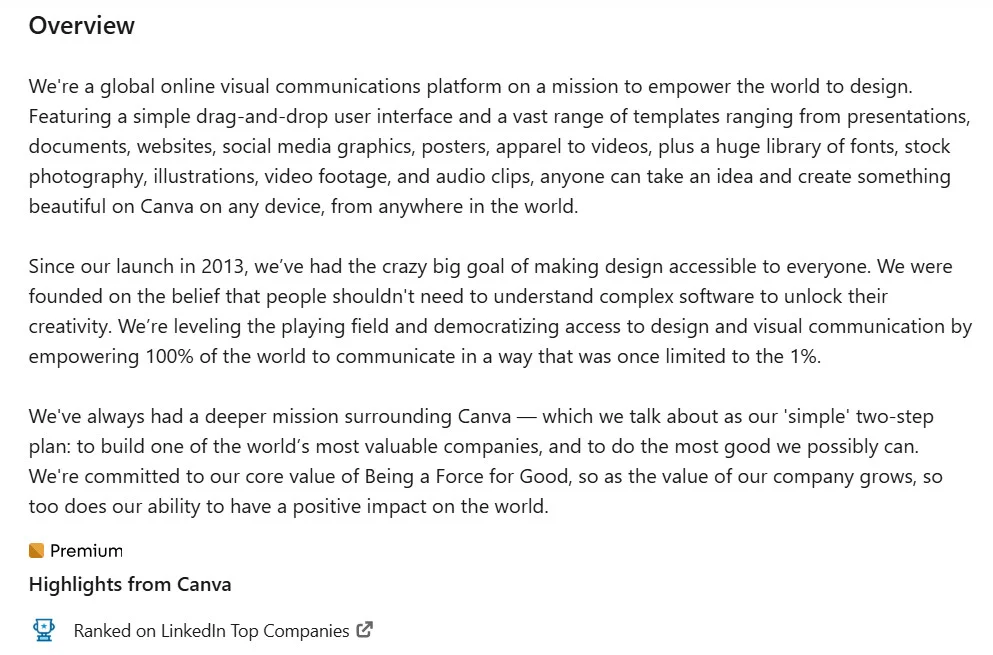
We analyzed Canva’s LinkedIn page, and there are several things they’re doing exceptionally well. To start with, their banner is clear, benefit-driven, and completely on-brand.
Then comes their tagline that beautifully summarizes their mission: “Empower the world to design.”
Their page on LinkedIn is not product-focused, but user-focused.
With a bright banner and clear typography, Canva clearly positions itself as a creative enabler, not a tool.
Their overview section is mission-led, wherein they clearly explain
- Who they are
- What they do
- What makes them accessible
They do not overwhelm their readers with technical jargon; instead, they speak about their impact and accessibility.
They use their LinkedIn page to
- Share design tips
- Publish product updates and industry news
- Highlight customer stories and use cases
- Promote webinars and educational resources
- Showcase employee voices and company culture

Canva uses LinkedIn to build an ecosystem; they don’t just post consistently but also organize events for engagement spikes and recurring attention. Everything from their thumbnails to the carousels is beautifully designed and fully aligned with Canva’s visual identity.
2. Airbnb
Airbnb has truly mastered the art of visual storytelling, and its LinkedIn page is a testament to that. They approach the platform differently, but brilliantly
For Airbnb, LinkedIn isn’t a lead-gen channel, but a platform to strengthen their brand perception.
Their content focuses heavily on:
- Company culture
- Social impact initiatives
- Community stories
- Business FAQs
- Policy updates
- Behind-the-scenes insights
- Employee highlights
Their visuals are powerful but human-centered. Instead of pushing listings or promotions, Airbnb tells stories.
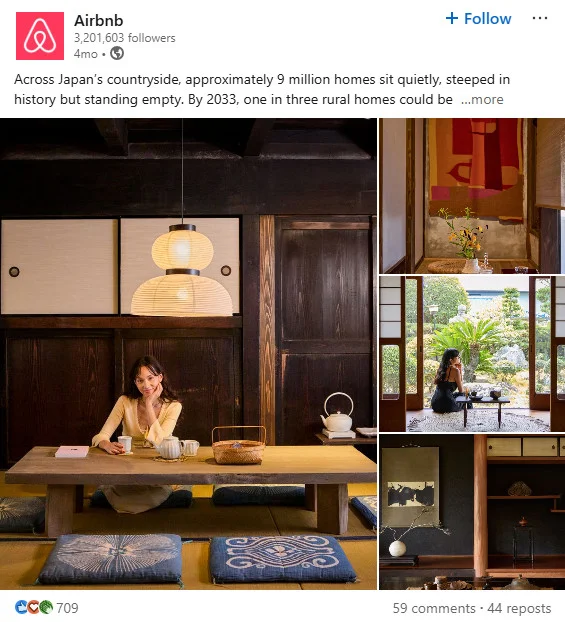
They consistently position themselves as:
- A mission-driven company
- A global community brand
- A forward-thinking employer
Their human-centered posts often outperform corporate messaging, and their storytelling skills help them build an emotional connection with their readers.
Airbnb understands that the success on LinkedIn is not just about reach, it’s about resonance.
3. Salesforce
Salesforce is one of the most influential B2B brands on LinkedIn, and its Company Page shows exactly how enterprise companies can use the platform to build authority at scale.
The first thing you notice about Salesforce’s LinkedIn presence is its clear positioning around innovation and customer success. Their banner visuals, campaign graphics, and post designs consistently highlight themes like AI, digital transformation, and the future of business.

Their tagline reinforces this positioning: “Where humans with agents drive customer success together”
Salesforce uses LinkedIn not just to promote its products, but to showcase how businesses grow with its ecosystem.
Their LinkedIn content strategy revolves around a mix of thought leadership, innovation updates, and real-world customer stories.
They regularly use their page to:
- Share customer success stories and case studies
- Announce product innovations and AI updates
- Promote events like Dreamforce and global webinars
- Highlight partnerships and ecosystem developments
- Feature employee stories and workplace culture
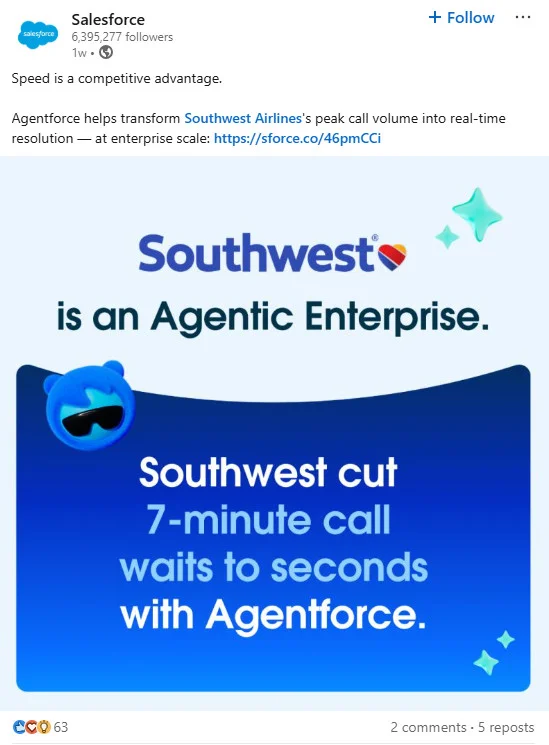
Visually, their posts are highly polished but still informative. Salesforce ensures that its LinkedIn feed consistently delivers insights about the future of technology and business.
Salesforce uses LinkedIn not just as a social channel, but as a stage for industry leadership, where product innovation, customer success, and global conversations come together to strengthen its brand authority.
Ready to Make LinkedIn Work for Your Business?
Unlike other social channels, LinkedIn offers a professional ecosystem where credibility is built, conversations start, and business opportunities take shape.
Brands that figure out how to use LinkedIn for business often end up growing faster than others.
Additionally, tools like SocialPilot can make it seamless to use LinkedIn for business. From easy post creation to scheduling to providing in-depth analytics, SocialPilot can help turn your LinkedIn business page into a powerful growth engine.Try out our 14 day free trial and start growing your LinkedIn more strategically.


 Join 55,000+ social media managers


