Did you know? As per the Statista data, YouTube has 2.5 billion monthly users and 114 million channels, but only a handful truly break through.
What sets them apart? All of the top-performing videos are powered by intelligent, data-driven optimization.
Our YouTube expert has crafted this guide after in-depth analysis, showing you exactly how to use YouTube analytics data and transform those insights into real channel growth.
What is YouTube Analytics?
It is the built-in feature that shows how your videos and channel perform.
By using the YouTube Analytics dashboard, marketers can track key metrics like watch time, views, traffic sources, engagement, and audience behavior, giving them a complete picture of what’s working and what’s not.
Where to Find YouTube Analytics?
To check your analytics, you’ll use YouTube Studio. It is the control center for your channel. It lets you upload videos, manage content, and track performance in one place.
Steps to See YouTube Analytics on Desktop
To head to YouTube Analytics on desktop, you can follow the steps:
Step 1: Sign in to your YouTube account and click on the profile icon in the top right corner.
Step 2: Now, click on YouTube Studio to access the analytics dashboard
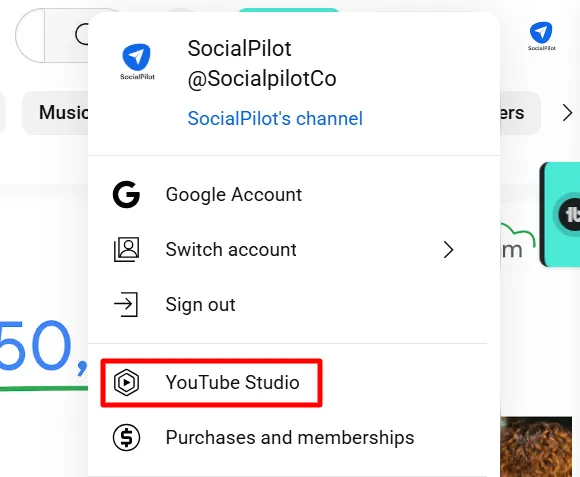
Step 3: On the left menu bar, you will find the “Analytics” option, select that.
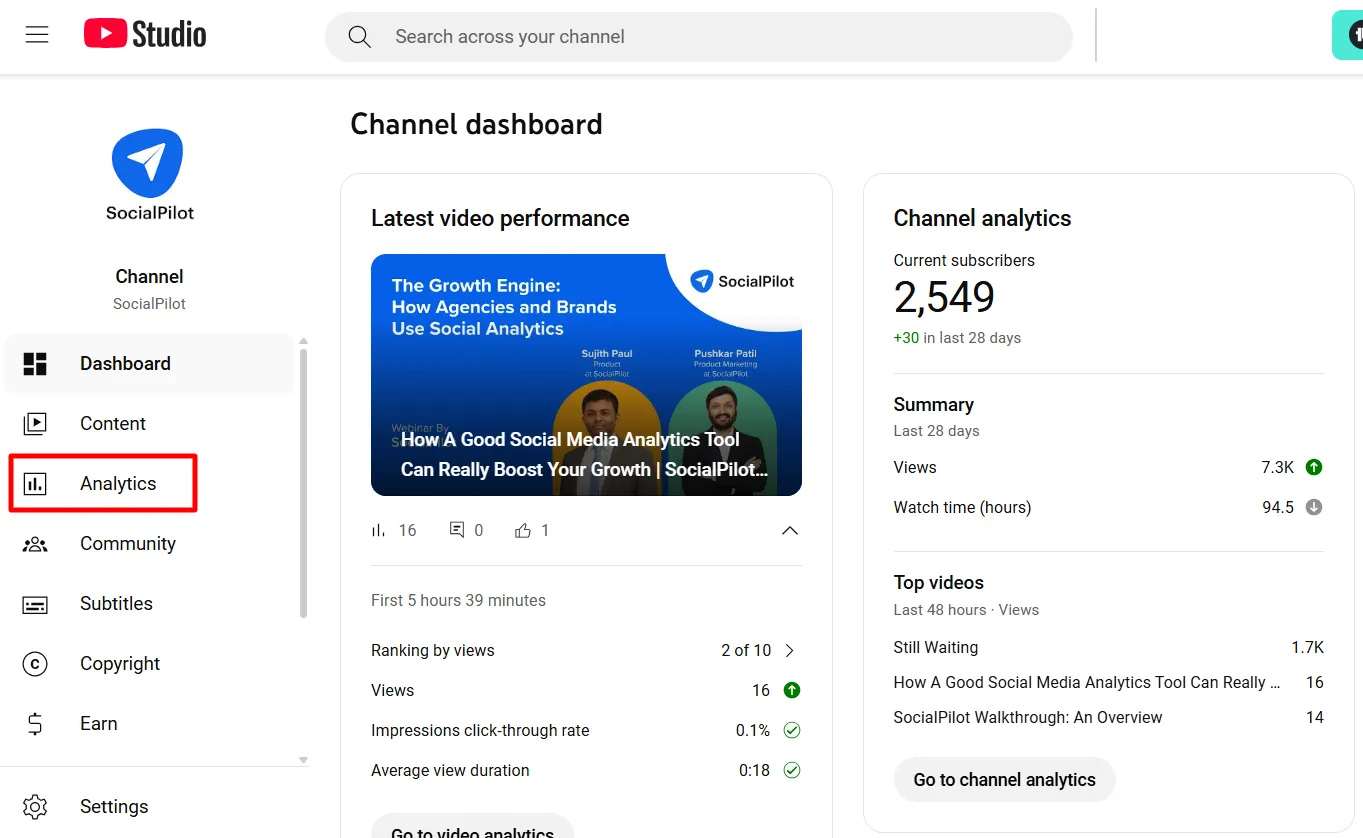
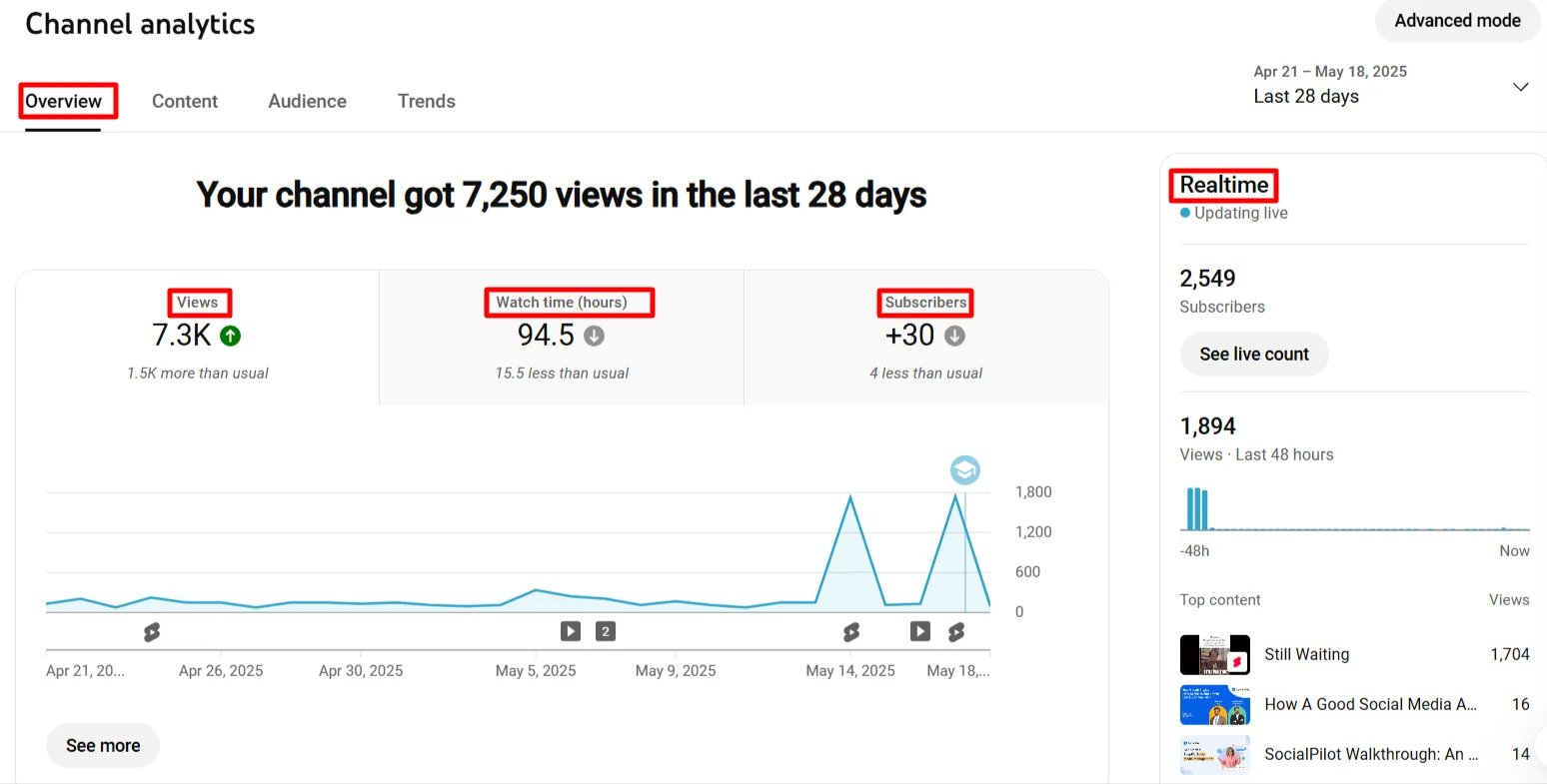
You will find the “Overview” tab selected by default on the channel analytics page, giving you an overview of the channel that includes your YouTube subscriber list, total views, watch time, real-time viewers, and more.
Here, you can get a detailed YouTube analytics report by clicking the “Advanced Search” option.
Steps to Find YouTube Analytics on a Mobile Phone
To access YouTube Analytics via your mobile phone, follow the steps:
Step 1: Download the YouTube Studio app on your mobile phone and sign in to your account.
Step 2: You will see the “Analytics Tab” on the dashboard once signed in. You can click to see further details.
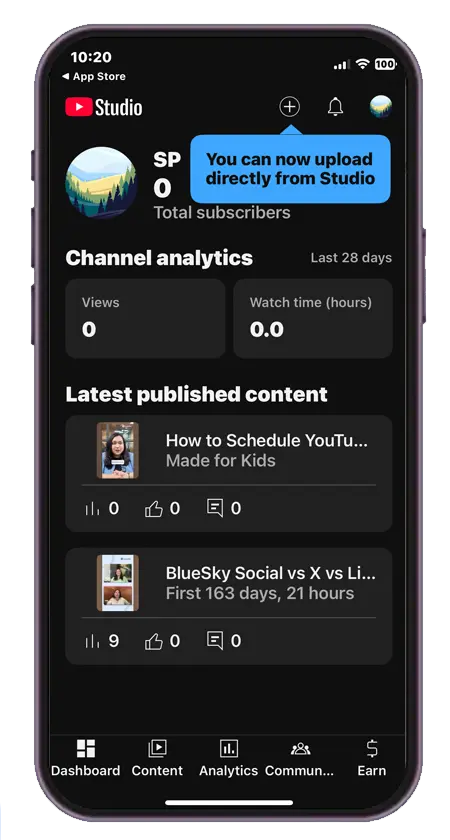
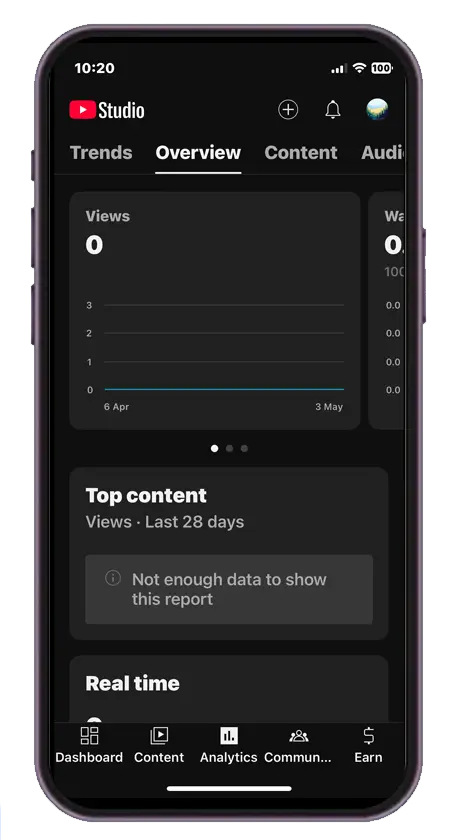
Step 3: You will also come across Overview, Trends, Content, and Audience. Select any of these based on the information you seek.
You can even check your YouTube subscriber count here, along with other metrics such as views, watch time, etc.
50+ Key YouTube Metrics Explained
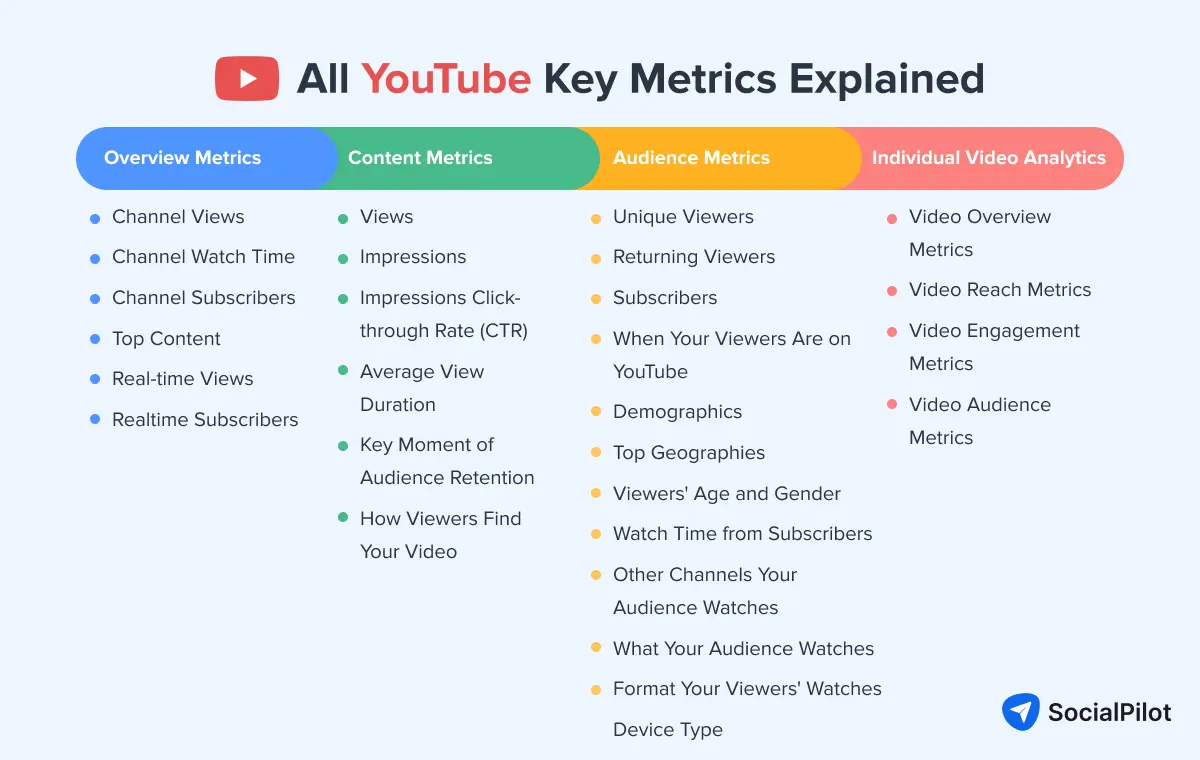
YouTube Studio Analytics dashboard and its metrics are divided into several tabs. Below is a detailed walkthrough of each tab and the metrics to track in YouTube Analytics.
Overview Metrics
The overview tab shows YouTube channel analytics. Here you can see the big picture of how your channel performs overall in the past 28 days.
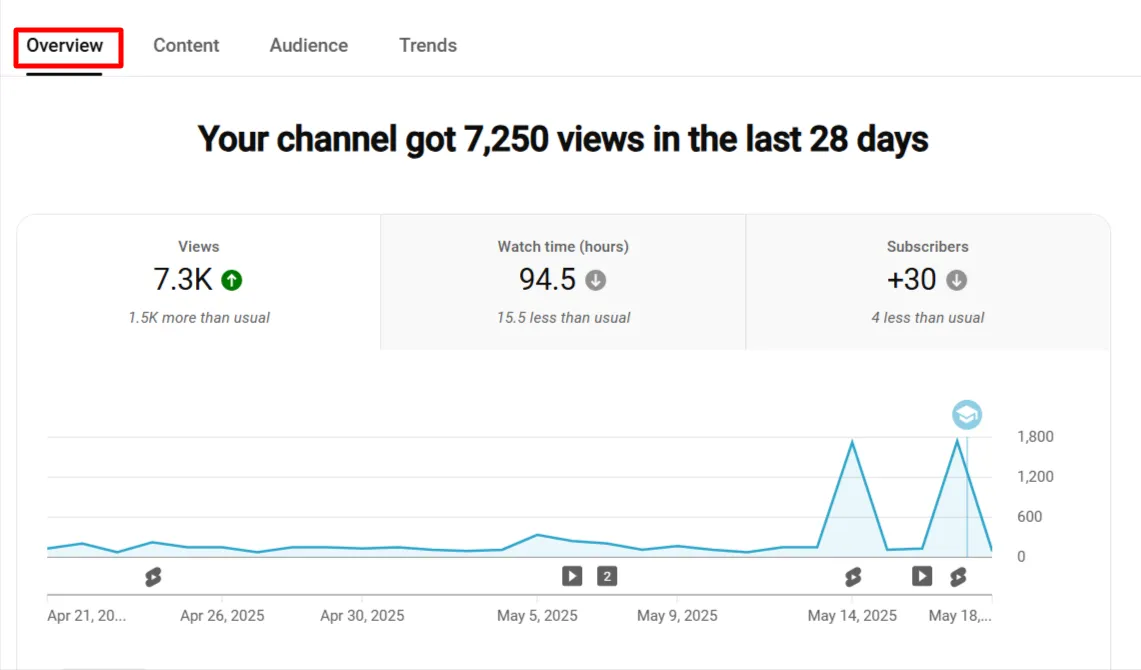
1. Channel Views: The total number of views on all videos in your channel. It helps gauge overall channel performance and popularity.
2. Channel Watch Time: The total time people have spent watching your videos. Higher watch time means YouTube’s algorithm sees your content as engaging.
3. Channel Subscribers List: The total number of subscribers to your channel. This is a key indicator of your audience’s loyalty and engagement.
4. Top Content: Displays your most popular videos based on views, watch time, and engagement. Helps identify what content resonates most with your audience.
5. Real-time Views: The number of views your channel is getting right now. This gives a quick snapshot of your channel’s current performance.
6. Realtime Subscribers: Shows the number of new subscribers gained in real-time, helping you track sudden changes in interest.
Content Metrics
This section shows analytical data on how your overall content is doing.
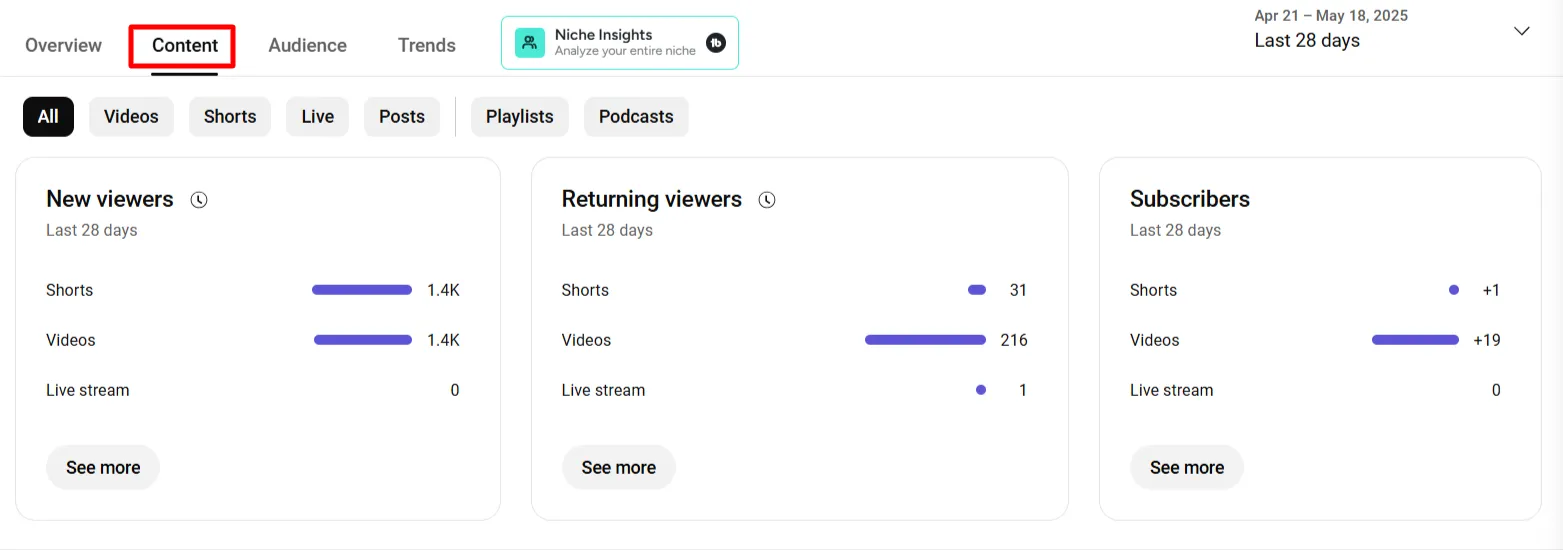
7. Views: Total views across your videos. Helps measure the reach and popularity of your content.
8. Impressions: The number of times your video thumbnails were shown to viewers. High impressions but low views suggest your thumbnail or title needs improvement.
9. Impressions Click-through Rate (CTR): The percentage of impressions that resulted in a view. This can be tracked using YouTube search analytics.
10. Average View Duration: The average time viewers watch your videos. Longer view durations suggest more engaging content.
11. Key Moment of Audience Retention: Shows where viewers drop off or skip. Helps identify the best and worst parts of your videos.
12. How Viewers Find Your Video: Shows search terms and sources directing traffic to your video. Helpful in optimizing keywords and titles.
Audience Metrics
This tab details the people watching your videos and what they find most relevant.
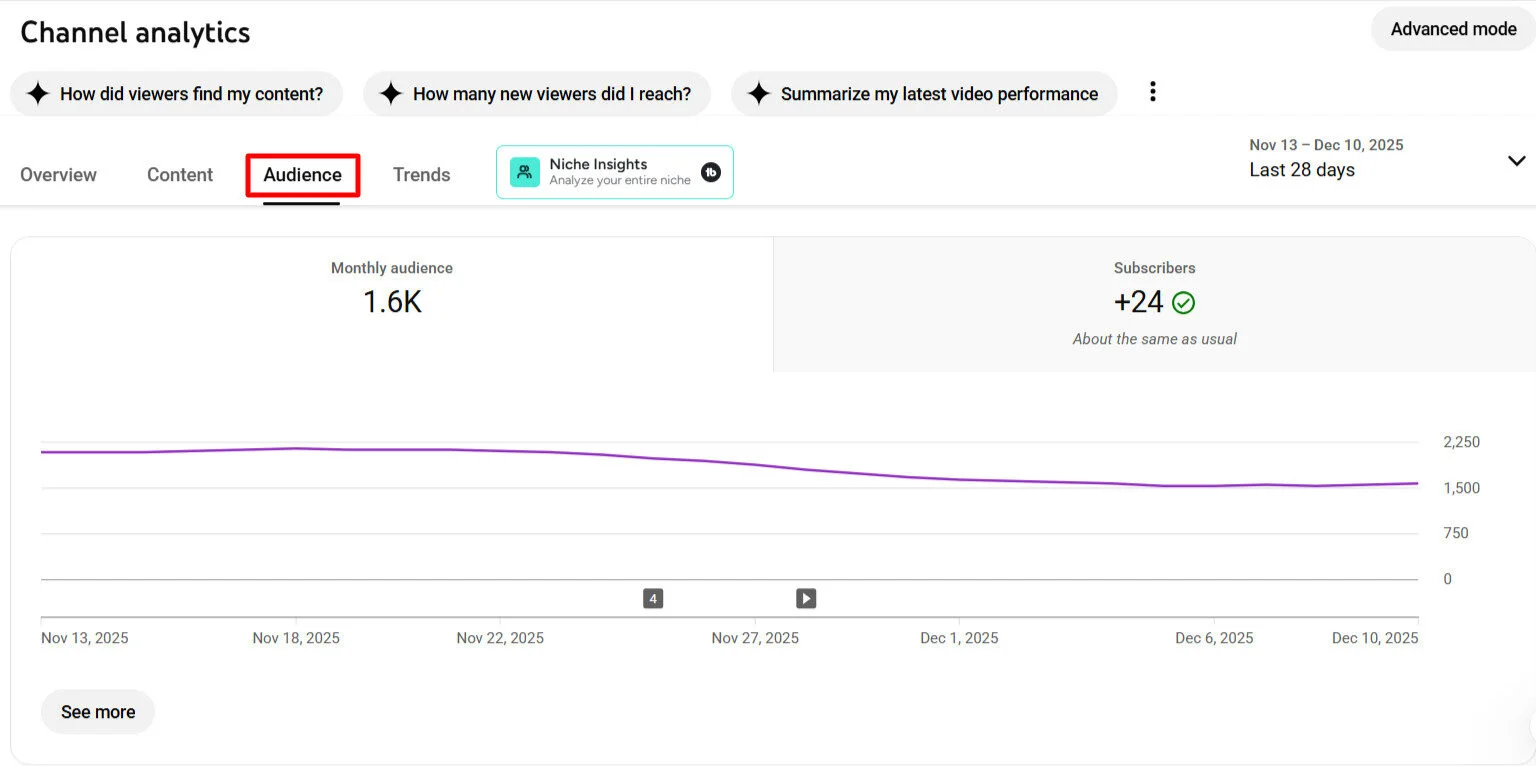
13. Unique Viewers: The number of individual users who watched your videos. A key metric for understanding how many people you’re reaching.
14. Returning Viewers: The number of viewers who return to watch your content again. High returning viewers indicate audience loyalty.
15. Subscribers: The number of people subscribed to your channel after watching. It measures your content’s ability to convert viewers into loyal followers.
16. When Your Viewers Are on YouTube: Tells you the times your audience is most active. Use this to schedule videos when viewers are most likely to watch.
17. Demographics: Shows the gender, age, and other attributes of your audience. Helps tailor content to your target demographic.
18. Top Geographies: Shows the locations where most of your views are coming from. This can help with region-specific content strategies.
19. Viewers’ Age and Gender: Further insights into your demographic, helping you customize your content for specific age groups or genders.
20. Watch Time from Subscribers: Indicates how much of your watch time comes from your subscribers. High watch time from subscribers suggests your content is consistently engaging.
21. Other Channels Your Audience Watches: Reveals channels with similar audiences. Great for collaboration and cross-promotion.
22. What Your Audience Watches: Shows the types of videos your audience watches on YouTube. It can guide you in creating content ideas.
23. Format Your Viewers’ Watches: Tells whether viewers watch on mobile, desktop, or TV. Helps optimize content for various devices.
24. Device Type: Details the devices your audience uses to watch your videos (e.g., phone, desktop, tablet). This helps in optimizing content for different platforms.
How to Check Individual Video Analytics on YouTube?
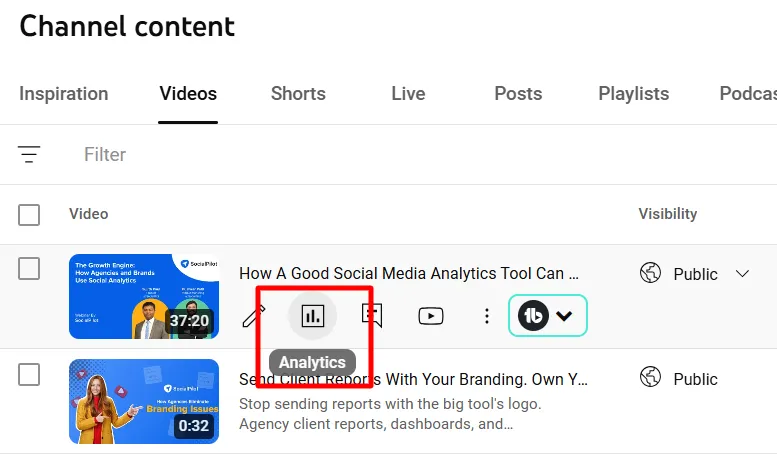
If you want to check the performance of a particular video content or YouTube Short, visit YouTube Studio and click on “Content” in the left menu bar.
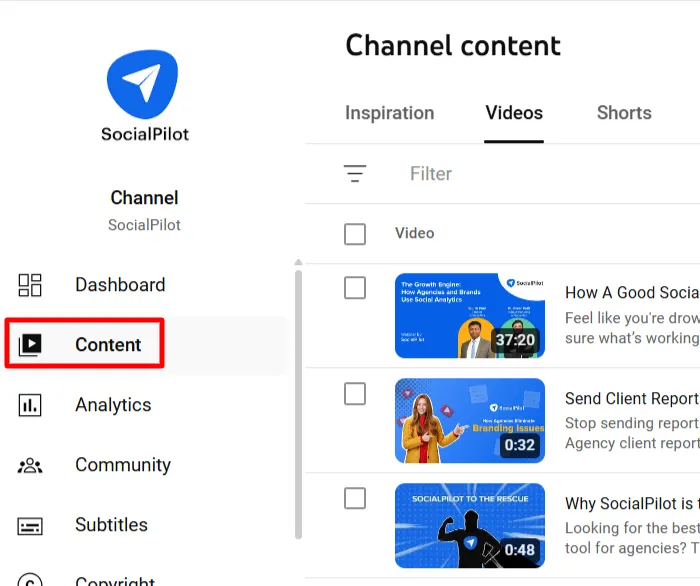
On hover over the video or Short and click on the “Analytics” icon on it.
Now, you can see four different tabs on the top, namely, Overview, Reach, Engagement, and Audience, each with various performance data.
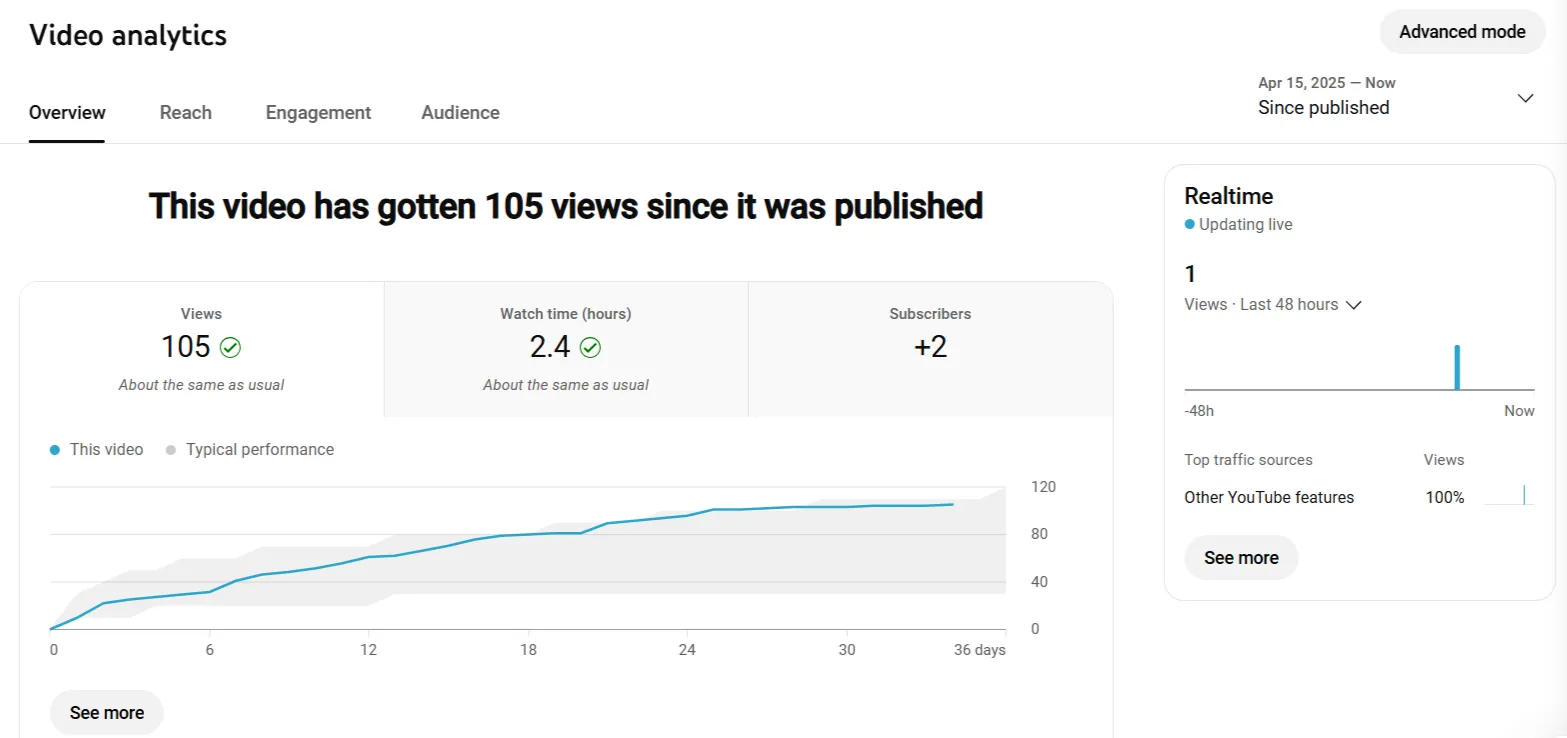
Here you will find all the YouTube video analytics metrics to track the growth of your individual video or Shorts.
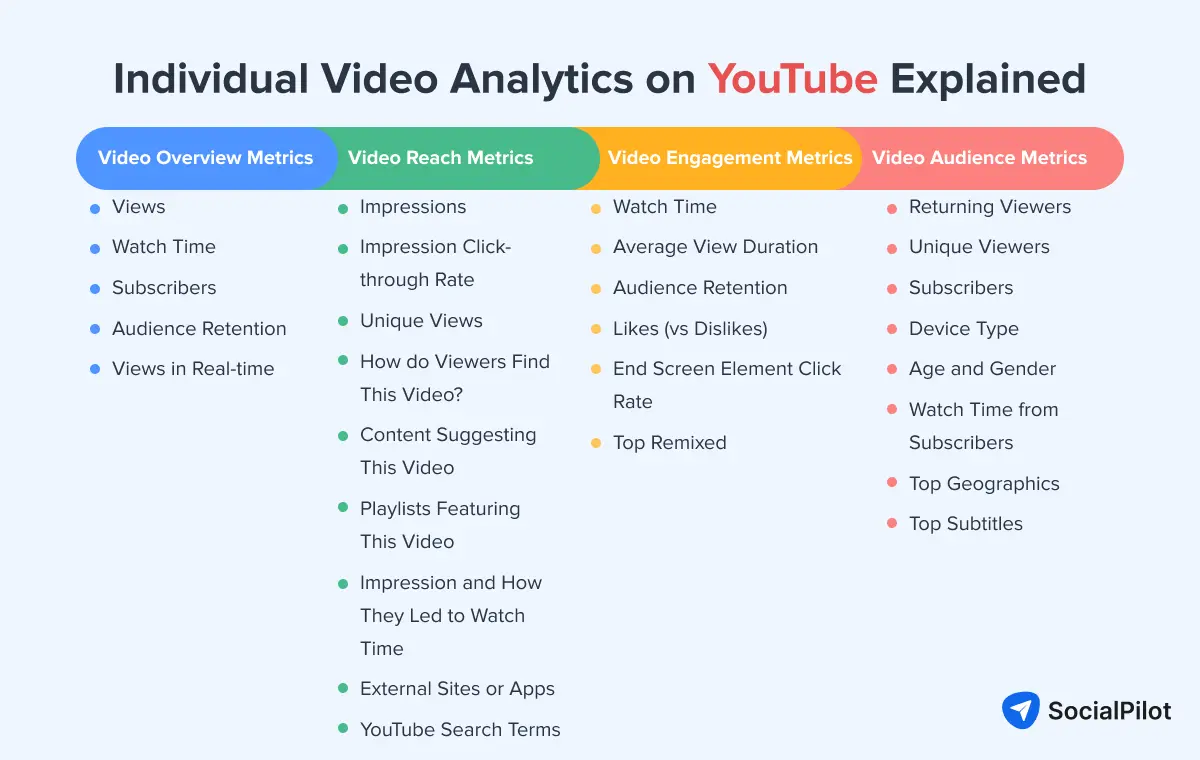
Video Overview Metrics
25. Views: The total number of views a video has received. It reflects the video’s reach.
26. Watch Time: The total minutes viewers have spent watching your video. Higher watch time can improve video ranking.
27. Subscribers: The number of subscribers gained from a particular video. Indicates how effective a video is in converting viewers to subscribers.
28. Audience Retention: Shows how many video viewers watch. High retention indicates that your video is holding viewer interest.
29. Views in Real-time: Displays how many views a video is getting at that moment. It gives an immediate idea of a video’s current performance.
Video Reach Metrics
30. Impressions: The number of times your video was shown in YouTube feeds. It’s a key measure of how often your video is exposed to new viewers.
31. Impression Click-through Rate: The percentage of impressions that resulted in views. High CTR means your video is grabbing attention effectively.
32. Unique Views: The number of distinct users who watched your video. Helps measure reach and audience size.
33. How do Viewers Find This Video? Identifies the sources (e.g., search, suggested videos) that brought viewers to your video. Helps optimize video promotion strategies.
34. Content Suggesting This Video: Shows other videos that are recommended by your video. Great for finding opportunities for more visibility through YouTube’s algorithm.
35. Playlists Featuring This Video: This shows if your video is included in playlists. This can help boost its discoverability.
36. Impression and How They Led to Watch Time: Analyzes the relationship between impressions and actual watch time. Helps you understand the impact of thumbnails and titles.
37. External Sites or Apps: The traffic your videos receive from sources outside of the YouTube platform itself.
38. YouTube Search Terms: Displays the search keywords leading to your video. Key for optimizing your SEO strategy.
Video Engagement Metrics
39. Watch Time: Total watch time for the video. Helps measure how engaging your content is.
40. Average View Duration: How long viewers stay on average. Higher view duration indicates more compelling content.
41. Audience Retention: Measures how well your video holds viewers’ attention—shows where they drop off and helps with content refinement.
42. Likes (vs Dislikes): Shows your video’s number of likes and dislikes. More likes generally signal positive reception.
43. End Screen Element Click Rate: The percentage of viewers clicking on elements in the end screen (e.g., links, video suggestions). Indicates how engaging your end screen elements are.
44. Top Remixed: Shows which videos are being remixed or reused by others. It can provide insight into how viral or shareable your content is.
Video Audience Metrics
45. Returning Viewers: The number of viewers returning to watch more of your content. Indicates viewer loyalty.
46. Unique Viewers: The number of distinct users who have watched your video. Helps gauge the reach.
47. Subscribers: The number of subscribers gained through a video. High subscriber numbers indicate that the video is engaging enough to prompt subscriptions.
48. Device Type: The devices your audience uses to watch videos. Helps in optimizing content for different devices.
49. Age and Gender: Gives a breakdown of the age and gender demographics of your viewers. Crucial for targeted content creation.
50. Watch Time from Subscribers: Shows how much of your video’s total watch time comes from subscribers. Higher values suggest strong engagement from loyal viewers.
51. Top Geographics: The locations where your video is being watched. Helps with geo-targeting strategies.
52. Top Subtitles: Shows which subtitle languages are used by viewers. Helpful for understanding your global reach and providing translations for broader audiences.
Still struggling to read analytical data inside YouTube Studio?
Listen to Brock Johnson, CEO of InstaClubHub, explain in our YouTube Masterclass how to check and understand your YouTube analytics.

How to Use YouTube Analytics Data Strategically for Growth?
1. Spot Underperforming Content
Videos not meeting expectations in views, engagement, or watch time likely aren’t performing well. They may also be failing to rank on search or suggested feeds, limiting exposure.
Key Actions:
- Identify Early: Check within the first week of posting to catch underperformance early.
- Make Quick Adjustments: Tweak titles, descriptions, and thumbnails for a 20-30% increase in CTR.
- Focus on Early Performance: YouTube’s algorithm prioritizes videos that perform well early. Poor initial performance can keep videos hidden unless adjusted.
Metric to Monitor:
- Views
- Watch Time
- CTR
How to find underperforming content?
- Check within the first 48-72 hours of posting.
- Optimize video metadata: titles, descriptions, and thumbnails.
- Keyword Alignments: Update keywords to match trending topics.
- Cross-Promotion: Share across other social channels to increase exposure.
2. Adjust Publishing Schedule Based on Traffic Patterns
Timing your video releases strategically boosts early engagement, improving the chances of YouTube promoting your video in suggested feeds.
Key Actions:
- Identify Peak Times: Use the “Audience” tab in YouTube Analytics to determine when your viewers are most active.
- Schedule Accordingly: Release videos during peak traffic hours for maximum engagement.
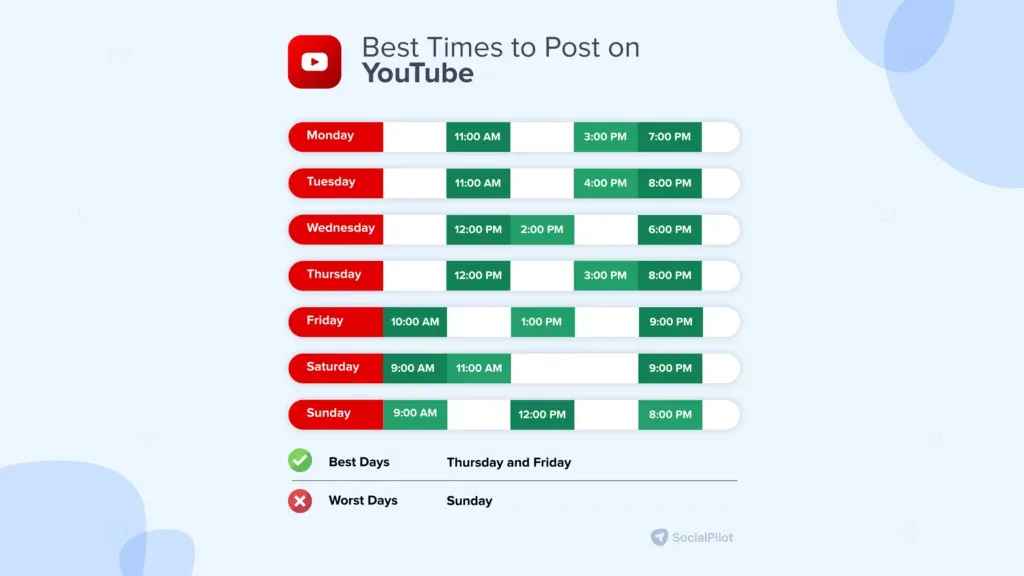
Metrics to Monitor:
- “When Your Viewers Are on YouTube”
- Views & Watch Time
How to Optimize Your Schedule:
- Test Different Posting Times: Track performance across different slots.
- Adjust as Needed: If CTR is low during non-peak hours, adjust your release time.
Maximize Efficiency:
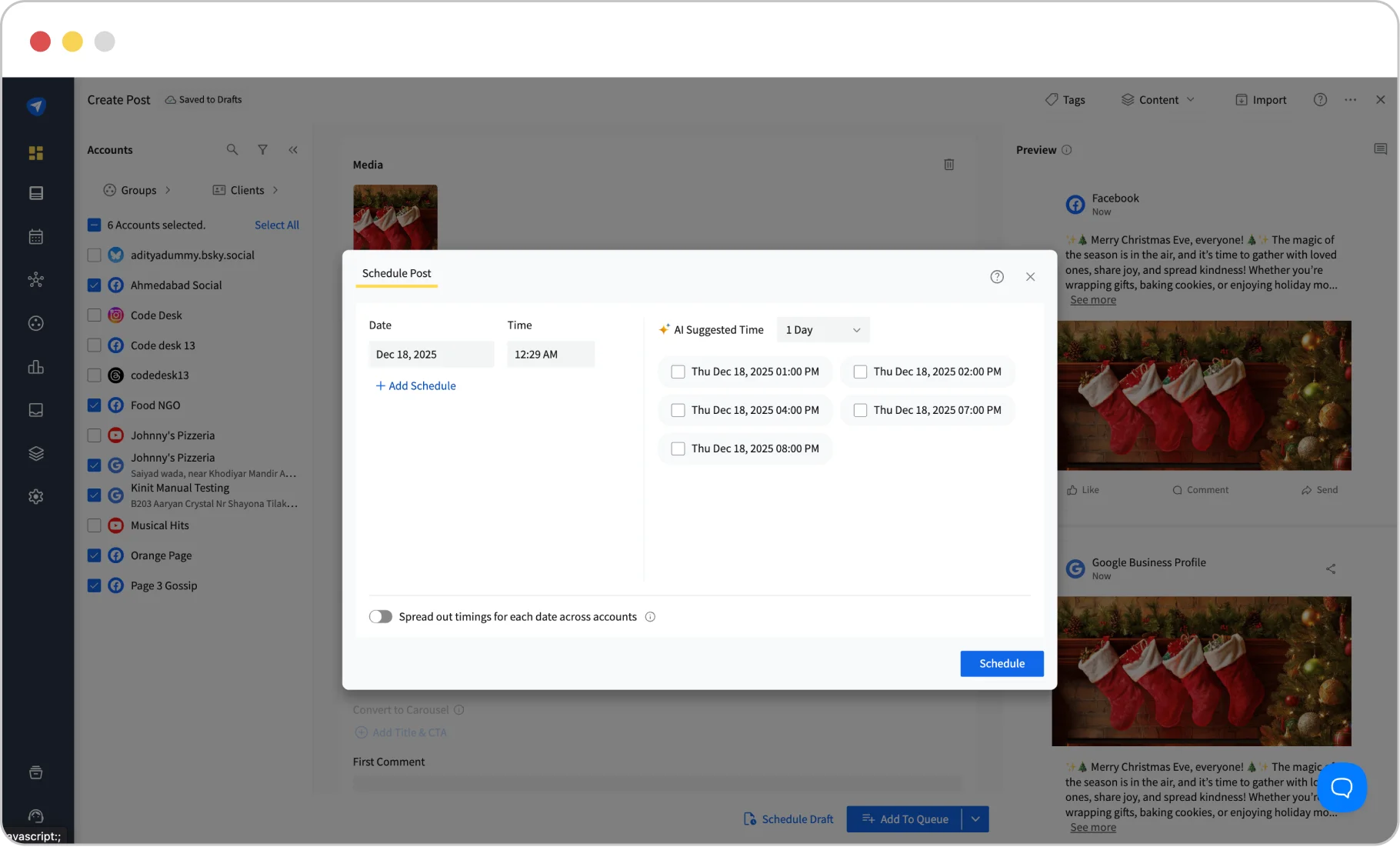
- SocialPilot’s AI can recommend optimal posting times based on audience activity, ensuring you get the best possible engagement.
Why guess when to post?
SocialPilot’s AI Suggested Time for Publishing studies when your audience is most active and recommends the perfect moment to schedule and post your videos, helping you get maximum views and engagement every time.
- Data-Driven Recommendations
- Platform-Specific Insights
- Flexible Scheduling
3. Identify Audience Drop-Off Points
Audience drop-off points refer to moments in a video where viewers stop watching or skip to another video.
These drop-offs often occur during transitions, lengthy explanations, or irrelevant content.
YouTube’s Audience Retention feature allows marketers to pinpoint exact drop-off moments and assess whether the issue concerns content appeal or technical aspects like pacing or editing.
Why is retaining the audience important?
- YouTube rewards videos with higher retention, boosting rankings and visibility.
- Higher retention rates make videos more likely to appear in recommended feeds, increasing reach.
- Studies suggest that a retention rate above 70%-85 % is optimum for seeing an increase in views on videos.
Hear Marcus Jones explain the strategy to analyze and increase the retention rate of your underperforming YouTube Shorts.
Early identification of drop-off points enables video re-editing. Focus on keeping content engaging by removing or condensing sections that cause viewers to lose interest.
Metric to Monitor:
- Audience Retention Metrics
Example: A noticeable drop after 60 seconds signals that the intro or early content isn’t captivating enough.
How to improve the retention rate?
- Tightening video introductions.
- Removing long-winded explanations.
- Adding engaging visuals to maintain interest.
- Re-positioning calls-to-action or making them more compelling if they coincide with drop-off points.
- Using annotations and end screens to guide viewers to related videos at key drop-off moments.
This strategy is most effective during the first 48 hours after uploading a video, as this is when most initial views will occur.
4. Optimize Titles/Thumbnails Based on CTR
Your video’s Click-Through Rate (CTR) is a key factor in its visibility on YouTube. A high CTR signals to YouTube that your content is compelling and encourages engagement, leading to better rankings and more exposure in search results and recommendations.
Key Actions:
- Craft Intriguing Titles: Use curiosity-driven language while targeting relevant keywords. Titles should spark interest while providing a clear idea of what the video is about.
- Design Attention-Grabbing Thumbnails: Thumbnails should be bold and visually compelling. Use high contrast colors, readable text, and eye-catching visuals to stand out in the feed.
Metrics to Monitor:
- CTR (Click-Through Rate)
How to Improve CTR:
- A/B Testing: Regularly test different title and thumbnail combinations to see what resonates best with your audience.
- Use Tools: Leverage design tools like Canva for thumbnails and platforms like TubeBuddy for optimizing titles based on keyword performance.
- Track and Iterate: Monitor CTR over time, and adjust your approach based on which variations drive the most clicks.
Impact on Growth:
A higher CTR leads to greater organic reach, which in turn improves your chances of getting featured in YouTube’s recommended videos and search results. Even minor improvements can have a significant impact on your channel’s visibility and growth.
5. Focus on Strong CTAs (Calls to Action)
Calls to Action (CTAs) are crucial for driving viewer interaction and encouraging further engagement with your content. Videos with strong CTAs typically see higher engagement rates, including more likes, comments, shares, and subscribers, all of which are key signals to YouTube’s algorithm.
Key Actions:
- Be Specific with Your CTAs: Instead of vague requests like “Like and subscribe,” use more direct prompts. For example, “If you found this tutorial helpful, hit the thumbs-up!” or “Want more content like this? Subscribe now!”
- Strategically Place CTAs: Place CTAs in key moments, at the beginning (to set expectations), in the middle (to re-engage viewers), and at the end (to give a final push before viewers leave).
Metrics to Monitor:
- Likes
- Comments
- Shares
- Subscribers Gained
How to Optimize CTAs:
- Clarity and Urgency: Be clear about what you want viewers to do. Add urgency where appropriate, like “Click the bell icon to never miss an update!”.
- Use Visual and Verbal Cues: Combine spoken CTAs with on-screen graphics or animations to make them more noticeable.
- Follow Through with Relevance: Make sure your CTAs align with the content’s objective, whether it’s increasing engagement, building subscribers, or driving traffic to another video.
Some compelling CTA examples:
- “Don’t forget to hit that subscribe button for more content!”
- “Leave a comment below to share your thoughts!”
- “Check out the link in the description for more details!”
When to Use CTAs?
The best times to incorporate CTAs are:
- At the beginning: Set expectations for viewers immediately (e.g., encourage subscriptions or bell notifications).
- In the middle: Engage viewers during longer videos, especially when they might lose attention.
- At the end: Make a final, compelling request as viewers prepare to leave.
Placing CTAs strategically throughout your video increases the chances of prompting viewers to take the desired action and helps grow your channel organically.
3 Best YouTube Analytics Tools
To grow your YouTube channel, choosing the right analytics tools is crucial for tracking video performance, understanding your audience, and identifying growth opportunities.
Here are the top 3 YouTube analytics tools that deliver powerful insights to enhance your content strategy:
SocialPilot provides comprehensive YouTube analytics, from video performance to audience behavior.
Key Features:
- Engagement Tracking: Monitor likes, shares, comments, views, watch time, and audience retention across videos and Shorts.
- Audience Insights: Track subscriber growth, demographics, location, and device usage for optimization.
- SEO & Keyword Tracking: Optimize content by tracking keywords that drive traffic and understanding referral sources.
- Advanced Reporting: Generate custom reports for one or multiple channels, with automated updates.
- Multi-Account Reporting: Manage multiple YouTube channels in one streamlined report.
Why Choose SocialPilot?
It’s a powerful tool for maximizing YouTube performance through in-depth analysis and streamlined reporting.
2. YouTube Analytics
YouTube’s native tool offers essential insights into video performance, audience demographics, and engagement.
Key Features:
- Video Performance Metrics: Track views, watch time, and audience retention to gauge video success.
- Audience Demographics: Understand your audience’s age, gender, and location to tailor content.
Limitations:
- Limited to YouTube data only, making cross-platform tracking challenging.
- Real-time data lacks depth, and the interface may be overwhelming for beginners.
Why Choose YouTube Analytics?
It’s ideal for creators who need platform-specific insights, but lacks broader integration options.
3. Google Analytics
Google Analytics tracks traffic from YouTube to your website, providing insights into referral traffic, user behavior, and conversions.
Key Features:
- Traffic Tracking: Monitor traffic from YouTube videos to your website for insights on user behavior and conversions.
- Audience Behavior: See how users interact with your website after visiting from YouTube.
Limitations:
- Lacks YouTube-specific metrics like watch time and audience retention.
- Requires manual setup and integration, which can be complex for those unfamiliar with web analytics.
Why Choose Google Analytics?
It’s useful for website traffic analysis, but doesn’t offer deep YouTube-specific insights for video content optimization.
Start Analyzing Your Way to Success!
For social media marketers managing client YouTube accounts, it’s not just about creating engaging content; it’s about making data-driven decisions that fuel growth. YouTube isn’t just an entertainment platform; it’s a serious business opportunity, and a smart, data-backed strategy is key to success.
You need metrics, insights, and a robust social media management tool that can help track and optimize performance across multiple channels.
SocialPilot is the tool to take your social media strategy to the next level. It helps you easily manage, analyze, and report on YouTube performance, enabling you to make informed decisions that drive results.
Start using SocialPilot today with a free trial and see how it can streamline your YouTube management and help you achieve your client goals.